In 2026, the top 7 beverage packaging innovations that brands can’t afford to ignore are: lightweight packaging, mono-material packaging, paper bottles, smart packaging, bio-based and compostable materials, and refillable and reusable packaging.
Today, beverage packaging is evolving around several key priorities, including material efficiency, recyclability, recycled content, digital engagement, and packaging performance. For beverage brands, these developments are increasingly connected to cost, regulatory requirements, logistics, and product positioning.
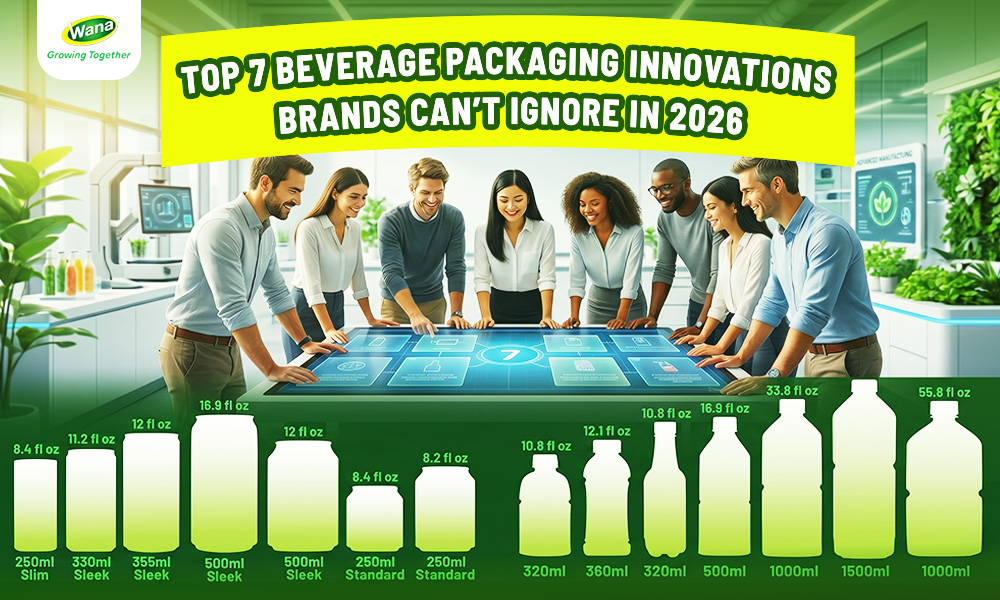
Lightweight Packaging: One of the Key Beverage Packaging Innovations in 2026
Lightweight packaging focuses on reducing the weight and material used in a package while maintaining the strength and product protection required throughout filling, transportation, storage, and retail handling.
For beverage brands, lightweight packaging can support both material efficiency and logistics optimization. However, the actual benefits depend on the packaging material, product requirements, production process, and distribution conditions.
Here are some key advantages:
- Transportation efficiency: Reducing package weight can lower the overall weight of shipments and may improve transportation efficiency, especially for beverages distributed over long distances.
- Material efficiency: Using less material per package can help reduce material consumption and packaging waste while supporting more efficient use of resources.
- Potential cost savings: Lightweight designs may reduce material and transportation costs. However, the actual cost impact depends on material prices, package design, production volume, and logistics conditions.
- Improved package design: Materials such as PET, glass, and paper-based structures can be engineered with optimized thickness, shape, or structural design to reduce weight while maintaining the required strength and functionality.
Example: Lightweight glass bottles are being developed with optimized designs that use less glass while maintaining the performance required for filling, transportation, and retail handling. The potential benefits should be evaluated based on the specific bottle design, beverage, production line, and distribution requirements.
For beverage brands, the goal of lightweight packaging is not simply to make a package thinner. It is to find the right balance between material efficiency, package strength, product protection, production performance, and total cost.
Mono-material Packaging: Supporting Recyclability and Material Efficiency
At the same time, mono-material packaging is gaining attention as brands look for packaging structures that can support recyclability and simplify material composition. Mono-material packaging uses the same or compatible material family throughout the main packaging structure, such as PE, PP, or PET, instead of combining multiple incompatible materials.
By reducing the number of different materials in a package, mono-material designs can make packaging management and recycling more straightforward in systems equipped to process the specific material. However, recyclability still depends on the complete packaging structure, local recycling infrastructure, and the compatibility of components such as caps, labels, adhesives, and barrier layers.
Here are some key benefits of mono-material packaging:
- Recyclability potential: A simpler material structure can support more efficient sorting and recycling compared with some multi-material formats.
- Material consistency: Using a compatible material family can simplify packaging design and may make material recovery easier at the end of the product’s life.
- Functional performance: Mono-material structures can be designed to provide the required strength, moisture resistance, barrier performance, and product protection. The appropriate structure depends on the beverage and its shelf-life requirements.
- Design flexibility: Mono-material packaging can be developed in different shapes, sizes, and formats while maintaining a consistent material structure. For beverage brands, this can include bottles, pouches, and other flexible packaging formats.
Example: Mono-material PET bottles can be designed with compatible packaging components to support recycling within suitable collection and recycling systems. For beverage brands, the overall packaging structure should be evaluated together with the cap, label, adhesives, and other components to determine its recyclability in the target market.
For brands considering mono-material packaging, the goal is not simply to use one material. It is to create a packaging structure that balances recyclability, product protection, production performance, design requirements, and cost.
Are Paper Bottles Shaping the Future of Sustainable Beverage Packaging?
Paper bottles are gaining attention as beverage brands explore alternatives to conventional packaging materials. Rather than being made entirely from paper, many current paper bottle concepts combine a fiber-based outer structure with an inner barrier layer designed to protect the beverage.
The technology is still developing, and its environmental performance depends on the complete packaging structure, production process, product requirements, and end-of-life infrastructure. For beverage brands, paper bottles should therefore be evaluated not only for their appearance or fiber content, but also for their technical performance and compatibility with existing waste-management systems.
Why Are Paper Bottles Getting So Much Attention?
- Potential material and weight efficiency: Fiber-based structures can offer an alternative to conventional glass or plastic packaging. The actual weight and environmental benefits depend on the specific bottle design and material composition.
- Use of renewable fiber: Paper bottle concepts can use sustainably sourced wood fiber or other fiber-based materials. Some current developments are designed around certified or responsibly sourced fiber, although the overall environmental impact also depends on the complete packaging structure and manufacturing process.
- Growing industry interest: Major beverage companies are exploring paper-based packaging technologies. For example, Carlsberg has developed research prototypes of its Green Fibre Bottle, while Coca-Cola continues to work with Paboco on the development of paper bottle concepts.
- Alternative to conventional packaging formats: Paper-based packaging can give brands another option when evaluating packaging materials alongside PET, rPET, glass, aluminum, and other formats.
What Are the Technical Challenges of Paper Bottles?
- Barrier performance: Paper and fiber materials alone do not provide all the protection required for many beverages. An additional barrier layer may be needed to protect against moisture, oxygen, light, or interaction between the beverage and the packaging. Current prototypes demonstrate that barrier technology remains an important part of paper bottle development.
- Recycling the complete package: The recyclability of a paper bottle depends on its full structure, including the fiber shell, liner or barrier, cap, adhesive, and other components. A package should therefore be evaluated based on the recycling infrastructure available in the target market.
- Production and scalability: Paper bottle manufacturing is still developing, and production requirements may differ from conventional PET or glass formats. Brands need to consider filling compatibility, package strength, production capacity, MOQ, and commercial scalability before moving to large-scale production.
- Product protection and shelf life: Beverage brands must verify whether the selected packaging can maintain product quality throughout the intended shelf life. Factors such as acidity, oxygen sensitivity, filling conditions, storage temperature, and transportation should be considered during product development.
- Cost and infrastructure: Paper-based packaging may involve additional materials, technologies, or processing steps. Its overall cost and environmental performance should therefore be assessed against alternatives such as PET, rPET, glass, and aluminum rather than assumed to be lower automatically.
For beverage brands, paper bottles represent an emerging packaging pathway rather than a one-size-fits-all solution. The right choice depends on the beverage formulation, shelf-life requirements, filling process, target market, packaging cost, and available end-of-life infrastructure.
Read more: How to Navigate EPR Beverage Packaging Regulations in 2026
Smart Packaging: Turning Beverage Packaging Into a Digital Touchpoint
Smart packaging combines packaging with technologies that can provide information, support traceability, improve product authentication, or create digital interactions with consumers. In beverage packaging, QR codes, NFC tags, digital identifiers, and other connected technologies can add functions beyond simply containing and protecting the product.
Through QR codes or NFC, smart packaging can help beverage brands:
- Share product information: Provide details about ingredients, sourcing, production, certifications, or serving suggestions.
- Support traceability: Connect a product or batch with digital information about its origin and supply chain.
- Build consumer engagement: Direct consumers to promotions, loyalty programs, product content, or brand experiences.
- Support authentication: Digital identifiers can help brands verify products and provide consumers with additional information about product authenticity.
Smart packaging can therefore turn a beverage package into a digital communication channel. Instead of relying only on the physical label, brands can use connected packaging to provide additional information and create interactions that continue after the product leaves the shelf.
For beverage brands, however, the value of smart packaging depends on factors such as technology cost, consumer adoption, data management, packaging design, and the digital experience behind the QR code or NFC tag. The technology should support a clear business or consumer purpose rather than being added simply because it is a new packaging trend.
Why Is Smart Packaging Relevant in 2026?
As beverage brands place greater emphasis on traceability, transparency, authentication, and direct consumer engagement, connected packaging provides another way to link physical products with digital platforms. For export-oriented brands, it can also provide a flexible way to communicate product information across different markets without overcrowding the physical label.
For this reason, smart packaging is becoming an area worth considering when beverage brands evaluate new packaging formats and digital strategies for 2026.
Bio-Based and Compostable Materials Packaging
Bio-based and compostable materials are gaining attention as beverage brands explore alternatives to conventional fossil-based plastics. However, these terms are not interchangeable, and their environmental benefits depend on the material, product application, and available waste-management infrastructure.
Bio-based packaging is made partly or entirely from renewable biological resources, such as plant-based materials. Being bio-based does not automatically mean that the packaging is biodegradable or compostable.
Compostable packaging, on the other hand, is designed to break down under specific composting conditions. Whether it can actually be composted depends on the material, certification requirements, and access to suitable industrial or home composting facilities.
For beverage brands, some of the key considerations include:
- Material suitability: The packaging must provide sufficient strength and protection for the beverage throughout filling, transportation, storage, and retail handling.
- Barrier performance: Beverages may require protection against oxygen, moisture, light, or other factors that can affect product quality and shelf life.
- End-of-life infrastructure: Compostable packaging only provides its intended end-of-life benefit when appropriate composting systems are available.
- Cost and scalability: Bio-based and compostable materials may have higher costs or more limited supply compared with established packaging materials.
- Production compatibility: Brands should also evaluate whether the material can run efficiently on existing filling, sealing, labeling, and packaging equipment.
Allow these reasons, bio-based and compostable packaging should be evaluated based on the complete packaging system, rather than simply the renewable or compostable label. For beverage brands, factors such as product formulation, shelf life, filling technology, target market, regulatory requirements, and end-of-life options all need to be considered before selecting a material.
Circular Packaging Solutions
Refillable and reusable packaging is receiving renewed attention as brands and retailers explore circular packaging models that can reduce reliance on single-use formats.
Common approaches include:
- Returnable bottles: Packaging is collected, cleaned, and reused for multiple cycles.
- Refill stations: Consumers refill containers instead of purchasing a new package each time.
- Subscription or return systems: Packaging is collected and returned through an organized distribution system.
These models can help reduce the amount of single-use packaging entering the waste stream. They may also create opportunities for brands to build longer-term customer relationships through return and refill programs.
However, reusable packaging requires more than simply changing the package design. Brands need to consider:
- Reverse logistics and collection systems
- Cleaning and sanitation requirements
- Packaging durability and number of reuse cycles
- Consumer participation
- Initial investment and operating costs
- Local infrastructure and distribution models
As a result, refillable and reusable packaging may be more practical for specific beverage categories, distribution channels, and markets where the necessary collection and refill infrastructure is already available.
How Do Advanced Filling Technologies Enable More Flexible Packaging?
Packaging innovation is not only influenced by materials and design. Filling and processing technologies also play an important role in determining which packaging formats a beverage can use efficiently.
Technologies such as aseptic filling, cold filling, and other controlled filling processes can help beverage manufacturers maintain product quality and achieve the required shelf life, depending on the beverage formulation, processing conditions, and packaging system.
They can also support greater packaging flexibility by allowing manufacturers to work with different:
- Packaging materials and formats
- Bottle and can sizes
- Filling conditions
- Product formulations and shelf-life requirements
For beverage brands, the key is to match the packaging format with the appropriate filling technology. Factors such as product sensitivity, packaging material, processing temperature, shelf life, production volume, and target market should be evaluated together.
For OEM and private label projects, this connection between packaging design and filling technology can be particularly important. A packaging concept may look attractive, but it also needs to be compatible with the manufacturing process and provide consistent performance at commercial scale.
How Are EPR and Regulations Influencing Packaging Innovation Decisions?
Packaging innovation is increasingly influenced by environmental regulations and producer responsibility requirements. Extended Producer Responsibility (EPR) is one of the factors that can affect how businesses approach packaging design, material selection, and waste management.
EPR requirements vary by country, packaging type, and the role of the business in placing products on the market. Depending on the market, businesses may need to consider:
- Material selection: Packaging materials can affect recycling, waste management, and compliance requirements.
- Packaging design: Brands may evaluate recyclability, material composition, packaging weight, and the use of recycled content.
- Reporting and data: Businesses may need to track packaging materials, quantities, and other packaging-related information.
- Packaging-related costs: EPR schemes may involve registration, reporting, recycling contributions, or other fees, depending on the jurisdiction.
For beverage brands selling across multiple markets, packaging decisions therefore need to consider more than appearance and functionality. Regulatory requirements, recyclability, material availability, production compatibility, and total cost can all influence the choice of packaging.
Rather than adopting one packaging solution for every market, brands should evaluate the specific requirements of each target market and consider regulatory changes during the packaging development process.
Case Study: How Coca-Cola Uses Different Packaging Formats for Different Markets
Coca-Cola provides a useful example of how a global beverage brand uses multiple packaging formats to meet different distribution and consumption needs.
Rather than relying on a single packaging format, Coca-Cola offers its beverages in options such as:
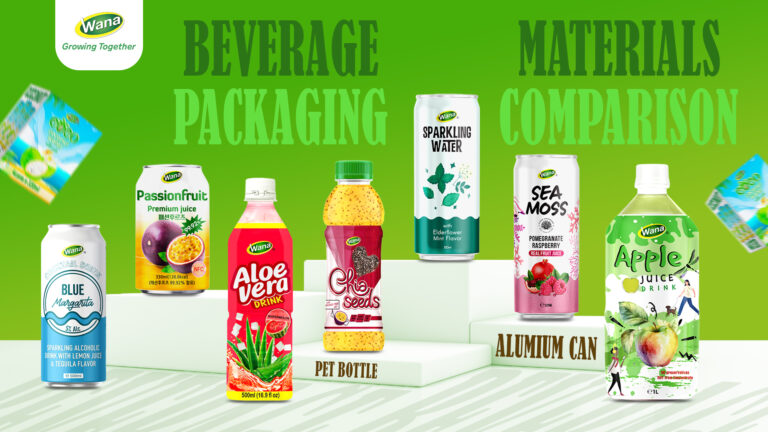
- PET bottles: Lightweight and convenient for retail, takeaway, and everyday consumption.
- Aluminum cans: Compact and suitable for chilled, on-the-go consumption.
- Glass bottles: Used in selected markets and channels where the packaging format supports a more premium or traditional brand experience.
Using different formats allows the brand to adapt its packaging strategy to factors such as distribution channels, consumer occasions, product positioning, and local market preferences.
This approach also highlights an important consideration for beverage brands: packaging decisions are not only about choosing the most sustainable or lowest-cost material. Brands need to balance:
- Packaging performance and product protection
- Transportation and storage requirements
- Production and filling compatibility
- Target market and distribution channel
- Product positioning
- Consumer usage occasions
- Total packaging and operational costs
Key Takeaway
There is no single packaging format that works equally well for every beverage, market, or consumption occasion. The right approach is to evaluate how material, format, production technology, cost, distribution, and product positioning work together when developing a packaging strategy.
Beverage Packaging Innovations at a Glance
Different packaging innovations offer different benefits and technical considerations. The right choice depends on the beverage, target market, production requirements, cost structure, and available recycling or recovery infrastructure.
| Packaging Innovation | Main Opportunity | Key Consideration |
|---|---|---|
| Lightweight Packaging | Reduce material use and improve transportation efficiency | Package strength, product protection, and filling performance |
| Mono-Material Packaging | Support simpler packaging structures and recycling potential | Compatibility of materials, labels, caps, adhesives, and local recycling systems |
| Recycled-Content / rPET Packaging | Increase the use of recycled materials and support circular material use | Material availability, quality, cost, and regulatory requirements |
| Paper-Based Packaging | Explore fiber-based alternatives to conventional packaging | Barrier performance, shelf life, scalability, and end-of-life options |
| Smart Packaging | Add digital information, traceability, and consumer engagement | Technology cost, data management, and consumer adoption |
| Bio-Based & Compostable Packaging | Explore renewable or compostable material pathways | Material suitability, certification, infrastructure, and cost |
| Refillable & Reusable Packaging | Reduce reliance on single-use packaging through reuse models | Reverse logistics, cleaning systems, consumer participation, and infrastructure |
No single innovation is suitable for every beverage product. Brands should evaluate packaging based on both environmental objectives and practical manufacturing requirements before moving from concept to commercial production.
Frequently Asked Questions About Beverage Packaging Innovations
What are the main beverage packaging innovations in 2026?
Key trends include lightweight packaging, mono-material structures, recycled-content and rPET packaging, paper-based packaging, smart packaging, bio-based and compostable materials, and refillable or reusable packaging. Their relevance varies depending on the beverage, target market, regulations, and available infrastructure.
What is the most sustainable beverage packaging?
There is no single packaging material that is automatically the most sustainable for every beverage. The environmental impact depends on factors such as material use, recycled content, manufacturing, transportation, product protection, reuse potential, and end-of-life infrastructure.
Is lightweight packaging better for the environment?
Lightweight packaging can reduce the amount of material used per package and may improve transportation efficiency. However, the overall benefit depends on package design, production, product protection, distribution conditions, and end-of-life management.
What is mono-material packaging?
Mono-material packaging uses the same or compatible material family for the main packaging structure instead of combining several incompatible materials. It can support recycling in systems designed to process that material, but the complete package—including caps, labels, adhesives, and barrier layers—still needs to be considered.
Are paper bottles completely biodegradable?
Not necessarily. Many paper bottle concepts combine a fiber-based outer structure with an inner barrier or liner. Whether the complete package is recyclable, biodegradable, or compostable depends on its specific materials, construction, certifications, and local waste-management infrastructure.
What is smart packaging for beverages?
Smart packaging uses technologies such as QR codes, NFC, or digital identifiers to provide additional information or interaction. Applications can include product information, traceability, authentication, promotions, and consumer engagement.
Are bio-based and compostable packaging the same?
No. Bio-based refers to the source of the material, while compostable refers to how a material is designed to break down under defined composting conditions. A bio-based material is not automatically compostable, and compostable packaging is not necessarily made entirely from bio-based materials.
How does EPR affect beverage packaging decisions?
EPR requirements can influence packaging material selection, recyclability, packaging data, reporting, and packaging-related costs. However, requirements vary by country, packaging type, and the role of the business placing products on the market.
How should beverage brands choose a packaging format?
Brands should consider the beverage formulation, shelf life, target market, packaging performance, filling technology, production volume, distribution conditions, regulations, material availability, and total cost. Evaluating these factors together can help determine whether a packaging concept is commercially and technically suitable.
Can an OEM beverage manufacturer help with packaging development?
An experienced OEM beverage manufacturer can support packaging development by evaluating packaging formats, filling compatibility, product requirements, production processes, and commercial scalability. For export projects, brands should also confirm the packaging and regulatory requirements of each target market.
Conclusion
In the context of Beverage Packaging Innovations in 2026, no brand needs (or can afford) to adopt all innovations at once. The key is to set the right priorities:
- For quick cost optimization: lightweight & mono-material packaging
- For brand differentiation: smart packaging
- For long-term sustainability: bio-based materials & refill systems
Ultimately, success does not come from chasing trends, but from the ability to balance cost, consumer experience, and regulatory requirements.
At Wana Beverage, we believe the future of the beverage industry belongs to brands that can flexibly integrate technology, materials, and packaging strategies—not only to meet today’s market demands, but to lead the trends of tomorrow.