As global beverage brands continue to expand into new markets, choosing the right manufacturing location has become a critical business decision. For years, China dominated global manufacturing thanks to its large-scale production capacity and extensive industrial ecosystem. However, Vietnam is rapidly emerging as a preferred alternative for beverage brands seeking competitive costs, greater flexibility, and reliable export capabilities.
Today, comparing Vietnam vs China beverage manufacturing cost is no longer just about finding the cheapest option. Brand owners, importers, distributors, and private label buyers are increasingly evaluating factors such as product quality, supply chain stability, production flexibility, and long-term business value.
In this article, we compare Vietnam and China from a beverage manufacturing perspective to help businesses determine which market offers better value in 2026.
Why Brands Are Comparing Vietnam and China for Beverage Manufacturing
China’s Long-Standing Position as a Manufacturing Hub
China has been one of the world’s leading manufacturing centers for decades. Its extensive supplier networks, advanced industrial infrastructure, and massive production capacity make it a strong choice for companies requiring extremely large production volumes.
Many multinational beverage companies continue to source products and packaging materials from China due to its mature manufacturing ecosystem.
Vietnam’s Growing Role in Global Beverage Production
While China remains a manufacturing powerhouse, Vietnam has steadily gained attention from international beverage brands.
Over the past decade, the country has invested heavily in modern manufacturing facilities, food safety systems, and export infrastructure. Beverage manufacturers in Vietnam now produce a wide range of products, including fruit juice, coconut water, sparkling drinks, energy drinks, coffee beverages, tea drinks, and functional beverages for global markets.
At the same time, Vietnam offers several advantages that appeal to both emerging brands and established companies looking to diversify production.
What Buyers Evaluate Beyond Production Cost
Manufacturing cost remains an important consideration, but it is no longer the only factor influencing sourcing decisions.
Today’s buyers often evaluate:
- Product quality and consistency
- Manufacturing flexibility
- Minimum order quantities (MOQ)
- Product development capabilities
- Lead times
- Export support
- Supply chain reliability
- Regulatory compliance
In many cases, the lowest production cost does not necessarily deliver the best overall value.
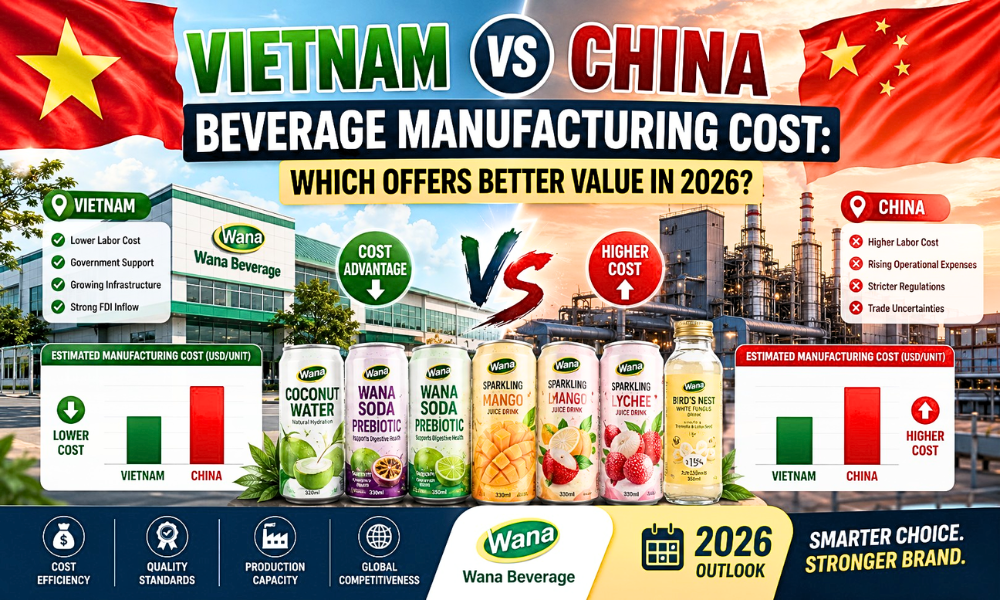
Vietnam vs China Beverage Manufacturing Cost Comparison
Labor Costs
Labor costs continue to be one of Vietnam’s strongest competitive advantages.
Compared to China, Vietnam generally offers lower labor expenses and operating costs, allowing manufacturers to maintain attractive production pricing while remaining competitive in international markets.
For beverage brands, lower labor costs can contribute to more efficient production budgets, particularly when launching new products or testing new markets.
China still offers highly skilled labor and extensive manufacturing expertise. However, rising wages in recent years have increased overall production expenses for many industries.
Raw Material Costs
Raw materials play a significant role in beverage manufacturing costs.
Vietnam benefits from strong agricultural resources and year-round access to tropical fruits and ingredients such as:
- Coconut
- Mango
- Pineapple
- Passion fruit
- Dragon fruit
- Coffee
- Tea
Because many of these ingredients are sourced locally, manufacturers can often reduce transportation expenses and improve supply stability.
This creates an advantage for brands developing fruit-based and functional beverage products.
China also maintains strong agricultural production, but imported tropical ingredients may increase costs for certain beverage categories.
Factory Operating Costs
Factory operation costs include:
- Utilities
- Facility expenses
- Labor management
- Local compliance requirements
In many cases, Vietnam offers lower operational costs than China, making it attractive for beverage brands looking to optimize manufacturing budgets.
Packaging and Logistics Costs
Packaging costs can vary depending on material availability and supplier networks.
China has advantages in packaging scale due to its massive manufacturing base. However, Vietnam continues to improve its packaging supply chain and offers competitive solutions for:
- Aluminum cans
- PET bottles
- Glass bottles
- Carton packaging
When combined with lower production costs, Vietnam remains highly competitive for export-focused beverage projects.
Cost Comparison Overview
| Cost Factor | Vietnam | China |
| Labor Cost |
More competitive |
Higher |
| Tropical
Ingredients |
Strong advantage |
Moderate |
| Factory
Operating Cost |
Lower |
Higher |
| Manufacturing
Scale |
Growing rapidly |
Very strong |
| Production
Flexibility |
High |
Moderate |
| Packaging
Ecosystem |
Developing fast |
Mature |
| Export
Capability |
Strong |
Strong |
Beyond Cost: Which Country Delivers Better Value?
Production Flexibility
One area where Vietnam performs particularly well is manufacturing flexibility. Many Vietnamese beverage manufacturers offer:
- Lower MOQ requirements
- Faster product customization
- More flexible development processes
- Stronger support for emerging brands
This is especially beneficial for startups, private label projects, and brands testing new beverage concepts.
China remains highly competitive for very large-scale production runs where volume efficiency is the primary objective.
Product Innovation
Consumer demand is evolving quickly. Today’s beverage market includes growing demand for:
- Functional beverages
- Energy drinks
- Coconut water
- Plant-based drinks
- Sparkling beverages
- Low-sugar products
Vietnam’s access to tropical ingredients and growing beverage R&D capabilities allows manufacturers to respond quickly to these trends.
Many beverage factories now offer complete product development services, helping brands create innovative products tailored to specific markets.
OEM and Private Label Services
Modern beverage manufacturing extends beyond production. Many brands require support with:
- Beverage formulation
- Packaging development
- Regulatory compliance
- Export documentation
- Private label solutions
Vietnamese manufacturers have increasingly expanded their OEM and ODM capabilities to meet these needs, providing end-to-end solutions for international clients.
Beverage Production Advantages in Vietnam
Abundant Tropical Ingredients
Vietnam’s agricultural strength creates a major competitive advantage.
The country produces a wide variety of tropical fruits and agricultural ingredients that are increasingly popular among global consumers.
This makes Vietnam an ideal manufacturing location for:
- Tropical Fruit Juice drinks
- Coconut water
- Functional beverages
- Natural beverages
Strategic Export Location
Vietnam is strategically positioned near major Asian markets, including:
- China
- Japan
- South Korea
- ASEAN countries
In addition, free trade agreements provide attractive export opportunities to Europe and other global markets.
Growing Manufacturing Infrastructure
Modern beverage factories in Vietnam continue to invest in advanced production technology, including:
- Aseptic filling
- Hot-fill systems
- Automated production lines
- International quality management systems
These investments help ensure consistent product quality and export readiness.
Competitive Manufacturing Costs
Vietnam remains one of the most cost-efficient manufacturing destinations in Southeast Asia.
For many beverage brands, this combination of quality and affordability delivers stronger long-term value than focusing solely on production cost.
Beverage Manufacturing Strengths in China
It is important to recognize China’s strengths as well to make a fair comparison.
Massive Manufacturing Scale
China remains unmatched in terms of production volume and manufacturing scale.
Extensive Supplier Network
The country’s mature supplier ecosystem supports virtually every aspect of beverage manufacturing.
Mature Industrial Infrastructure
China’s logistics, packaging, and industrial support systems are highly developed.
Ideal for Very Large Production Volumes
For multinational corporations requiring extremely large production runs, China continues to be a strong option.
Vietnam vs China for Different kinds of Beverage Brands
Startups and Emerging Beverage Brands
Vietnam often provides a better balance of flexibility, customization, and cost control.
Lower MOQs and stronger development support make it easier for startups to launch products without excessive risk.
Importers and Distributors
Importers typically evaluate product quality, consistency, and supplier responsiveness.
Vietnam’s growing export experience and manufacturing flexibility make it increasingly attractive for distributors seeking private label opportunities.
Retail Private Label Programs
Retail chains frequently require customized products and faster development cycles.
Vietnam’s OEM and ODM capabilities support these requirements effectively.
Large Global Beverage Brands
Large corporations may prioritize production scale and supplier networks.
In such cases, China remains competitive, although many companies are now diversifying manufacturing into Vietnam to reduce supply chain concentration.
Case Study: Why More Beverage Brands Are Choosing Vietnam
In recent years, global sourcing strategies have shifted significantly.
Rather than relying on a single manufacturing country, many beverage companies are adopting a “China Plus One” strategy. This approach involves maintaining some production in China while expanding manufacturing operations into countries like Vietnam.
Key reasons include:
- Competitive manufacturing costs
- Strong agricultural resources
- Export-friendly policies
- Flexible OEM and ODM services
- Growing production capacity
This trend highlights Vietnam’s increasing importance within the global beverage supply chain.
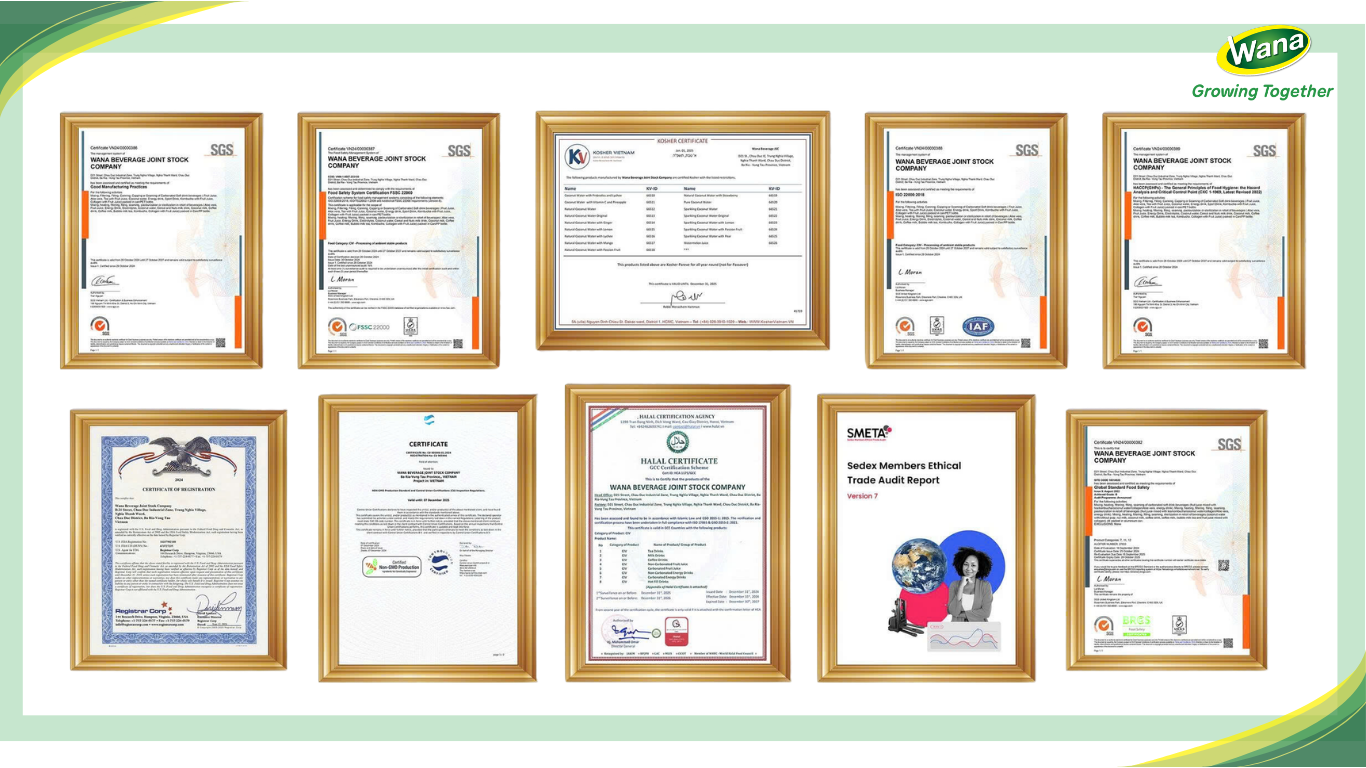
Why Global Brands Partner with WANA Beverage
As one of Vietnam’s trusted beverage manufacturers, WANA Beverage helps brands transform product ideas into commercially successful beverages.
International Certifications
WANA Beverage operates under internationally recognized manufacturing standards, including:
- ISO 22000
- HACCP
- GMP
- HALAL
- FDA
- FSSC 22000
- SEDEX SMETA
Full OEM, ODM, and Private Label Services
Our team supports customers through every stage of product development, from concept creation and formulation to packaging and production.
Strong R&D Capabilities
WANA Beverage continuously develops innovative beverage solutions tailored to changing consumer trends.
Flexible Manufacturing Solutions
We support both growing brands and established companies with customized production solutions.
Export Experience
WANA Beverage serves customers in more than 40 countries and provides export documentation support to help simplify international market entry.
Diverse Beverage Portfolio
Our manufacturing capabilities include:
- Fruit Juice
- Coconut Water
- Sparkling Drinks
- Energy Drinks
- Functional Beverages
- Tea Drinks
- Coffee Drinks
Vietnam vs China Beverage Manufacturing Cost: Final Thoughts
There is no universal answer when comparing Vietnam and China for beverage manufacturing.
China remains a strong choice for companies requiring massive production volumes and access to a highly developed industrial ecosystem.
However, Vietnam offers a compelling combination of competitive costs, manufacturing flexibility, abundant raw materials, and growing export capabilities.
Ultimately, the best decision depends on your business goals, production requirements, and long-term growth strategy. For many beverage brands in 2026, Vietnam is no longer simply a lower-cost alternative—it is a strategic manufacturing destination that delivers real business value.