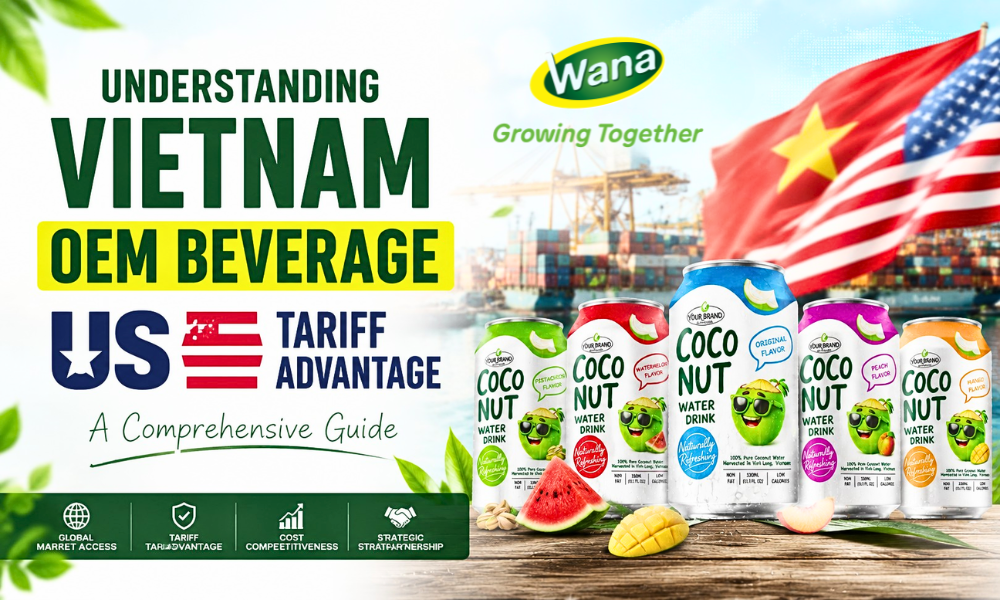
The Vietnam OEM beverage US tariff advantage matters when landed cost, supply continuity, and compliance determine whether a product can compete in the US. For beverage brands and importers, Vietnam is increasingly evaluated as an OEM/ODM manufacturing base alongside other Asian sourcing markets.
This guide explains how tariffs and trade policy affect beverage imports, where Vietnam can be cost-competitive, and how to assess OEM partners-including how to incorporate Wana Beverage into an OEM sourcing narrative without overstating capabilities.
What is OEM in the Beverage Industry?
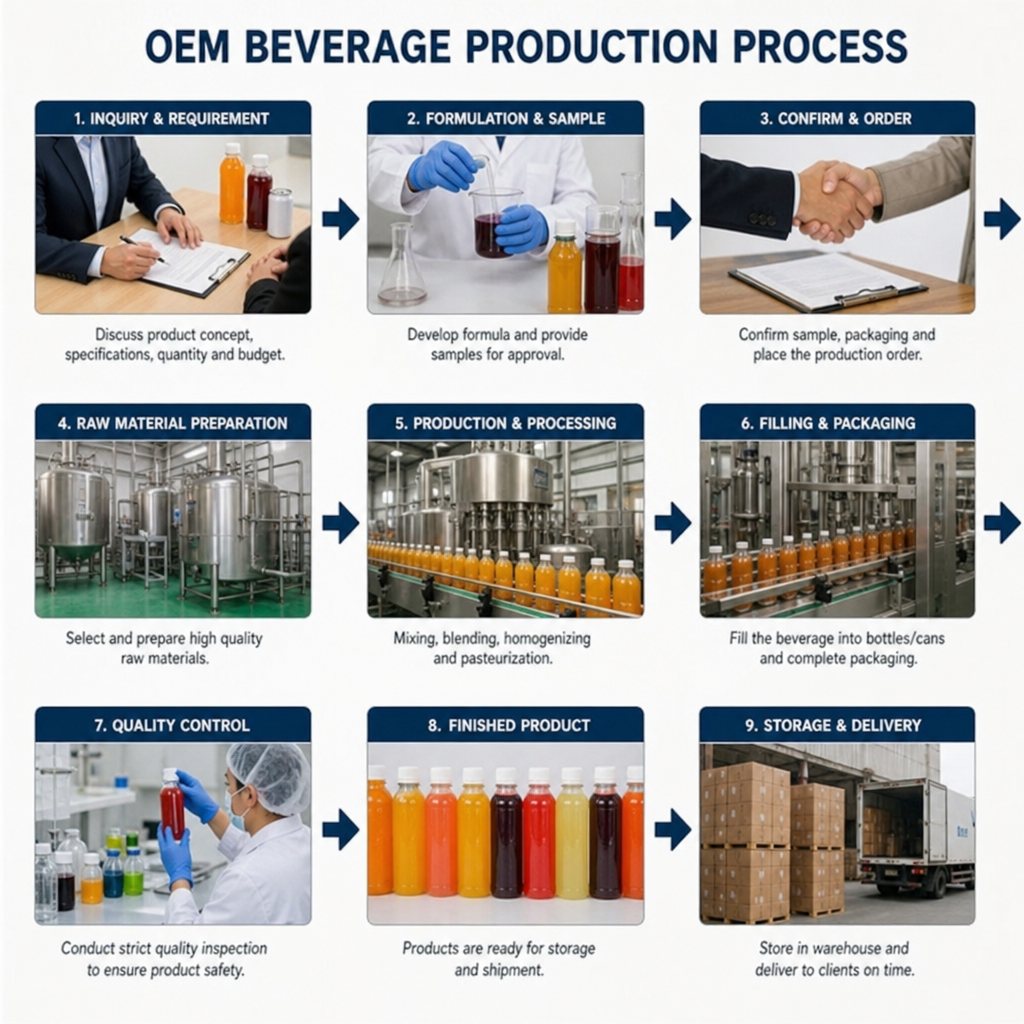
OEM (Original Equipment Manufacturer) beverage production refers to a manufacturer producing beverages on behalf of another brand. Depending on the agreement, an OEM may provide manufacturing only, or broader ODM-style support such as formulation refinement, packaging development, and commercialization support.
Common reasons brands use beverage OEMs include:
- Reducing capital investment in production assets
- Scaling volume faster than in-house capacity allows
- Accessing established quality, food-safety, and packaging processes
- Accelerating product development and line extensions
Understanding Tariffs and Their Impact on International Trade
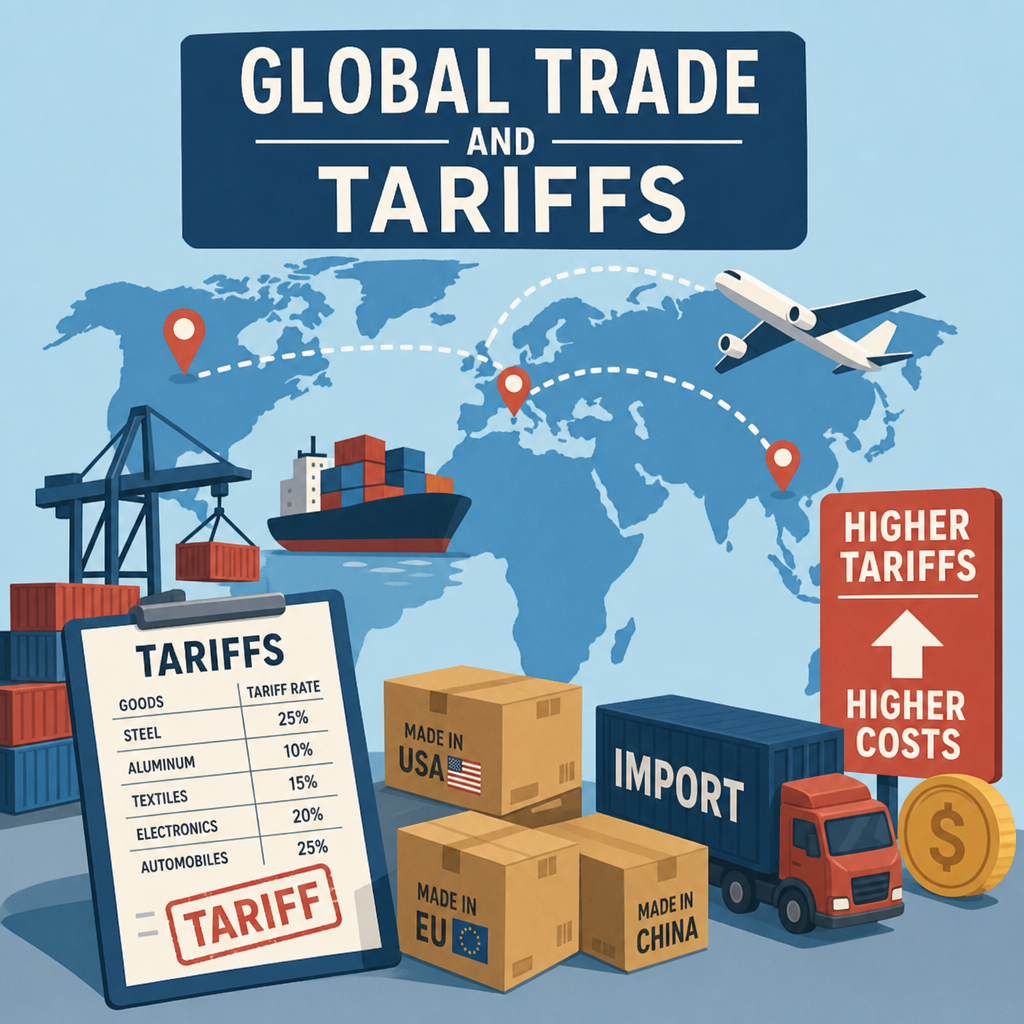
Tariffs are taxes applied to imported goods. In beverage supply chains, tariffs affect pricing, sourcing decisions, and total landed cost, alongside freight, insurance, warehousing, and domestic distribution.
Tariffs can:
- Increase consumer prices or compress margins
- Shift sourcing to alternative origins
- Create administrative and classification risk (HS code accuracy, documentation, audits)
- Drive changes in product mix (formats, ingredients, packaging) to manage landed cost
Vietnam-US Trade Relations: Historical Context and Key Agreements
Vietnam-US trade expanded significantly after the US-Vietnam Bilateral Trade Agreement (2001), which reduced barriers and supported broader commercial engagement. Vietnam’s integration into regional trade frameworks and supply networks has also increased its relevance for US importers evaluating multi-country sourcing strategies.

The US Tariff Advantage for Vietnam OEM Beverages
Tariff advantage is best evaluated as a total landed-cost comparison versus alternative origins for the same HS classification and product attributes. Vietnam can be attractive when its manufacturing cost structure and operating efficiency offset tariffs, freight, and working-capital timing.
In beverage OEM sourcing, tariff-related competitiveness commonly interacts with:
- Category and classification (HS code; ingredient and packaging attributes)
- Production economics (labor, utilities, yields, scrap, packaging inputs)
- Quality performance and rework risk
- Lead time and inventory strategy (safety stock, reorder cadence)
Product types frequently evaluated for OEM import programs include ready-to-drink teas, functional beverages, energy drinks, and packaged waters, subject to compliance and shelf-life requirements.
Key Trade Agreements Shaping Tariff Benefits
Vietnam participates in multiple trade agreements that can affect regional competitiveness and supply-chain routing. For Vietnam-US trade, the most practical consideration for importers is how current US tariff schedules apply to the imported beverage classification and whether any applicable programs, exclusions, or rule changes affect the landed cost over time.
From a sourcing standpoint, the operational value of agreements and policy frameworks is often indirect:
- More predictable trade administration and customs processes
- Incentives for investment in manufacturing capacity and export readiness
- Greater standardization of documentation and quality expectations
Economic Benefits for US Importers and Vietnamese Exporters
When the economics work, US importers can improve gross margin or price competitiveness. Vietnamese exporters can access larger programs and longer-term volume commitments.
In practice, the benefits depend on execution discipline:
- Consistent product quality and on-time delivery
- Stable input sourcing (sweeteners, concentrates, packaging materials)
- Clear change control for formula and packaging revisions
- Accurate, complete import documentation
Competitive Pricing and Quality: Vietnam’s Edge in the Beverage Market
Vietnam can be cost-competitive due to manufacturing cost structure and growing packaging and processing capability. However, cost advantage is sustainable only if the OEM maintains process control, validated food-safety systems, and consistent sensory and analytical specifications.
For US buyers, quality is typically measured by:
- Specification conformance (Brix, pH, microbiology, fill volume, torque/seam integrity)
- Batch traceability and recall readiness
- Packaging performance in distribution (leakage, denting, scuffing, label adhesion)
- Documented CAPA (corrective and preventive action) when deviations occur
Challenges and Risks in Maintaining Tariff Advantages
Tariff advantage can erode quickly due to policy changes, freight volatility, or classification disputes. Operational failures (quality deviations, late shipments, incomplete documentation) can eliminate cost savings through chargebacks, rework, or rejected loads.
Common risk areas include:
- Tariff and classification changes (HS code disputes; ingredient-driven classification differences)
- Currency and commodity swings affecting the costed BOM
- Geopolitical or port disruptions affecting lead times
- Non-compliance with US import and labeling requirements
The Impact of US-China Trade Tensions on Vietnam’s Export Opportunities
US-China trade friction has led many companies to diversify sourcing. Vietnam is often considered as part of a China+1 strategy. For beverages, feasibility depends on whether the OEM can meet specification, compliance, and continuity expectations at scale.
Market Outlook for Vietnam’s Beverage OEM Sector
Growth in OEM beverage programs is typically tied to demand for product variety, shorter innovation cycles, and the need to manage total landed cost. Vietnam’s opportunity is strongest where it can combine competitive manufacturing economics with consistent compliance and reliable logistics.
Strategies for US Businesses to Leverage Vietnam’s Tariff Advantage
US businesses should treat tariff advantage as one input into a broader sourcing and risk-management model.
Practical steps include:
- Model total landed cost by SKU (tariffs, freight, duties, brokerage, warehousing, spoilage, chargebacks)
- Qualify the OEM via audit, specification alignment, and trial production runs
- Build a compliance package (labels, ingredient statements, allergens, COAs, traceability)
- Set measurable service levels (OTIF, defect rates, CAPA timelines)
- Maintain contingency plans (secondary packaging, alternate ports, buffer inventory)
Regulatory Landscape and Compliance for Beverage Imports in the US
US beverage imports must comply with FDA requirements and any other applicable federal and state rules. The importer of record is typically responsible for ensuring that documentation and labeling are accurate and that food-safety expectations are met.
Core compliance workstreams include:
- Labeling and ingredient documentation, including allergens where applicable
- Product specifications and lot-level traceability
- Customs documentation and consistent classification support
- Distributor/retailer requirements (testing, certifications, and claims substantiation)
Supply Chain Management and Logistics Considerations
Logistics performance can determine whether an OEM program succeeds. Beverage imports require packaging integrity, temperature and humidity considerations where relevant, and reliable documentation flow.
Key focus areas:
- Lead-time discipline and shipment visibility
- Packaging specification aligned to distribution realities (pallet patterns, case strength)
- Inventory planning to reduce stockouts and expired product
- Clear responsibilities across OEM, forwarder, broker, and warehouse
Innovation, Technology, and Sustainability
Innovation matters when it is tied to measurable outcomes: shelf stability, quality consistency, reduced waste, and packaging performance. Sustainability claims should be used only when supported by documentation (materials data, certifications, or verified programs).
Branding, Marketing, and Consumer Trends in the US Market
US beverage demand trends often favor clear labeling, consistent quality, and claims that can be substantiated. For imported OEM beverages, marketing should align with what the product and documentation can support, and avoid implied health claims unless properly qualified.
Recommendations for Businesses Entering the Vietnam-US Beverage Trade
- Start with a specification-driven brief (formula targets, packaging, shelf life, claims constraints).
- Validate feasibility via samples, stability testing, and pilot runs before committing to scale.
- Lock down labeling and documentation early to avoid launch delays at customs or with retailers.
- Use contracts and change control to manage formulation, packaging, and lead-time changes.
Wana Beverage: Your Trusted OEM/ODM Partner in Vietnam
For global beverage brands and US importers looking to leverage Vietnam’s competitive trade advantages, finding a reliable manufacturing partner is key. Below is a comprehensive breakdown of Wana Beverage’s core capabilities, operating model, and supply chain advantages as a premier OEM/ODM beverage manufacturer in Vietnam.
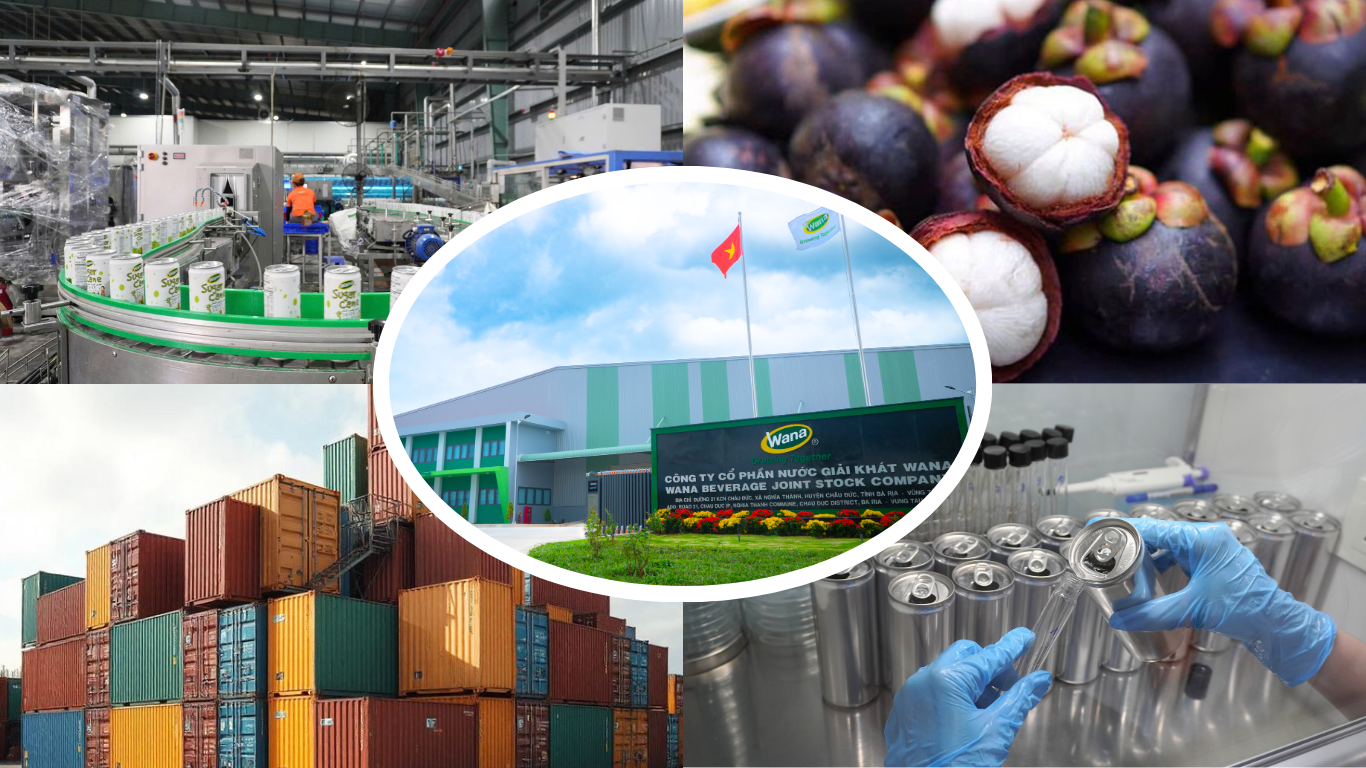
End-to-End Beverage Contract Manufacturing (OEM/ODM)
Wana Beverage operates as a true one-stop solution, streamlining the entire pipeline from conceptualization to final export. This comprehensive workflow allows international buyers to turn a product concept into a commercial-ready, compliant SKU with defined technical specifications.
Full-Service Supply Chain Integration:
- R&D & Formula Customization: Tailored beverage formulation, sensory alignment, and shelf-life stability testing.
- Packaging Design Coordination: Adapting labels to meet multi-market compliance and aesthetic standards.
- Regulatory & Certification Consulting: Assisting with target market entry documentation (e.g., FDA, customs compliance).
- Production & Logistics Execution: Seamless turnkey manufacturing coupled with efficient export port coordination.
Proven Global Export Experience & Compliance
Established in 2016, Wana Beverage has built extensive international market exposure, making them a seasoned player in global food and beverage (F&B) logistics.
- Global Footprint: Trusted by over 100+ international brands with successful exports spanning 40+ countries.
- International Presence: Regular exhibitor at major global trade shows including Gulfood, Thaifex, SIAL Paris, Anuga, and PLMA.
- US Market Readiness: Experienced in handling strict US import documentation workflows, FDA labeling requirements, and rigorous buyer onboarding protocols.
Massive Production Capacity & Packaging Flexibility
Scalability is crucial for retail distribution. Wana’s manufacturing infrastructure is built to support everyone from emerging beverage startups to high-volume multi-national retail chains.
- Infrastructure: Operating 5 state-of-the-art production facilities housing over 15+ advanced production lines.
- High Volume Output: A stated capacity of up to 600 containers per month, ensuring supply chain resilience and on-time delivery.
- Packaging Options: Over 15+ packaging formats available, including sleek aluminum cans, PET bottles, and glass bottles, tailored to your Minimum Order Quantity (MOQ) and scheduling needs.
[Idea] ➔ [Custom Formula] ➔ [Compliant Packaging] ➔ [Scale Production] ➔ [Global Export]
Strategic Vietnam Sourcing & Cost Efficiency
Manufacturing with Wana Beverage in Vietnam unlocks major structural and macroeconomic cost-drivers that protect your profit margins:
- Localized Raw Material Sourcing: Direct access to Vietnam’s rich agricultural supply (tropical fruits, coconut water, coffee, and tea) significantly lowers raw material overhead.
- Logistical Advantages: Factory proximity to major deep-water seaports reduces domestic transit times and inland freight costs.
- Optimized Production Costs: Competitive labor rates and scaled operations translate to a lower per-unit cost (COGS).
Broad Product Catalog: From Core Favorites to Trend-Led Innovations
Wana’s R&D capability allows brands to rapidly launch line extensions, featuring an extensive portfolio of both high-volume staple drinks and emerging functional beverage trends.
Core Beverage Categories:
- Natural Juices: Pure Coconut Water, Fresh Fruit Juices, Aloe Vera Drinks.
- Daily Staples: Ready-to-Drink (RTD) Teas, Premium Coffee Drinks, and High-Energy Drinks.
Trend-Led & Functional Formats:
- Gut Health & Wellness: Premium Kombucha, Prebiotic Sodas, and Apple Cider Vinegar drinks.
- Beauty & Nutrition: Collagen-infused drinks, Protein Shakes, and Sea Moss beverages.
- Gen-Z Favorites: Popping Boba drinks and innovative “Dirty Sodas”.
Flexible Commercial Models & Prototyping
Whether you want a complete custom formulation (ODM) or a turn-key private label solution, Wana adapts to your business model.
- Flexible Branding Options: Offering full support for OEM, ODM, Private Label, and White Label programs.
- Ingredient Customization: Precision engineering for specific flavor profiles, targeted brix/sugar levels, alternative sweetener systems, and functional ingredient callouts.
- Rigorous Sampling Protocols: Rapid prototype development paired with comprehensive lab specs (microbiology, stability, and packaging performance tests) before moving to mass production.
Partnering with Wana Beverage: Bridging the gap between global brand vision and Vietnam’s finest manufacturing capabilities. Contact us today to request a sample kit or review our factory audit reports.
Conclusion: Maximizing the Vietnam OEM Beverage US Tariff Advantage
Vietnam can be a viable OEM beverage sourcing option for the US when total landed cost, quality systems, and compliance execution align. Treat tariff advantage as a variable, not a guarantee, and prioritize verifiable capability, documentation discipline, and supply-chain reliability when evaluating partners such as Wana Beverage.