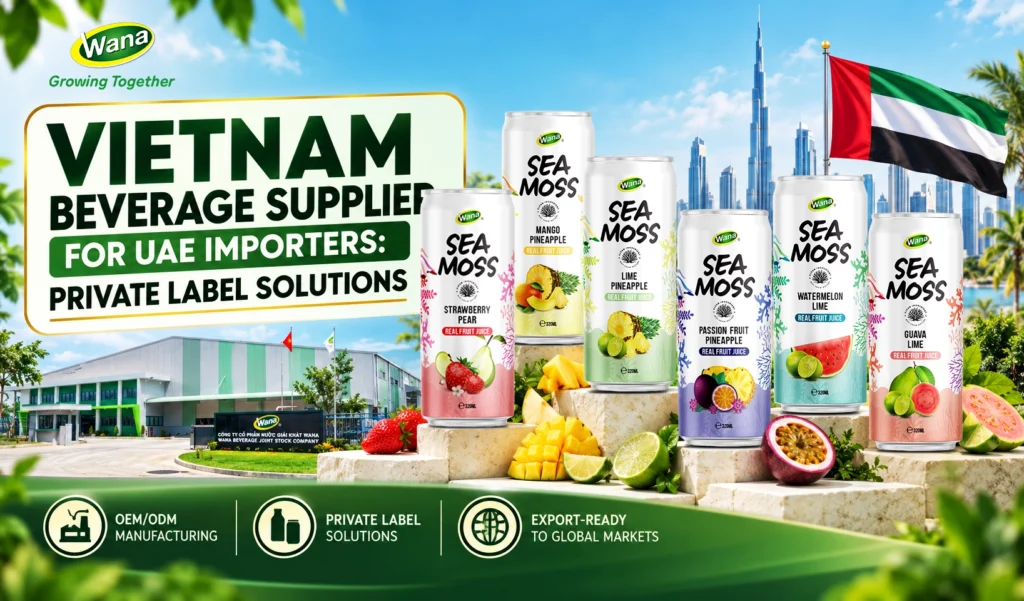
Why Source Beverages from Vietnam for the UAE Market?
Choosing the right Vietnam beverage supplier for UAE importers involves more than comparing product prices. Importers and distributors need to assess manufacturing capabilities, product consistency, customization options, minimum order quantities (MOQs), and export readiness to find a supplier that meets their business requirements.
Vietnam offers a range of beverage manufacturing options, from fruit juices and coconut water to sparkling and selected functional beverages. For UAE buyers looking to develop or expand their private label portfolios, working with a Vietnamese manufacturer can provide opportunities to explore different beverage categories, packaging formats, and OEM or ODM solutions.
Before selecting a supplier, buyers should evaluate its production capabilities, quality management systems, relevant certifications, and experience serving international markets. These factors help determine whether a manufacturer can support the project’s product specifications, commercial objectives, and applicable UAE import requirements.
Private Label Drinks for the UAE Market: Product Categories to Consider
Selecting the right beverage category is an important early step in developing a private label brand for the UAE market. Importers should consider their target consumers, retail or distribution channels, intended price positioning, product differentiation, and applicable regulatory requirements before finalizing a product concept.
The following beverage categories offer potential starting points for private label development, subject to market research and confirmation of manufacturing capabilities.
Fruit Juice and Fruit Juice Blends
Fruit juice is a versatile category for importers seeking products in familiar flavors or looking to develop a differentiated beverage range. Depending on the formulation and manufacturing capabilities, potential options include mango, pineapple, orange, guava, peach, apple, and mixed fruit juice.
Coconut Water and Tropical Beverages
Coconut water is another category to consider when developing a beverage portfolio with a tropical fruit focus. Importers may evaluate original coconut water or flavored variations, depending on product availability, target pricing, and the preferences of their intended customers.
Sparkling Fruit Drinks and Prebiotic Soda
Sparkling fruit drinks provide another option for brands seeking alternatives to conventional still beverages. Prebiotic soda may also be considered for projects targeting consumers interested in beverages with specific functional attributes.
Functional and Specialty Beverages
Functional and specialty beverages can include products such as protein shakes, aloe vera drinks, and other formulations designed around specific ingredients or product attributes.
These projects may require additional attention to formulation feasibility, ingredient sourcing, nutritional specifications, product stability, and the evidence needed to support marketing claims. Buyers should confirm whether the manufacturer has relevant experience and suitable production capabilities for the intended beverage.
How to Select the Right Beverage Category
Before requesting quotations, UAE importers can narrow their options by defining a few essential project requirements:
- Target channel: Supermarkets, convenience stores, foodservice, wholesale distribution, or other channels.
- Product concept: Beverage category, flavor profile, formulation requirements, and intended positioning.
- Packaging specifications: Preferred can or bottle format, size, label design, and case configuration.
- Commercial requirements: Estimated order volume, target cost, launch timeline, and expected reorder frequency.
- Compliance requirements: Applicable product registration, labeling, ingredient, and import documentation requirements.
A clear product brief helps manufacturers assess feasibility, identify suitable packaging options, and provide a more relevant quotation.
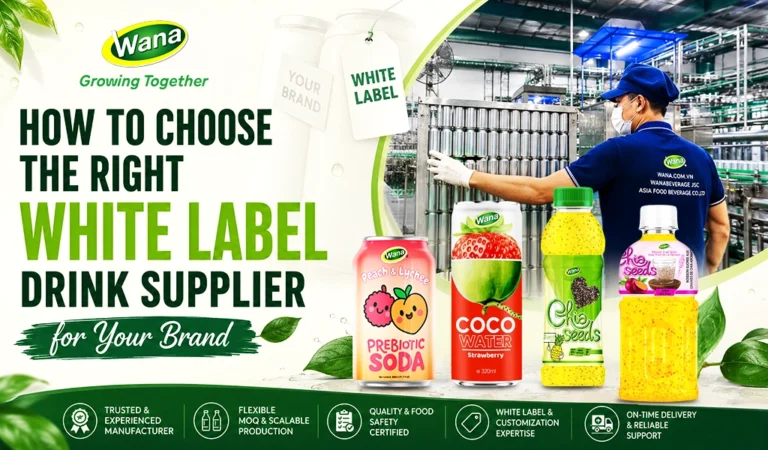
For businesses considering private label beverages from Vietnam, WANA Beverage offers OEM, ODM, and private label manufacturing services across beverage categories within its production capabilities. Importers can share their product concepts, preferred packaging, and estimated order quantities to discuss suitable options for their projects.
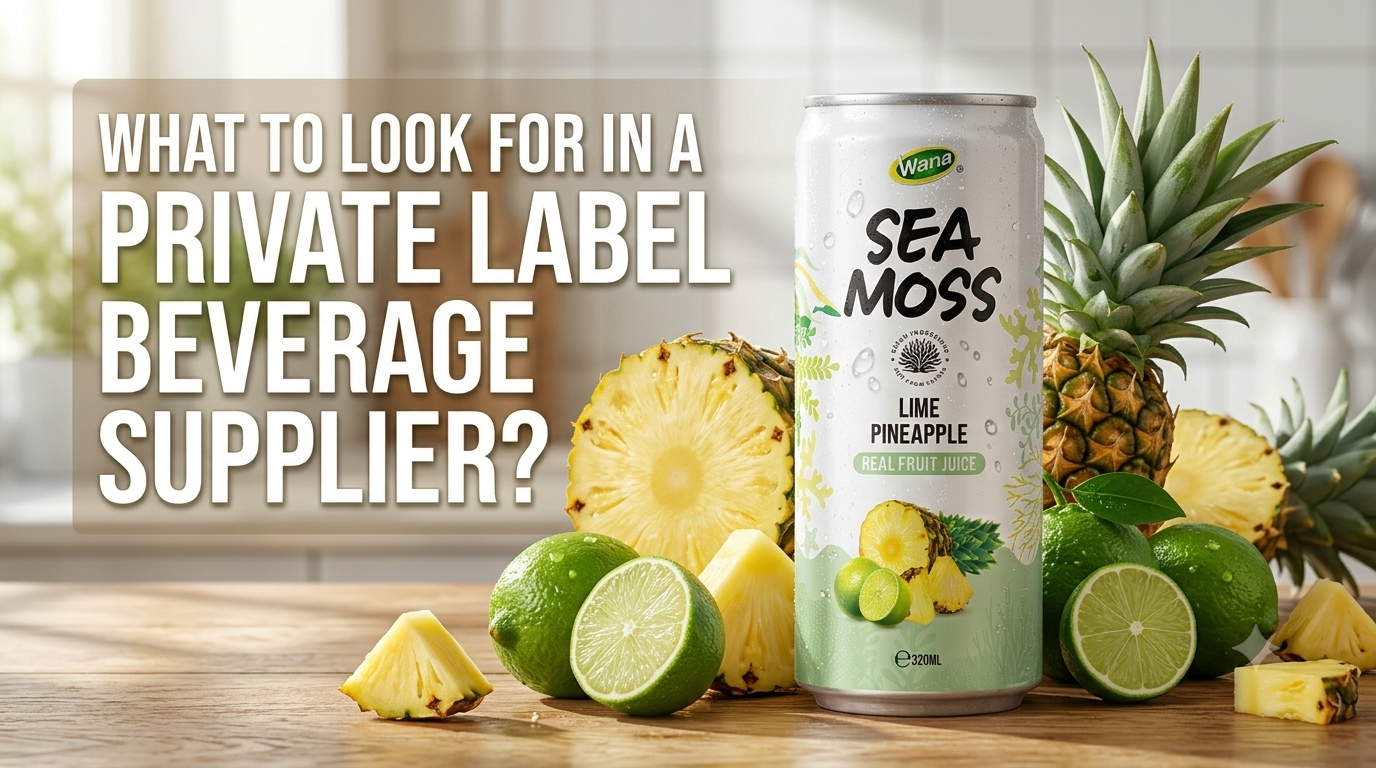
What to Look for in a Private Label Beverage Supplier
Choosing a private label beverage supplier involves more than comparing quotations. UAE importers should verify manufacturing capabilities, product quality, customization options, and export readiness before committing to an order.
Use the following checklist to evaluate potential suppliers and compare their suitability for your project.
Private Label Beverage Supplier Evaluation Checklist
- Manufacturing Capabilities
- Can the supplier manufacture your required beverage category and flavors?
- Are your preferred packaging formats and sizes supported by its production lines?
- Can the supplier accommodate your estimated order volume and future demand?
- MOQ, Pricing, and Payment Terms
- Is the MOQ clearly stated for each flavor, SKU, and packaging format?
- Does the quotation specify product specifications, packaging, and any additional charges?
- Are payment terms, production lead time, and quotation validity confirmed?
- Product Quality and Consistency
- Can the supplier provide product specifications and relevant test reports?
- Are quality control procedures and product traceability documented?
- Can you review samples and approve the final product before bulk production?
- Product Development and Approval
- Can the supplier assess the feasibility of your proposed formula?
- Are sample revisions and final product approval included in the agreed process?
- Are packaging artwork, specifications, and production requirements reviewed before bulk production?
- Certifications and Export Readiness
- Can the supplier provide valid, relevant certifications for the proposed facility and product?
- Does it have experience preparing export documentation for international shipments?
- Can the supplier support the product specifications and documents needed for your UAE import process?
- Communication and Project Management
- Is there a clear contact person for technical, commercial, and production discussions?
- Does the supplier communicate changes to costs, materials, or production schedules promptly?
- Are responsibilities for product approval, documentation, and shipment clearly agreed upon?
How to Use This Checklist
Before making a decision, request a quotation, product samples, relevant specifications, and supporting certification documents from each shortlisted supplier. Compare suppliers against the same product requirements and delivery terms to make a more informed sourcing decision.
For UAE imports, confirm applicable registration, labeling, and documentation requirements with your local importer or compliance partner before approving the final packaging and placing a commercial order.
Read more: 10 Questions Every Brand Should Ask Before Choosing a Discreet Beverage Manufacturer
Customization Options for Private Label Beverages
Private label manufacturing allows businesses to develop beverages that align with their brand identity, target customers, and distribution strategy. Depending on the manufacturer’s capabilities, several product elements can be customized.
| Product element | Customization options |
| Formulation | Ingredients, sweetness level, juice content, and other product specifications |
| Flavor | Existing flavors, flavor combinations, or new product concepts |
| Packaging format | Available cans, PET bottles, and other supported formats |
| Packaging size | Different capacities based on product and production-line compatibility |
| Branding and artwork | Brand logo, label design, colors, and product information |
| Secondary packaging | Multipacks, cartons, and case configurations for distribution |
Not every customization is available for every beverage or production line. Changes to formulations, packaging materials, or artwork may also affect MOQ, development time, and overall cost.
Before placing an order, buyers should confirm the final product specifications, approve samples and artwork where applicable, and ensure that the packaging and label meet the requirements of the intended market.
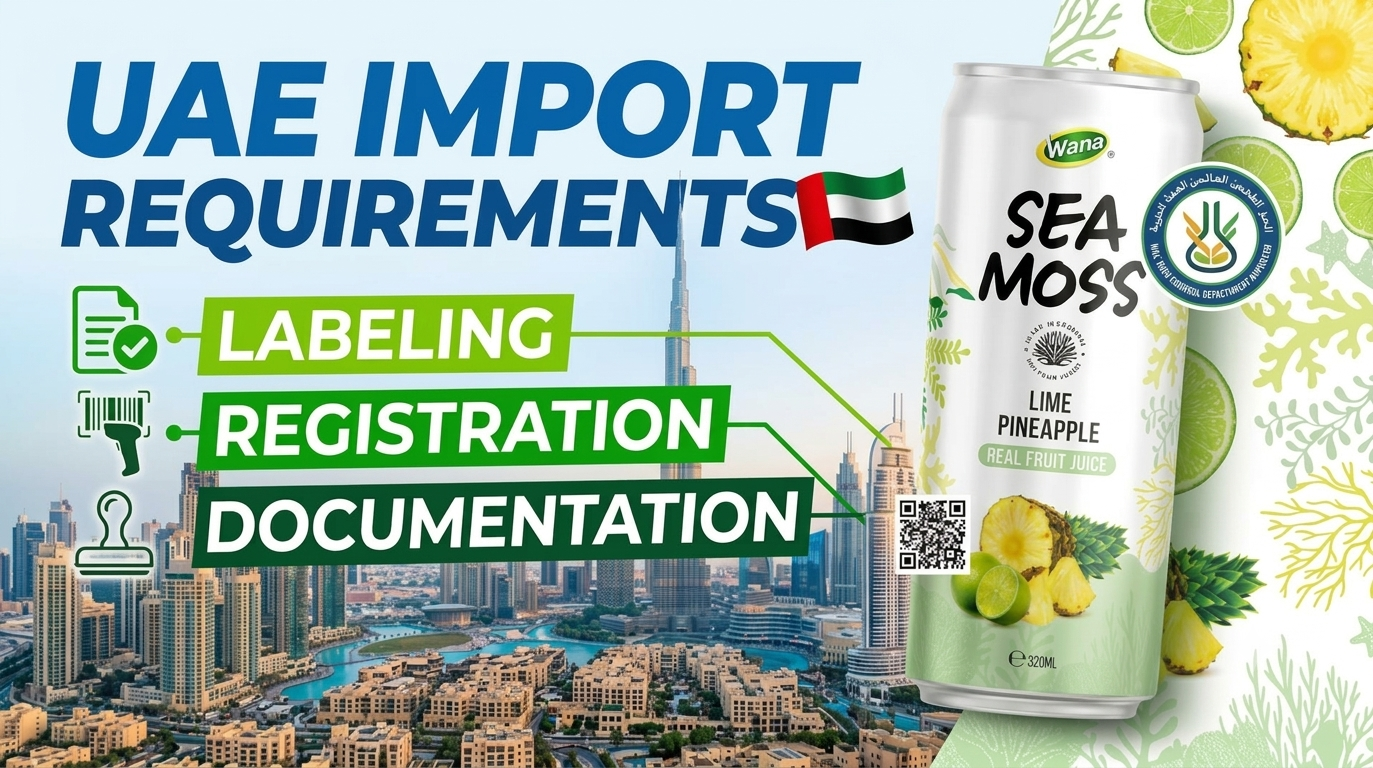
UAE Import Requirements: Labeling, Registration and Documentation
Before shipping private label beverages to the UAE, importers should confirm the applicable food registration, label approval, food safety, and import documentation requirements. The process may vary by product and destination emirate, so buyers should work with their local importer or compliance partner to verify the requirements before approving packaging or arranging shipment.
For example, Dubai Municipality provides services for food product registration and label assessment, as well as the release of imported food consignments for sale in the local market. Importers should consult the relevant authority for current requirements.
Product Registration and Food Safety
Importers should confirm the applicable product registration process and food safety requirements with the relevant UAE authorities or their authorized local representatives. Product composition, permitted ingredients, additives, and supporting documentation may need to be reviewed before commercial shipment.
Arabic Labeling and Product Information
Beverage labels should be reviewed against applicable UAE labeling rules, including Arabic-language requirements where applicable. Depending on the product, required information may include the product name, ingredients, nutritional information, net volume, production and expiry dates, storage instructions, and manufacturer or importer details.
Claims such as sugar-free, no added sugar, organic, or functional benefits should be verified against the product formulation and applicable regulations before artwork approval.
Certifications and Import Documentation
Depending on the product and shipment, buyers may need relevant certificates, product specifications, test reports, commercial invoices, packing lists, certificates of origin, and other supporting documents. Halal certification requirements should also be checked where applicable.
The importer and manufacturer should agree on document responsibilities before production and shipment. As requirements can change, UAE importers should verify the latest rules with the relevant authorities or a qualified local compliance partner before finalizing their orders.
MOQ, Lead Time and Cost Factors for Private Label Drinks
When sourcing private label beverages, UAE importers should evaluate minimum order quantities (MOQ), production lead times, and total costs before confirming an order. These factors vary depending on the product specifications, packaging requirements, and manufacturing process.
What Determines the MOQ?
The minimum order quantity depends on several factors, including:
- Beverage type and formulation: Different products may require different production processes and ingredient quantities.
- Number of flavors and SKUs: Each flavor or product variation may have a separate MOQ.
- Packaging format: Can sizes, bottle formats, printed materials, and customized packaging can affect order quantities.
- Production and material requirements: Equipment setup and minimum packaging material orders may influence the final MOQ.
Buyers should confirm the MOQ for each product and packaging format before finalizing their product portfolio.
What Affects Production Lead Time?
Production lead time depends on sample development and approval, ingredient and packaging availability, artwork approval, production scheduling, and quality checks. Customized formulations or packaging may require additional preparation time.
Importers should discuss their target launch dates with the manufacturer early in the process to allow sufficient time for product approval, production, and shipment arrangements.
What Influences Private Label Beverage Costs?
A private label beverage quotation typically depends on the formulation, ingredients, packaging materials, order volume, customization requirements, and any additional testing or documentation needs. Shipping arrangements and agreed trade terms also affect the overall landed cost.
To receive an accurate quotation, buyers should provide their preferred beverage category, flavors, packaging specifications, estimated order quantity, and destination market. Comparing quotations on the same product specifications and delivery terms helps importers evaluate suppliers more effectively.
From Product Concept to Commercial Production: The Private Label Process
Developing a private label beverage involves several stages, from defining the product concept to preparing the finished goods for shipment. A clear process helps buyers and manufacturers align product specifications, costs, and timelines before production begins.
Step 1: Define the Product Brief
Specify the beverage category, target market, flavor profile, packaging format, estimated order quantity, and intended brand positioning.
Step 2: Review Manufacturing Feasibility
The manufacturer evaluates the proposed formulation, available production capabilities, packaging options, MOQ, and estimated costs. Any technical or regulatory considerations should be identified at this stage.
Step 3: Develop and Approve Samples
Where product development is required, samples are prepared for evaluation. Buyers review the taste, appearance, and relevant product specifications before approving the final formulation.
Step 4: Confirm Packaging and Commercial Terms
Finalize the label artwork, packaging specifications, order quantity, quotation, payment terms, quality requirements, and estimated production schedule. Applicable market compliance requirements should be reviewed before commercial production.
Step 5: Production and Quality Control
Once the required approvals are complete, manufacturing proceeds according to the agreed specifications and quality procedures. Finished products undergo the applicable checks before release.
Step 6: Export and Shipment Coordination
The manufacturer and buyer coordinate export documentation, packing details, shipment arrangements, and agreed delivery terms. The importer should ensure that the necessary UAE import requirements are met before the goods arrive.
Following these steps helps reduce misunderstandings, avoid unnecessary revisions, and establish a clearer timeline for launching a private label beverage.
Why Partner with WANA Beverage?
WANA Beverage supports beverage brands, importers, distributors, and retailers through OEM, ODM, and private label manufacturing services in Vietnam. With a diverse product portfolio, multiple production lines, and experience serving international markets, WANA helps business customers explore beverage concepts and assess manufacturing options based on their commercial needs.
Diverse Beverage Portfolio and Customization
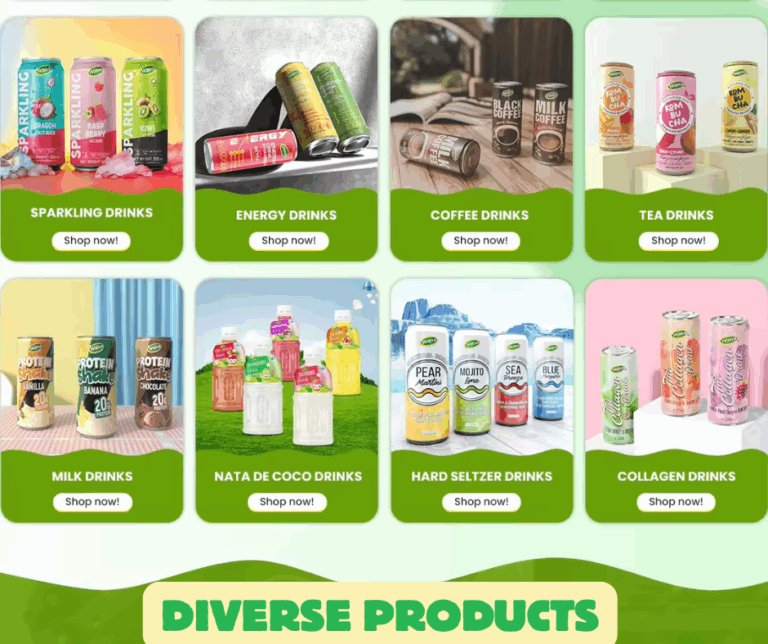
WANA offers a wide range of beverage categories, including fruit juices, coconut water, sparkling beverages, prebiotic soda, protein drinks, aloe vera drinks, and other beverage products. Buyers can discuss flavors, packaging formats, and branding requirements to develop products aligned with their target markets and business objectives.
Production Capacity to Support Growing Demand
WANA has 15 production lines to support different beverage categories and customer requirements, with a production and export capacity of up to 600 containers per month. This manufacturing scale helps WANA serve a range of B2B projects, from product launches to larger-volume orders, subject to production scheduling and project specifications.
Quality Management and Market-Specific Certifications
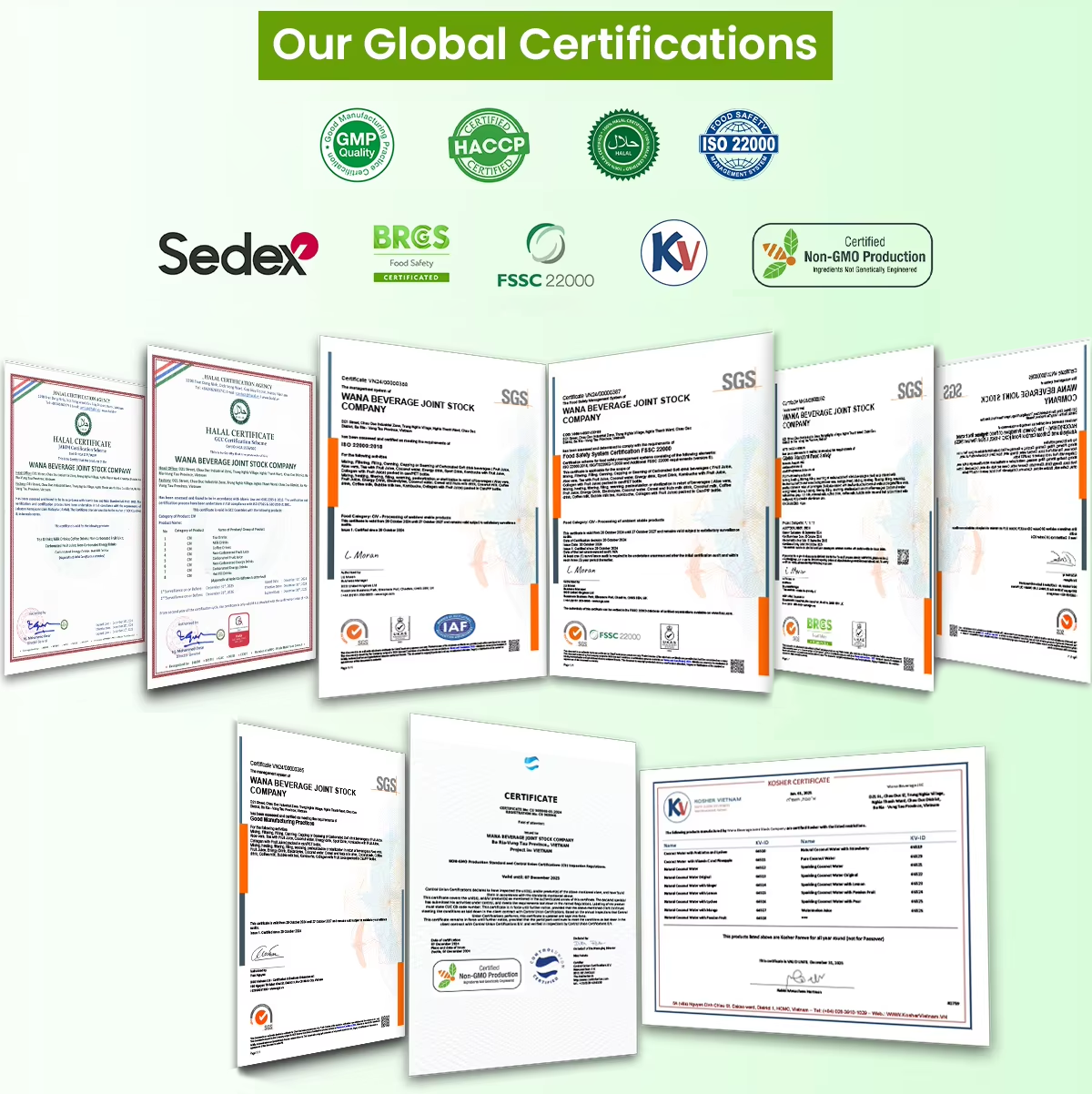
WANA works with quality management procedures throughout relevant production stages and holds or works with certifications relevant to different market requirements, including ISO 22000, Halal, and GMP,… where applicable. Buyers should confirm the validity, scope, and facility coverage of each certification, along with any product-specific requirements, before placing an order.
Experience in International Export Markets
WANA has exported beverages to more than 60 countries worldwide, serving business customers across different markets. For UAE-bound projects, importers can discuss product specifications, packaging and labeling requirements, and the documentation needed to support their import process. Final compliance requirements should be verified with the relevant UAE authorities or local import partners.
Support for International B2B Projects
From initial product discussions to production planning and export coordination, WANA works with buyers to clarify project requirements and assess manufacturing feasibility. The MOQ starts from one 20-foot container, while the typical production lead time is 30–45 days. Both depend on the beverage category, packaging format, and project specifications and should be confirmed for each order.
Planning to launch or expand your beverage brand in the UAE?
Share your beverage concept, preferred packaging, target flavors, and estimated order volume with WANA Beverage to discuss suitable OEM or private label manufacturing options.
Frequently Asked Questions
Can I order multiple beverage flavors under one private label project?
Yes, multiple flavors may be included in one project, depending on the manufacturer’s capabilities. MOQ is usually confirmed per SKU based on the formula, packaging format, and production requirements.
Can I use my own beverage formula and packaging design?
Yes, buyers can discuss using their existing formula and artwork with the manufacturer. The formula must be assessed for production feasibility, while artwork requires technical review and approval before printing.
How long does it take to develop a new private label beverage?
Sample development and commercial production have different timelines. The overall schedule depends on formula revisions, ingredient availability, packaging preparation, sample approval, and production planning.
Can I request beverage samples before placing a bulk order?
Yes, buyers can request samples to evaluate flavor, quality, and product suitability before confirming an order. Share your product preferences and destination market to confirm sample availability, preparation time, and shipping costs.
Who is responsible for product registration and import compliance in the UAE?
Responsibilities should be agreed upon between the manufacturer, importer, and distributor before production and shipment. UAE registration, labeling, and documentation requirements depend on the product and applicable regulations.
What information should I include in an RFQ for private label beverages?
Include the beverage category, flavors, packaging format and size, estimated order quantity, destination market, and target launch date. Any formula, certification, labeling, or technical requirements will also help the manufacturer prepare a more accurate quotation.
Conclusion
Finding the right Vietnam beverage supplier for UAE importers starts with clear product specifications, realistic order requirements, and a shared understanding of market compliance. With OEM and private label options, WANA Beverage works with buyers to explore suitable beverage concepts, packaging, and production plans.
Planning your next beverage project? Contact WANA Beverage to discuss your product requirements and request a quotation.