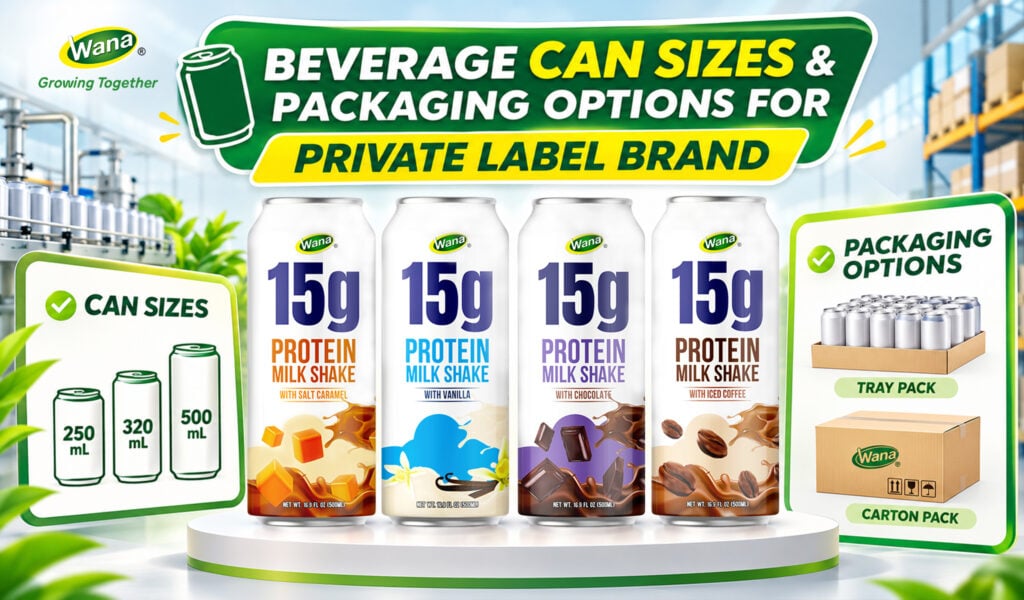
Choosing the right beverage can size is an important decision for private label brands. Can capacity influences serving size, product positioning, retail pricing, and packaging costs, while the overall format can shape how consumers perceive a drink on the shelf. For beverage brands, the goal is to find a balance between consumer preferences, market requirements, and production feasibility.
Common beverage can sizes include 250ml, 330ml, and 500ml, with other capacities available depending on the product, packaging supplier, and target market. Each offers different advantages for juice, energy drinks, sparkling beverages, and functional drinks. Understanding the differences between these beverage can sizes helps brands make informed packaging decisions before moving into product development and manufacturing.
What Are the Most Common Beverage Can Sizes?
Beverage can sizes vary according to the product category, serving occasion, and market preference. For private label brands, 250ml, 330ml, and 500ml cans are useful options to consider when developing a new canned beverage. Each capacity offers a different balance between portion size and consumer expectations.
250ml Beverage Cans
250ml beverage cans provide a compact serving size for energy drinks, juice, sparkling beverages, and selected functional drinks. This format may suit products designed for shorter consumption occasions or consumers who prefer smaller portions.
330ml Beverage Cans
330ml beverage cans are a familiar single-serve format for soft drinks, juice, sparkling beverages, and energy drinks. They can work well for brands looking for a versatile serving size across retail and convenience channels.
500ml Beverage Cans
500ml beverage cans offer a larger serving for energy drinks, sparkling beverages, flavored drinks, and other suitable products. This format may appeal to consumers who prefer more beverage per can and can support a different product positioning from smaller formats.
Other Beverage Can Capacities
Other capacities may be suitable for specific beverage concepts or regional preferences. Before selecting an alternative size, consider the intended serving occasion and how the volume fits your product’s role in the market.
The most suitable capacity is the one that matches the beverage, expected serving size, and consumer demand. Can shape and packaging specifications are separate decisions that should be evaluated alongside capacity.
| Can size | Common applications | Potential commercial advantages | Key considerations |
| 250ml | Energy drinks, juice, selected functional beverages | Compact serving and convenient positioning | Unit cost, serving expectations, availability |
| 330ml | Soft drinks, sparkling beverages, juice and energy drinks | Familiar single-serve format across many markets | Target-market preferences, pricing and line compatibility |
| 500ml | Energy drinks, sparkling beverages, flavored drinks and other suitable beverages | Larger serving size for different consumption occasions | Product category, target-market preferences, unit cost and packaging compatibility |
| Other capacities | Varies by product and market | Opportunities to match specific serving occasions | Supplier availability, dimensions, MOQ and distribution needs |
Standard, Slim and Sleek Cans: What’s the Difference?
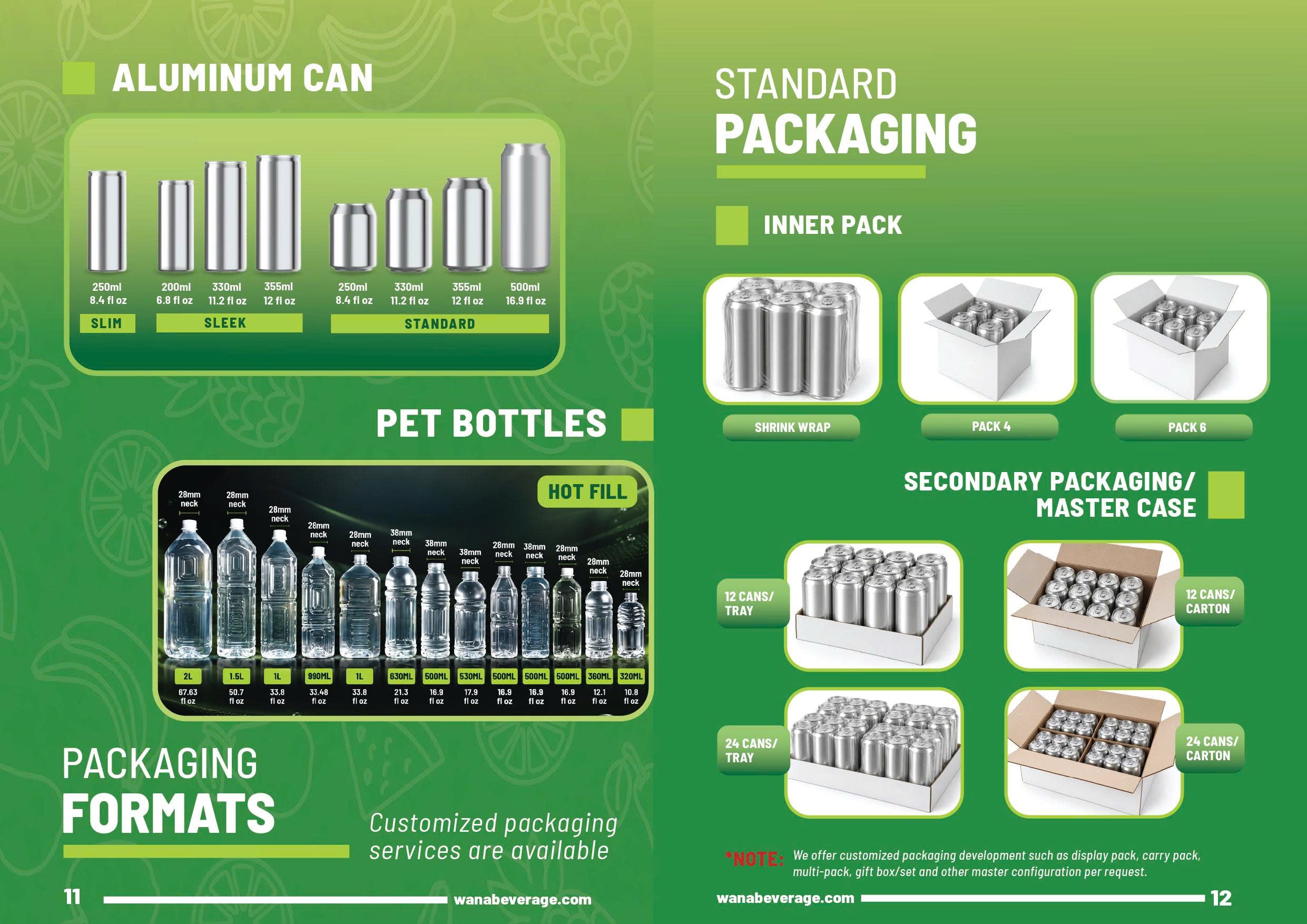
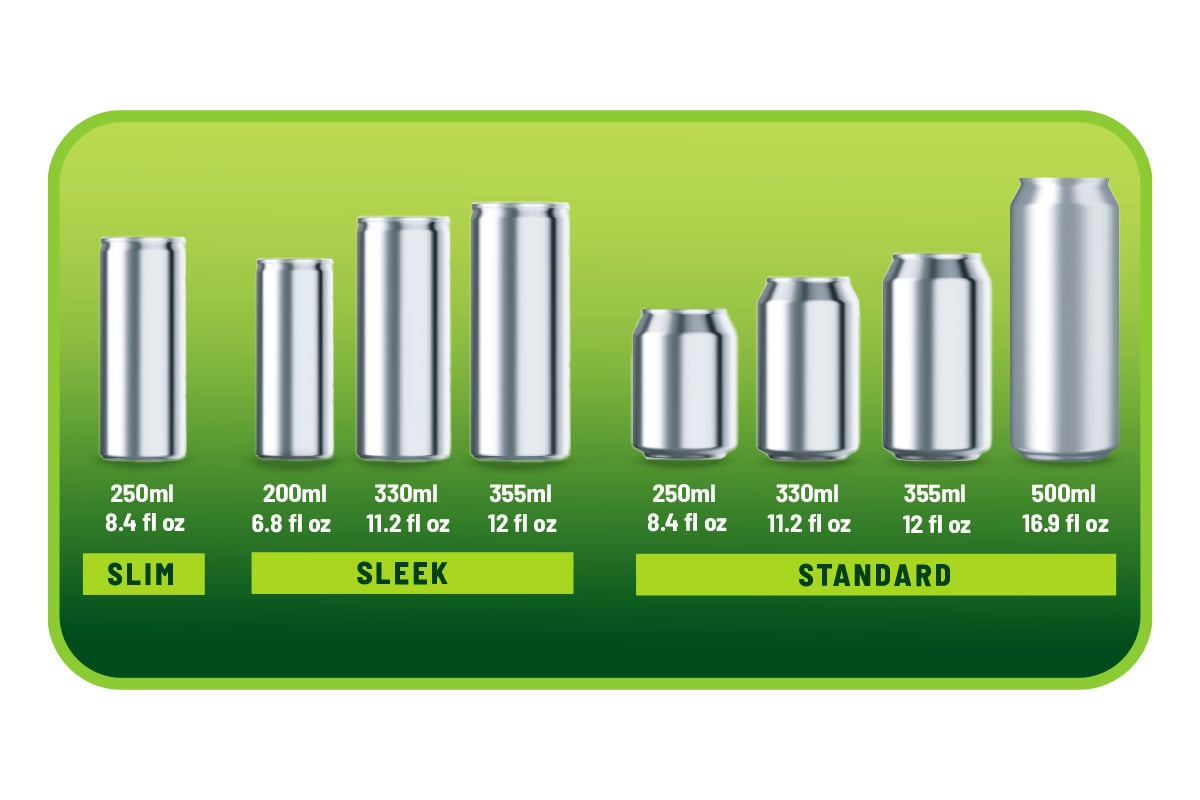
Beverage can capacity describes how much liquid a can holds, while its shape determines its proportions and visual appearance. Standard, slim, and sleek cans can create different impressions on the shelf, even when used for similar beverage categories.
Standard Aluminum Beverage Cans
This cans have a familiar, wider profile that works across many mainstream beverage categories. Their conventional appearance may suit brands that want packaging consumers can easily recognize.
Slim Cans for Modern Beverage Brands
Slim cans have a narrower, more elongated profile. Their distinctive silhouette can help create a contemporary look for brands seeking a different visual identity from conventional beverage packaging.
Sleek Cans for Premium Beverage Positioning
Sleek cans combine a taller profile with a slender appearance. This shape can support a more refined presentation for beverage brands looking to establish a premium visual identity.
The main distinction is in the proportions: standard cans have a conventional profile, slim cans are narrower, and sleek cans are taller and more slender. Exact dimensions and naming conventions can vary by supplier, so confirm the specifications of the format you intend to use.
How to Choose the Right Beverage Can Size for Your Product
Choosing a beverage can size involves more than deciding how much liquid to put in each can. The format should support your product concept, fit the way customers buy and consume the beverage, and make commercial sense for your business.
Match the Can Size to Your Product Concept
Start with the intended serving occasion. A compact format may fit a product designed for smaller portions, while a larger can may suit beverages intended to be consumed over a longer period. Consider the drink’s flavor profile, formulation, and intended use before settling on a capacity.
Evaluate Your Target Market and Sales Channels
Review comparable products in your destination market to understand common serving sizes, retail price points, and consumer expectations. Also consider where the beverage will be sold, whether through supermarkets, convenience stores, food service, or online channels. These factors can influence which format makes sense for your launch.
Assess the Commercial Feasibility
Compare the expected selling price with the cost of the complete package, including the can, decoration, secondary packaging, and logistics. A format that looks attractive may not be commercially practical if its cost or availability does not fit your business plan.
Use these factors to shortlist suitable options before confirming a final specification with your manufacturer. This approach helps connect consumer appeal with the practical needs of launching and selling the product.
Aluminum Can Beverage Packaging: What Should Buyers Know?
Aluminum can beverage packaging combines a lightweight container with a surface that can support a wide range of branding designs. However, the performance of the package depends on more than the aluminum itself. Material specifications, internal coatings, closure integrity, and the beverage’s processing requirements all need to work together.
Benefits of Aluminum Beverage Packaging
Aluminum cans block light and, when properly sealed, provide a barrier against external exposure. They are also lightweight, portable, and convenient for chilled, single-serve beverages.
Aluminum is recyclable, but the environmental benefits of a specific package depend on factors such as recycled content, collection systems, and local recycling rates. Brands should review the conditions in their destination markets before making sustainability claims.
Can Printing, Labels and Branding Options
Branding options depend on the can supplier, format, order volume, and production setup. Direct printing can create a consistent design across the can surface, while labels or other decoration methods may be available for selected formats.
Before approving artwork, confirm the printable area, color specifications, and placement of required product information. Changes after artwork approval may affect packaging costs and procurement schedules.
Internal Lining and Product Compatibility
Beverage cans generally use an internal coating to separate the product from the metal. The coating must be suitable for the specific formulation and intended conditions of use, particularly for acidic beverages such as many fruit drinks.
The can, end, and closure must also suit the filling and processing method. Carbonated products require packaging and seaming systems designed for the relevant pressure conditions, while beverages undergoing heat treatment need a validated process appropriate to the product and package.
Shelf life should be established through appropriate product and packaging validation. Aluminum packaging alone does not guarantee a specific shelf life; formulation, processing, closure integrity, and storage conditions also matter.
Beverage Cans for Private Label: What to Confirm With Your Manufacturer
Once you have shortlisted a can size and packaging format, the next step is to confirm whether a manufacturer can deliver the complete beverage according to your specifications. A clear product brief helps both parties assess feasibility, establish expectations, and prepare an accurate quotation.
Can Availability and Minimum Order Quantity
Confirm that the manufacturer can source your preferred can size, shape, and decoration method. Availability may differ between standard, slim, and sleek formats, and packaging suppliers may set separate minimum quantities for certain specifications.
Ask for the MOQ for the complete beverage order, any packaging-specific minimums, unit pricing, and secondary packaging options. These details help you understand the order commitment before moving forward.
Formulation, Customization and Artwork Approval
Clarify which parts of the product can be customized, including the beverage formulation, flavor, ingredients, can design, and secondary packaging. Confirm who is responsible for preparing and checking the artwork, reviewing technical specifications, and approving the final sample.
Agreeing on these details early can reduce revision cycles and help ensure that the approved product matches the commercial production order.
Production Lead Time, Quality and Export Requirements
Ask the manufacturer to outline the expected timeline for sample approval, packaging procurement, production, quality checks, and shipment preparation. The schedule may change if ingredients or packaging are unavailable or if the product specification changes after approval.
You should also review the manufacturer’s quality-control procedures, traceability systems, relevant certifications, and product-specific testing capabilities. Verify that any claimed certification applies to the actual production facility and relevant scope.
Finally, establish the documentation and labeling requirements for the destination market, including ingredient declarations, nutrition information, language requirements, and applicable packaging regulations.
Before confirming the order, make sure the product specification, MOQ, quotation, approval process, lead time, quality expectations, and export documentation are clearly agreed upon.
Develop Your Private Label Beverage With WANA Beverage
Choosing the right can size and packaging format is an important step in developing a private label beverage, but turning that choice into a market-ready product also requires the right manufacturing partner. WANA Beverage is a Vietnam-based OEM, ODM, and private label beverage manufacturer supporting businesses that want to develop and produce beverages for their target markets.
From juice and coconut water to energy drinks and other functional beverages, WANA works with beverage brands, importers, and distributors to explore product specifications, flavor development, packaging options, and production requirements. The appropriate can size and format depend on the beverage category, packaging availability, and compatibility with the selected production line.
For buyers planning a new canned beverage, it is important to confirm the available can formats, customization options, and order requirements early in the project. WANA’s standard minimum order quantity is one 20-foot container, while lead time is typically around 30–45 days, depending on ingredient and packaging availability, sample approval, and production scheduling. Specific can formats and project requirements should be confirmed with the team before finalizing your product brief.
Whether you are launching a new beverage brand or expanding an existing product range, discussing your requirements early can help establish a realistic path from concept to commercial production.
Discuss Your Beverage Project with WANA Beverage to explore product development, packaging feasibility, and manufacturing options for your target market.
Frequently Asked Questions
Which beverage can size is best: 250ml, 330ml, or 500ml?
The right can size depends on your beverage category, target consumers, retail price, and intended serving occasion. A 250ml can may suit compact servings, while 330ml offers a familiar single-serve format. A 500ml can provides a larger serving for suitable beverage products. Compare consumer preferences, packaging costs, and manufacturing feasibility in your target market before deciding.
Can I customize aluminum cans for a private label beverage?
Customization options depend on the manufacturer, can supplier, and selected packaging format. Private label projects may involve different beverage formulations, flavors, can sizes, artwork, and secondary packaging. Confirm available can specifications, printing or decoration methods, minimum order quantities, and artwork approval requirements before proceeding with production.
What affects the MOQ for private label beverage cans?
MOQ can depend on the beverage type, production line, can format, packaging supplier requirements, ingredients, and degree of customization. Printed packaging may have additional minimum order requirements. At WANA Beverage, the standard MOQ is one 20-foot container. Buyers should confirm the applicable quantity and packaging requirements for their specific project.
How long does it take to manufacture a private label canned drink?
Production lead time is typically around 30–45 days, depending on the project’s readiness, ingredient and packaging procurement, sample and artwork approval, and production schedule. Projects requiring new formulation development or specialized packaging may need additional preparation time. Confirm the expected timeline with the manufacturer once the product specifications and order requirements are established.