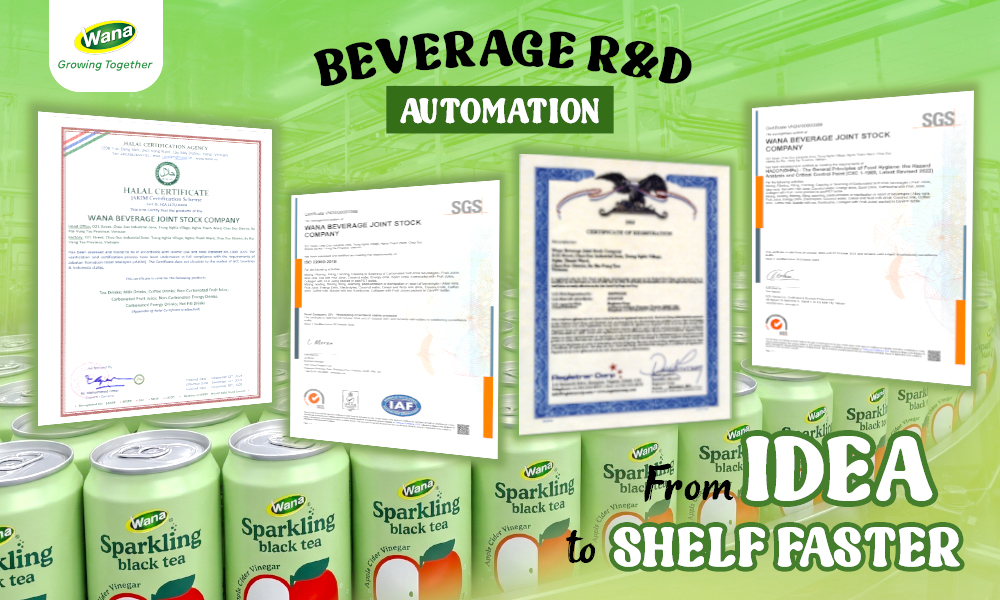
Why Speed Matters in Beverage Success
In today’s fast-paced beverage industry, innovation is racing ahead—yet the process of bringing new products to market often lags. Traditionally, it can take 12 to 18 months to launch a new drink, moving through stages like concept ideation, formulation trials, stability testing, regulatory checks, and production validation. While this timeline may have once been sufficient, it now feels outdated, putting brands at a disadvantage in a market where consumer preferences change in the blink of an eye.
This used to be okay. Now it is too slow. People’s tastes are changing quickly, and if you are not fast, you will miss out. Trends can become popular overnight. New brands are coming out all the time. If you miss the time to launch your product, you will lose sales and opportunities.
The problem is not that people are not creative or smart. It is just that the way we do things is not very efficient.
That is where automation comes in. It is not about replacing the people who make our drinks. It’s about making the process faster and better. It helps us avoid trying a lot of things that will not work. It makes sure that our drinks are good from the start.
The Real Cost of Slow Development
When you take a long time to develop a product, it can cost you a lot of money. Imagine you want to launch a summer drink. If you are late, you will miss the summer season. You will not make as much money. This can also make it harder to get your product into stores. You will have to spend more money on marketing.
When development takes a long it’s can be expensive. You might have to pay for:
- More laboratory tests
- Ingredients that you do not use
- Multiple test runs
- Delayed launches
- Missing out on current trends
Studies suggest that 30–50% of beverage formulations face reformulation during scale-up, often because early testing doesn’t reflect what happens in real-world manufacturing. As development cycles stretch out, innovation becomes more of a gamble, dissuading brands from taking the risks necessary for growth.
Where Traditional R&D Hits a Wall
To fully appreciate how automation can help, it’s important to recognize the challenges in traditional workflows.
There are a lot of challenges when you are developing a product.
- When you are coming up with ideas, you might not have data.
- When you are testing recipes, you might have to try many different versions.
- When you are checking if the drink is safe, you might find problems later.
- When you are making the drink on a scale, the recipe might not work as well.
- When you are keeping track of everything, you might have to do a lot of paperwork
A big problem is that what works in a test might not work when you make the drink on a bigger scale. This can cause a lot of problems. It can make it hard to predict what will happen.
This disconnect can force teams into a reactive mindset rather than fostering a predictive approach to development.
Understanding Beverage R&D Automation Today
Many people think that beverage R&D automation means machines making drinks on their own. In truth, it’s all about using integrated systems to make better decisions throughout the development journey.
Modern automation uses:
- Big databases of ingredients and recipes
- Special tools to predict how things will work
- Computer simulations
- Reporting and tracking
- Analysis of how feasible it’s to make the drink
Instead of replacing the expertise of human formulators, automation enhances their capabilities. It enables teams to simulate various ideas digitally before moving into physical trials, saving both time and resources.
For readers interested in the science behind predictive flavor modeling, our article on AI Taste Prediction: Transforming Beverage Innovation explores how machine learning evaluates flavor outcomes
Automation builds on those predictive capabilities and applies them to operational execution.
What Is Beverage R&D Automation?
Beverage R&D automation refers to the use of digital tools, data, AI-assisted technologies, and automated workflows to streamline the product development process. Instead of relying entirely on manual research and repeated trial-and-error, R&D teams can use technology to analyze data, evaluate formulations, track testing results, and identify potential issues earlier.
The goal is not to replace beverage R&D professionals. Rather, automation helps teams make faster, more data-informed decisions while reducing repetitive work. When connected with manufacturing capabilities, it can also help move a beverage from initial concept to commercial production more efficiently.
What Can Beverage R&D Automation Actually Automate?
Market & Consumer Data Analysis
Digital tools can analyze consumer preferences, market trends, flavor popularity, and product data to help R&D teams identify promising product concepts. This allows brands to develop beverages based on market insights rather than relying solely on assumptions.
AI-Assisted Formula Development
AI-assisted tools can help evaluate ingredient combinations, nutritional targets, and formulation parameters. R&D professionals can use these insights to identify potential formulations and reduce unnecessary trial-and-error during the development process.
Prototype Testing
Digital systems can help organize prototype information, record test results, and compare different formulations. This makes it easier for R&D teams to track changes and determine which prototypes require further development.
Scale-Up Simulation
A formula that works in the laboratory may behave differently during commercial production. Data-driven tools can help identify potential manufacturing challenges earlier by evaluating factors such as ingredient behavior, processing conditions, and production parameters.
R&D Documentation
Automation can centralize formulation records, testing results, specifications, and product development data. A structured digital workflow makes information easier to track, update, and transfer between R&D, quality control, production, and other teams.
The Automated Workflow: From Idea to Market
When applied thoughtfully, automation can add real value throughout the entire development stage of a product.
Step 1 — Analyzing Market and Flavor Data
We start by looking at data from just guessing. We look at what has worked, what ingredients are popular, and what people are currently buying. This helps us come up with ideas that’re more likely to work.
Step 2 — AI-Assisted Formula Creation
We use tools to help us come up with recipes. These tools can suggest what ingredients to use and how much of each to use. This means we do not have to try many different versions, which saves time.
Step 3 — Fast Tracking Lab Validation
Automation helps us decide which recipes to test. We can focus on the ones that’re most likely to work, which means we do not have to do as many tests.
Step 4 — Scale-Up Simulation
One of the things about automation is that it can predict problems before they happen. We can use computer simulations to see if the recipe will work when we make it on a scale.
By using automation, companies can get their products to market faster, reduce waste, and make drinks. In an industry that’s all about being new and different, automation can be a big help.
Step 5 — Manufacturing Integration
The people who develop the recipe must work closely with the people who make the drink.
When we work together, it is easier to get the drink from the test stage to the market. We can make sure that everything works smoothly and we can avoid problems.
Traditional R&D vs. Automated R&D
| Development Stage | Traditional R&D | Automated R&D |
|---|---|---|
| Market Research | Manual research and trend monitoring | Data-assisted consumer and market analysis |
| Formula Development | Multiple trial-and-error cycles | AI-assisted formulation and data-driven evaluation |
| Prototype Testing | Manual testing and record keeping | Digital tracking and comparison of test results |
| Documentation | Manual records and separate files | Centralized digital formulation and testing data |
| Scale-Up | Manufacturing issues may be identified later | Earlier assessment of production feasibility |
| Decision-Making | Primarily based on experience and manual analysis | Combines R&D expertise with data-driven insights |
What Does R&D Automation Mean for Beverage Brands?
Faster Product Development
R&D automation can streamline research, formulation, testing, and documentation, helping beverage brands move from an initial concept to a market-ready product more efficiently.
Fewer Prototype Trials
Data-driven tools can help R&D teams identify promising formulations earlier, reducing unnecessary trial-and-error and allowing resources to be focused on the most viable prototypes.
Better Scale-Up
Connecting R&D data with manufacturing capabilities helps identify potential production challenges earlier, making the transition from laboratory samples to commercial-scale production more predictable.
Improved Consistency
Standardized digital workflows and centralized product data can help maintain consistency across formulations, testing, and production batches, particularly as order volumes increase.
Faster Response to Trends
With access to market and consumer data, brands can identify emerging preferences and develop new flavors, functional beverages, or product concepts more quickly.
How Automation Cuts Down on Time-to-Market (With Real Examples)
While the actual timeline can vary depending on the product, companies that embrace automated workflows often share impressive results, such as:
- Development timelines slashed from 14–18 months down to 6–9 months.
- A reduction in prototype revisions by 30–50%.
- Fewer challenges during scale-up reformulations.
- Quicker preparation of regulatory documents.
All of these benefits come from catching problems and avoiding wasted time. Automation helps us focus on making sure the drink is good, from the start of just fixing problems as they come up.
A Real Example: Launching a Functional Beverage
Let us take a hypothetical startup that is creating a functional beverage to show the difference between traditional and automated development paths:
To illustrate the difference, consider a hypothetical functional beverage startup.
Traditional Development Path
- Concept validation: 2 months
- Formulation trials: 6 months
- Stability testing adjustments: 3 months
- Scale-up corrections: 3–4 months
Total timeline: ~14–15 months
Automated R&D Workflow
- Data-guided concept validation: 3 weeks
- Optimized formulation testing: 3 months
- Early production simulation: parallel testing
- Smooth scale-up integration: minimal reformulation
Total timeline: ~7–9 months
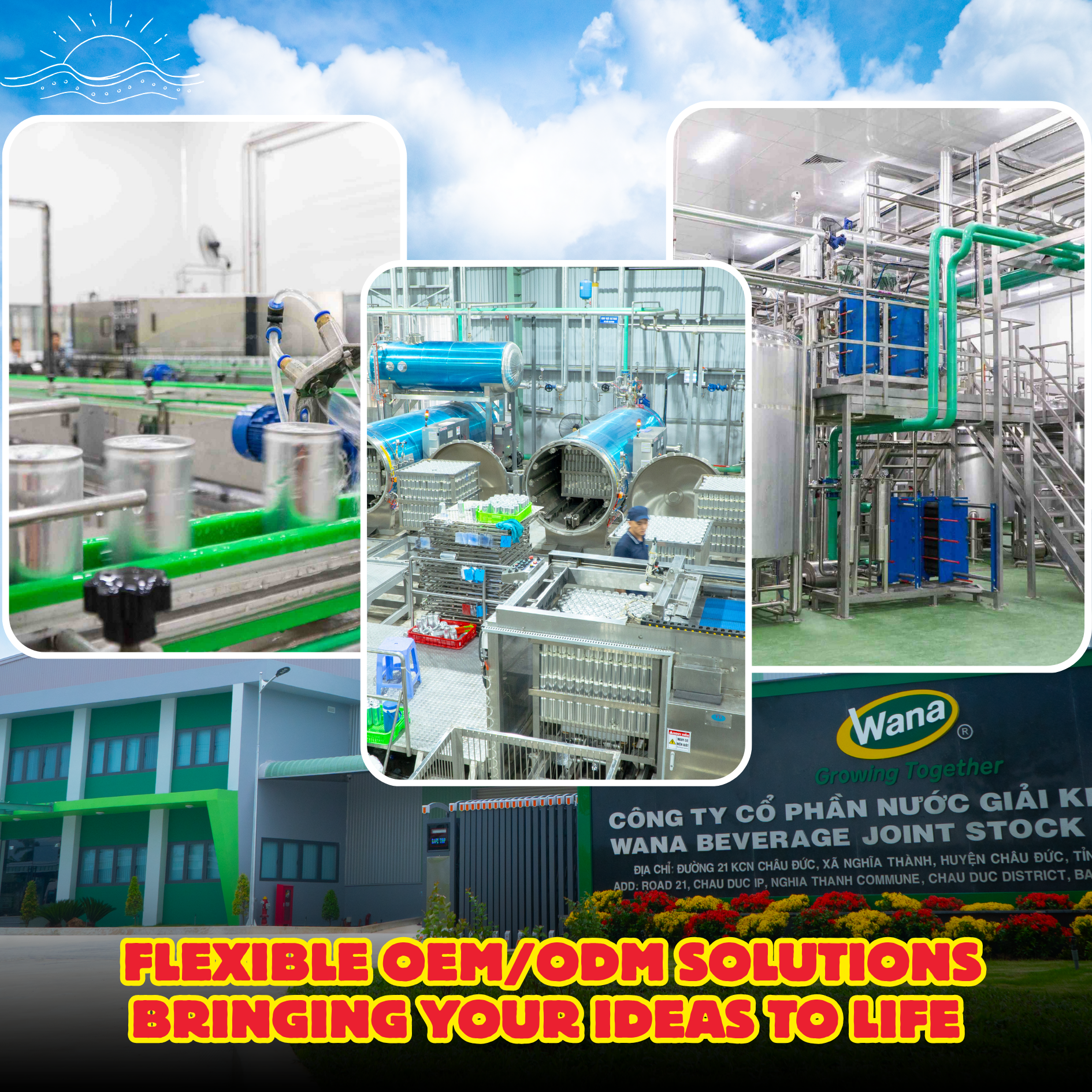
Why Automation Needs a Connection to Manufacturing
Simply automating processes will not fix development issues if we do not think about the practical realities of production.
Many beverage projects have problems during commercialization because formulas are made for lab conditions, not manufacturing environments.
Effective automation needs to connect:
- formulation design
- ingredient sourcing
- processing conditions
- packaging compatibility
When the manufacturing team has a say in R&D early on, brands can sidestep costly redesigns later in the process.
This integration is what sets successful product launches apart from those that face delays.
Questions Beverage Brands Should Ask Before Automating R&D

Before jumping into automation, brands should take a critical look at their readiness.
Here are some questions to ponder:
- Is our formulation data organized and easy to access?
- Are we designing our products to be scalable from the beginning?
- Can our manufacturing partner handle changes?
- Do we have an understanding of our target consumer?
- Are we thinking about requirements early on?
Answering these questions helps ensure that automation enhances productivity rather than complicating matters.
Actionable Steps: How to Speed Up Your Beverage Development Timeline
To start making improvements, brands can do the following:
1. Centralize Development Data
Keep all formulation results, ingredient performance, and testing outcomes in one system that’s easy to access.
2. Define Product Success Metrics Early
Set clear goals for taste, nutrition, and shelf life before diving into formulation.
3. Validate Ingredients for Production Conditions
Check compatibility instead of waiting until after formulation approval.
4. Reduce Prototype Quantity, Increase Prototype Quality
Use predictive tools to guide experimentation.
5. Collaborate With Scalable Manufacturing Partners
Align R&D decisions with production capabilities from the start.
Adopting these steps can dramatically minimize inefficiencies in development.
Industry Outlook: Faster Innovation Without Increasing Risk
As beverage categories become more diverse. From drinks to plant-based options. The complexity of development will increase. Fortunately, automation can help companies navigate this complexity without making timelines
Rather than replacing human insight, automated R&D systems allow teams to concentrate on creativity while technology handles repetitive analysis and validation.
The future of beverage innovation seems to favor brands that combine creativity with operational efficiency.
Greater Speed in Innovation Through Integration
In a world full of beverage innovation, speed is not about working harder or doing more experiments. It is about making systems that connect data, formulation, and manufacturing into one workflow.
Beverage R&D automation empowers brands to reduce uncertainty, shorten timelines, and confidently bring products to market.
For those who want innovation, the goal is not just to create new ideas. It is to make sure those ideas can go smoothly from concept to commercial production.
In today’s market, the brands that hit the shelves first are often the ones that stick in consumers’ minds.
👉Looking to shorten your product development timeline?
Connect with our team to explore smarter, faster beverage R&D solutions.