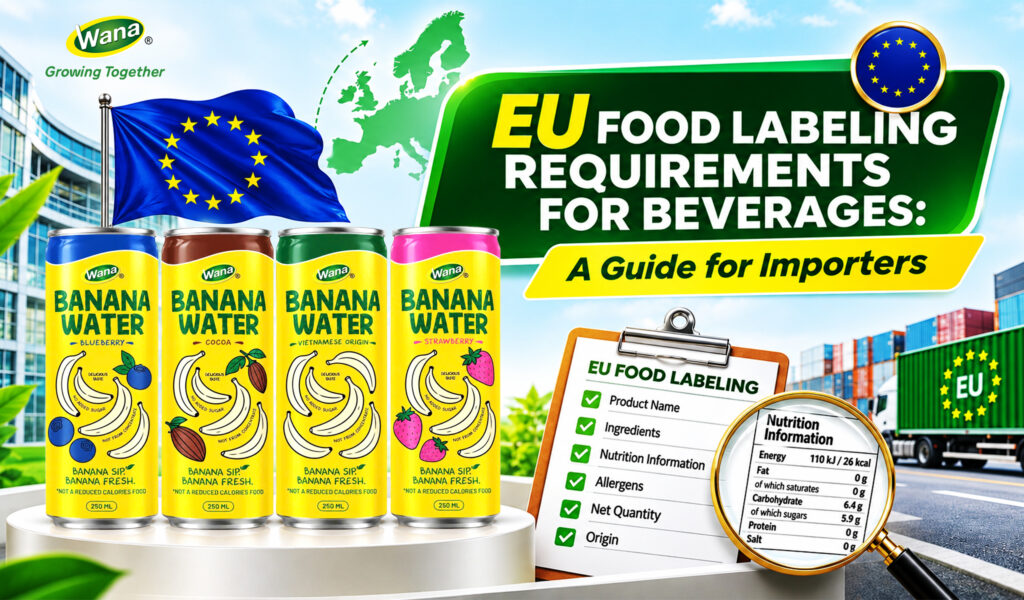
Entering the European Union (EU) beverage market requires more than a competitive product and attractive packaging. Importers and private label brands must also ensure that product labels meet applicable EU food labeling requirements before products reach consumers. Missing ingredient information, incorrect product descriptions, or inadequate language and nutrition details can lead to label revisions, additional costs, and delays in product launches.
Understanding these requirements early helps beverage buyers make informed sourcing decisions and avoid unnecessary complications during product development. This guide covers the key EU food labeling requirements for beverages, essential label information, specific considerations under EU import requirements for juice, and practical steps to review packaging and label artwork before mass production.
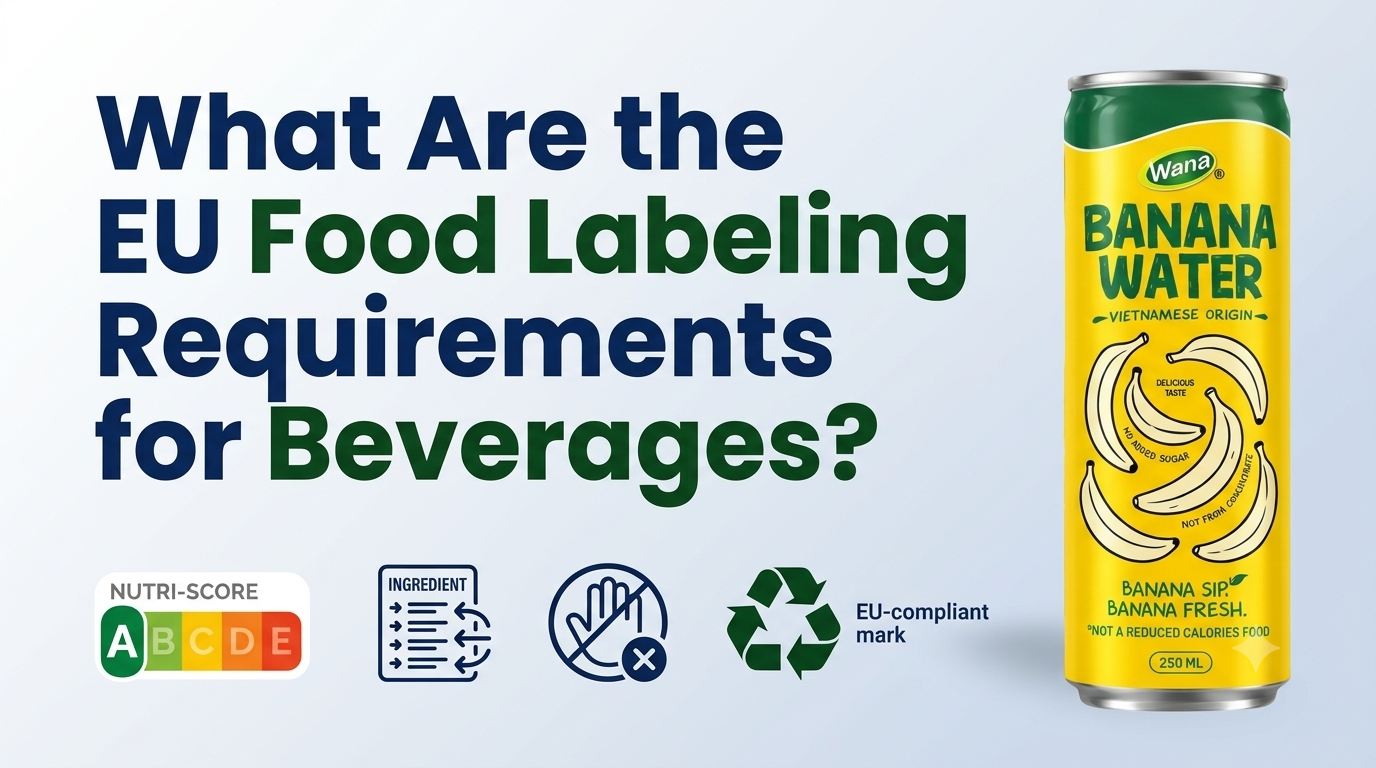
What Are the EU Food Labeling Requirements for Beverages?
The Main EU Regulation for Beverage Labeling
The primary legal framework for EU food labeling requirements for beverages is Regulation (EU) No 1169/2011 on the provision of food information to consumers. It establishes general rules for presenting food information, helping consumers make informed choices while ensuring that labels are accurate, clear, and not misleading.
For most prepacked beverages sold in the EU, the regulation covers essential information such as the product name, ingredient list, allergen declarations, net quantity, date marking, storage instructions, and nutrition declaration, subject to applicable exemptions. Importers and beverage brands should review these requirements during product development rather than waiting until packaging artwork is finalized.
Which Beverages Are Covered by EU Food Labeling Rules?
The general rules apply to a wide range of prepackaged beverages, including fruit juices, coconut water, aloe vera drinks, energy drinks, and other soft drinks. However, certain product categories are also subject to specific EU legislation. For example, fruit juices and similar products are governed by additional rules concerning product definitions, composition, and permitted names.
This distinction matters for importers sourcing products from international manufacturers. A label that accurately describes a beverage in one market may require adjustments to meet EU requirements, particularly when the product name, ingredients, or nutrition claims are regulated.
General EU Rules vs. Country-Specific Requirements
Although EU legislation harmonizes many food labeling requirements, some details depend on the destination country. Mandatory food information must appear in a language easily understood by consumers in the market where the product is sold, and individual member states may require one or more official EU languages.
Importers should therefore confirm destination-market requirements before approving a label for production. When distributing the same beverage across several EU countries, multilingual packaging or market-specific labels may be necessary.
Mandatory Label Information for Packaged Beverages in the EU
Before importing packaged beverages into the EU, buyers should check that all applicable mandatory information is included on the product label. Under Regulation (EU) No 1169/2011, these requirements help consumers understand what a beverage contains, how much they are purchasing, and how to store or use the product safely.
The exact requirements depend on the product category and any applicable exemptions or additional legislation. The following are key elements importers should review before approving packaging artwork.
Product Name and Ingredient List
The product name must accurately identify the beverage and should not mislead consumers about its nature or characteristics. The ingredient list generally presents ingredients in descending order by weight as used in manufacturing. Product names should also comply with any specific legal definitions that apply to the category.
For example, a fruit juice, fruit nectar, and fruit-flavored drink may have different compositions and labeling requirements. Buyers should confirm that the proposed product name matches the final formulation before printing labels.
Allergen Information and Ingredient Quantities
Ingredients or processing aids that cause allergies or intolerances and remain in the finished product must be declared where required. Under EU rules, the relevant allergens must be clearly emphasized within the ingredient list, such as through bold text or another distinct typographic style.
The quantity of certain ingredients may also need to be declared, particularly when an ingredient appears in the product name or is emphasized through words or images. Importers should review ingredient specifications and label claims together to ensure consistency.
Net Quantity and Date Marking
The net quantity must indicate the amount of beverage contained in the package, typically in millilitres or litres for liquid products. The label must also carry the applicable date marking, such as a “best before” date or a “use by” date where required.
Buyers should confirm that the declared volume matches the packaging specification and that date coding can be applied legibly during production. The appropriate date marking depends on the product’s characteristics and applicable rules.
Nutrition Declaration
Most prepacked beverages must provide a nutrition declaration showing energy value, fat, saturates, carbohydrate, sugars, protein, and salt. Values are generally expressed per 100 ml for beverages, using the units and presentation required by EU law.
If a product carries claims such as “sugar-free,” “high protein,” or other nutrition or health statements, importers should verify that the formulation meets the relevant legal conditions before the claims are printed on the label.
Storage Conditions and Instructions for Use
Labels must include any special storage conditions or instructions necessary for the product, where applicable. For example, a beverage may require refrigeration after opening or specific handling instructions to maintain its quality.
These details should be confirmed using the product’s specifications and shelf-life information. Instructions should reflect the actual product rather than being copied from another beverage label.
Importer or Responsible Food Business Operator Details
The label must identify the food business operator responsible for the food information under EU rules, including the appropriate name or business name and address. For imported products, the responsible operator and the applicable requirements should be confirmed before artwork approval.
International beverage manufacturers and EU importers should agree in advance on which business details will appear on the packaging and ensure that the information is accurate for the intended market.
EU Beverage Labeling Checklist for Importers
Use the following checklist as an initial review before approving beverage packaging for the EU market.
| Label element | What importers should check |
| Product name | Accurately describes the beverage and meets applicable product-specific rules |
| Ingredients | Lists ingredients in the required order and uses appropriate declarations |
| Allergens | Clearly emphasizes applicable allergens in the ingredient list |
| Ingredient quantities | Declares specific ingredient quantities where required |
| Net quantity | Matches the actual package volume or weight |
| Date marking | Uses the applicable “best before” or “use by” indication |
| Nutrition declaration | Includes the required energy and nutrient information, unless an exemption applies |
| Operator details | Shows the name and address of the responsible food business operator as required |
| Storage instructions | Includes relevant storage conditions and directions for use |
| Language and presentation | Meets destination-market language, legibility, and layout requirements |
This checklist provides a starting point, not a complete compliance assessment. Importers should also check country-of-origin information where applicable, regulated nutrition and health claims, and any additional requirements for specific beverage categories. Reviewing the label alongside the final formulation and packaging specifications can help reduce avoidable revisions before mass production.
EU Import Requirements for Juice: What Buyers Need to Know
Juice Product Names and Fruit Content
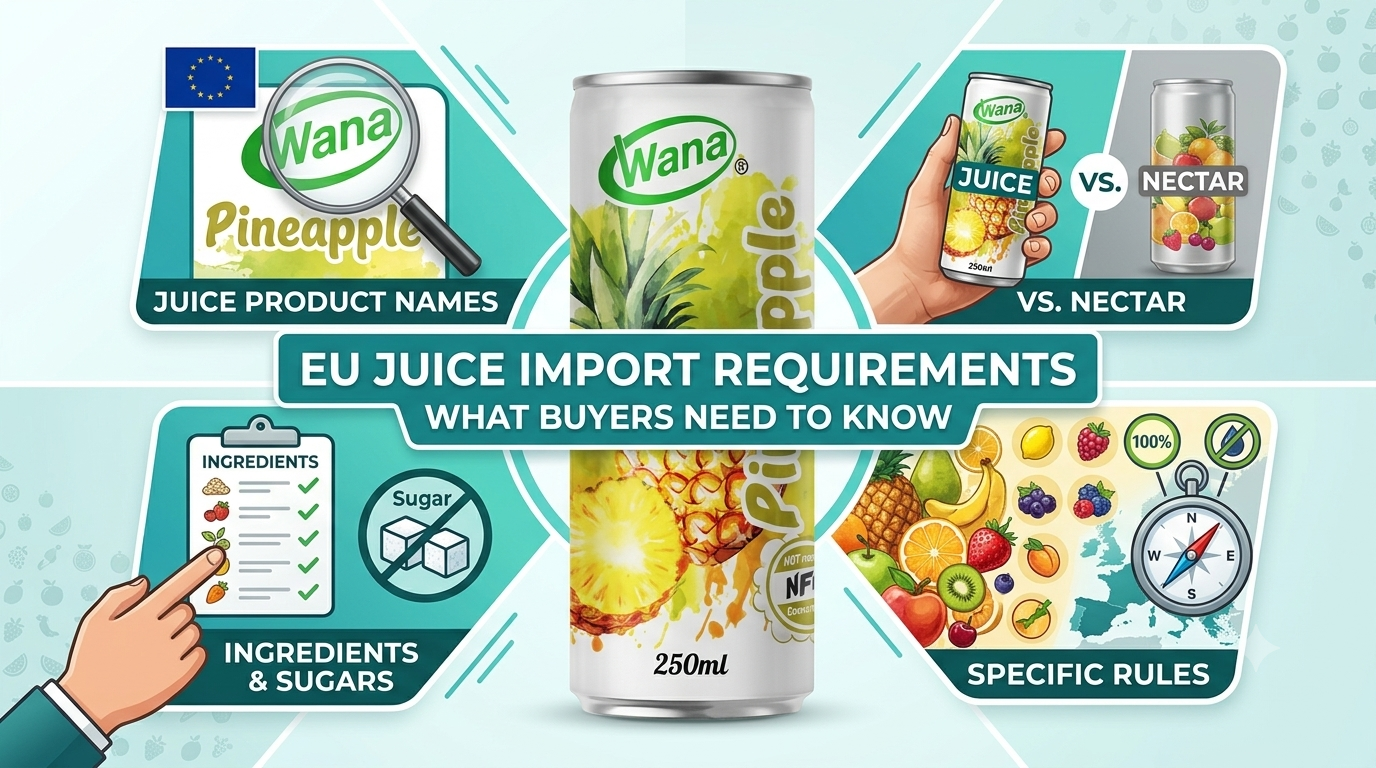
One of the most important EU import requirements for juice is ensuring that the product name accurately reflects its composition and manufacturing process. Under EU rules, terms such as “fruit juice” and “fruit nectar” have specific legal definitions and cannot be used interchangeably.
For example, buyers sourcing mango juice, peach juice, or mixed fruit juice should confirm the formulation and intended product designation before approving the label. For products made from multiple fruits, the product name must follow applicable rules on identifying the fruits used.
Ingredient Lists, Added Sugars and Sweeteners
Ingredient declarations must match the actual formulation and comply with the rules applicable to the product category. Under the EU Fruit Juices Directive, added sugars are not permitted in products designated as fruit juice, while fruit nectars may contain sugars, honey, or permitted sweeteners under specified conditions.
Importers should therefore verify ingredient specifications and review any claims about sugar content before finalizing packaging artwork.
Fruit Juice vs. Nectar and Other Fruit Drinks
Fruit juice, fruit nectar, and fruit drinks are not necessarily subject to the same composition and naming rules. For example, fruit nectar must meet the applicable minimum fruit content requirements, and its label must indicate the minimum fruit content. Other fruit-based beverages may fall under different rules depending on their composition and presentation.
Product-Specific Rules for Juice Labeling
Certain juice products must carry additional information, such as “from concentrate” or “partially from concentrate,” where applicable. Buyers should also review any nutrition claims and verify that the product meets the relevant legal conditions.
The key takeaway for importers is to confirm the product category, formulation, legal name, and label claims together before mass production. These checks help reduce packaging revisions and support a smoother route to the EU market.
Language, Font Size and Label Design Requirements
Language Requirements Across EU Markets
EU food labeling rules require mandatory information to appear in a language easily understood by consumers in the country where the product is marketed. Member States may require the use of one or more of their official EU languages.
For beverage importers selling across multiple countries, this may mean preparing multilingual packaging or adapting label artwork for individual markets. Language requirements should be confirmed before printing to avoid costly changes after production.
Minimum Font Size and Readability
Mandatory food information must be clearly visible, legible, and presented in a way that does not hide or interrupt essential details. Under Regulation (EU) No 1169/2011, the minimum font size generally requires an x-height of at least 1.2 mm. For packaging or containers whose largest surface area is less than 80 cm², the minimum x-height is generally 0.9 mm.
These requirements matter when designing compact packaging, particularly slim cans and small beverage bottles, where space for ingredients, nutrition information, and multilingual text may be limited.
Label Placement and Visibility on Cans and Bottles
Mandatory information must appear directly on the package or on a label attached to it. It should remain easy to locate and read without being obscured by graphics, folds, or other design elements. The product name and net quantity must also appear in the same field of vision.
Before approving artwork for cans or bottles, buyers should check text size, contrast, spacing, and the placement of required information. A visually appealing design should support clear communication while meeting the applicable labeling rules.
Read more: European Commission — Language and presentation of food information
Common Beverage Labeling Mistakes Importers Should Avoid
Even a well-developed beverage can face delays if its label does not meet EU requirements. Identifying common labeling mistakes early helps importers reduce packaging revisions, avoid unnecessary costs, and keep product launches on schedule.
Using Product Names That Do Not Match the Formula
A product name must accurately describe the beverage and comply with applicable legal definitions. For example, fruit juice, fruit nectar, and fruit-flavored drinks may have different composition requirements. Buyers should verify the product category against the final formulation before approving the label.
Missing or Incorrect Nutrition Information
Nutrition declarations must reflect the product accurately and follow applicable EU requirements. Errors in energy values, sugar content, or other nutrient information can require label corrections. Importers should confirm that nutrition data is based on reliable product specifications and appropriate calculations or analysis.
Unsupported Health and Nutrition Claims
Claims such as “sugar-free,” “high protein,” and “natural” should not be used without checking the applicable legal conditions. Nutrition and health claims are subject to specific EU rules, and marketing language alone does not establish compliance.
Overlooking Local Language Requirements
A label prepared for one EU market may not meet the language requirements of another. Importers should confirm the required languages in each destination country before printing packaging.
Approving Artwork Before Finalizing Product Specifications
Changes to ingredients, nutrition values, package size, or product claims can make previously approved artwork inaccurate. Finalizing product specifications before approving the label helps minimize reprints and production delays.
How to Prepare Your Beverage Label Before Production
Preparing a compliant beverage label starts well before packaging enters mass production. Importers should coordinate with their manufacturing partner to confirm product information, review artwork, and identify market-specific requirements.
Confirm the Target EU Market and Product Category
Identify the countries where the beverage will be sold and determine its correct product category. Requirements may vary depending on the beverage type and destination market, so confirm the applicable rules before developing the label.
Finalize the Formula and Nutrition Data
Confirm the ingredient list, formulation, nutritional values, allergens, and intended product claims. For fruit-based beverages, verify that the product name and composition meet the rules applicable to that category.
Prepare and Review the Label Artwork
Develop the label using the confirmed product information and required destination-market languages. Review the product name, ingredients, nutrition declaration, net quantity, date marking, responsible operator details, and any applicable storage instructions. Check font size, readability, and the placement of mandatory information.
Confirm Packaging Specifications Before Mass Production
Before printing labels or starting production, use this checklist:
- Confirm the target EU countries and applicable labeling rules.
- Finalize the formula, ingredient list, and nutrition data.
- Verify product names and nutrition or health claims.
- Review translations, artwork, and mandatory label information.
- Confirm packaging dimensions, label placement, and printing specifications.
- Approve the final artwork version before mass production.
An OEM beverage manufacturer can help provide product specifications, ingredient information, and packaging details, as well as coordinate artwork reviews. However, responsibilities for regulatory compliance should be clearly agreed upon between the manufacturer, importer, and other relevant parties. Early coordination helps reduce avoidable revisions and supports a more efficient product launch.
Choosing an OEM Beverage Manufacturer for the EU Market
Choosing an OEM beverage manufacturer for the EU market involves more than comparing prices and production capacity. Buyers should confirm that their manufacturing partner can provide accurate product information and coordinate packaging preparation before production begins.
What to Confirm With Your Beverage Manufacturing Partner
Before starting a project, confirm the manufacturer’s ability to develop beverages according to your required formula, ingredients, flavor profile, and packaging specifications. Request product specifications, ingredient information, and nutrition data to support label preparation. You should also review available packaging formats, such as cans and bottles, to ensure they fit your product concept and target market.
From Product Development to Label Approval
A clear process for product sampling, specification confirmation, artwork review, and final approval helps reduce avoidable packaging revisions. Confirm who will provide product data, review translations, and check label artwork at each stage. Although an OEM manufacturer can support product development and packaging coordination, the importer and other responsible food business operators should clearly establish their respective compliance responsibilities.
WANA Beverage supports OEM, ODM, and private label beverage projects, with customization options for product formulation and packaging. Early coordination helps buyers align product specifications with their target market before mass production.
Planning to launch a beverage brand in Europe? Discuss your product specifications and private label requirements with WANA Beverage.
Frequently Asked Questions
What information must appear on beverage labels in the EU?
Under Regulation (EU) No 1169/2011, most prepacked beverages require information such as the food name, ingredients, highlighted allergens where applicable, net quantity, date marking, storage or use instructions where required, the responsible food business operator’s details, and a nutrition declaration, subject to applicable exemptions.
Are EU beverage labeling requirements the same in every member state?
EU rules harmonize many labeling requirements, but some details, including the languages required for consumer information, can vary by destination country. Importers should check the national rules in each market.
What are the EU import requirements for juice?
Juice must comply with applicable food safety, labeling, and product-composition rules. Requirements can differ between fruit juice, concentrated juice, and fruit nectar. Buyers should verify the product category and applicable composition standards before approving the label.
Read more: Fruit Juices Directive 2001/112/EC.
Do imported beverages need labels in the local language?
Mandatory food information must appear in a language easily understood by consumers in the member state where the product is marketed. National authorities may require one or more official languages. Check the rules for each destination market.
Can one beverage label be used across multiple EU countries?
Sometimes. A common label may work across several markets if it meets EU requirements and includes all necessary languages and market-specific information. Importers should verify local requirements before printing large quantities of packaging.


