
What Happens to Beverage Packaging After Use?
A consumer finishes a bottle of juice, casually throws the packaging away, and moves on. For many brands, that may seem like the end of the product journey. But in reality, the packaging still has an important lifecycle after the last sip—from collection and disposal to recycling, composting, or landfill.
Now, imagine a different end-of-life pathway. Instead of becoming long-term waste, a suitable package can be processed through an appropriate composting system and break down into natural components under the required conditions. This is the core idea behind compostable beverage packaging and one reason why beverage brands are exploring new approaches to packaging waste.
For the beverage industry, the question is no longer only how to protect a product until it reaches the consumer. It is also about considering what happens to the packaging after the product has been consumed.
What Is Compostable Beverage Packaging?
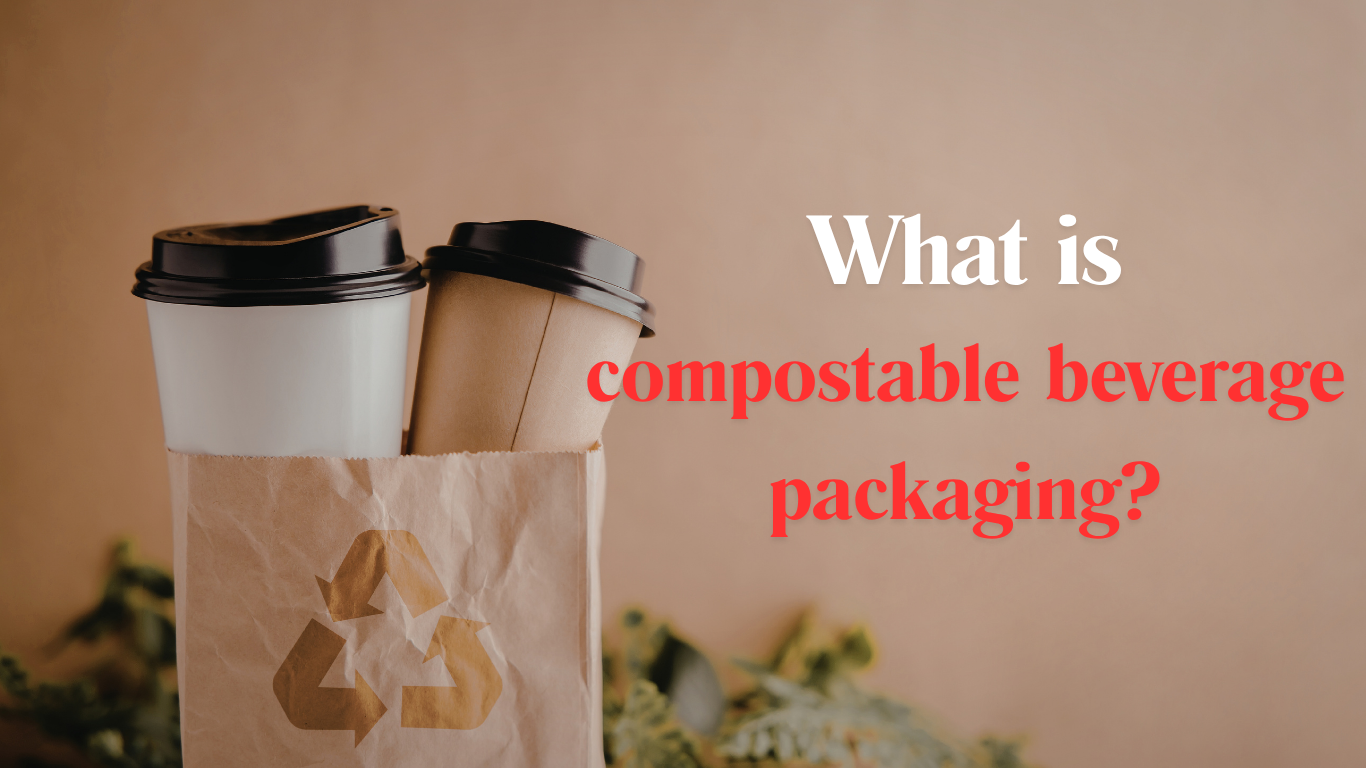
Not all eco-friendly packaging is the same. Compostable beverage packaging refers to materials that can fully break down into natural elements such as water, carbon dioxide, and biomass, without leaving microplastics or toxic residues. It also requires decomposition within a specific timeframe under controlled composting conditions. To be considered compostable, packaging must meet recognized standards such as EN 13432 in Europe or ASTM D6400 in the United States.
Read more: rPET Beverage Bottles: A Sustainable Packaging Option for Brands
Compostable vs. Biodegradable vs. Recyclable Packaging
| Factor | Compostable | Recyclable | Conventional Plastic |
|---|---|---|---|
| End-of-life | Composting | Recycling | Disposal/recycling depending on system |
| Infrastructure | Limited in many markets | More established | Widely available |
| Sustainability Positioning | Strong | Strong | More limited |
| Material Cost | Generally higher | Varies | Generally lower |
| Consumer Sorting | Important | Important | Important |
| Best Use | Selected sustainability-focused applications | Broad packaging applications | Broad mainstream applications |
What Is the Difference Between Compostable and Biodegradable Packaging?
Biodegradable, recyclable, and compostable packaging are often used interchangeably, but they have different meanings. Biodegradable materials can break down naturally through biological processes, although the timeframe and conditions may vary. Recyclable materials can be collected and processed into new materials, depending on available recycling infrastructure. Compostable materials are designed to break down into natural components such as water, carbon dioxide, and biomass under specific composting conditions.
The key difference is that compostable packaging is designed for a composting end-of-life pathway, rather than recycling. However, proper disposal infrastructure and suitable composting conditions are still important for compostable packaging to break down as intended.
Why Is Compostable Packaging Important for the Beverage Industry?
The beverage industry relies heavily on convenient, often single-use packaging for products such as tea, fruit juice, sparkling drinks, and functional beverages. Because beverages are consumed frequently and distributed at a large scale, packaging decisions can have a significant impact on material use and end-of-life waste.
This has encouraged beverage brands and manufacturers to explore more sustainable packaging options, including recyclable, recycled, and compostable materials. For brands, the choice of packaging is no longer only about protecting the product. It can also influence sustainability positioning, consumer expectations, regulatory compliance, and long-term packaging strategy.
Compostable packaging is one potential solution for selected beverage applications. However, its suitability depends on factors such as product type, shelf life, filling process, packaging performance, and the availability of appropriate composting infrastructure in the target market.
What Materials Are Used in Compostable Beverage Packaging?
Compostable beverage packaging can be made from several materials, each with different properties, performance characteristics, and end-of-life requirements. The most suitable option depends on the beverage formula, packaging format, shelf life, filling process, and target market.
PLA (Polylactic Acid)
PLA is a plant-based bioplastic commonly made from renewable resources such as corn starch or sugarcane. It can offer a lower reliance on fossil-based plastics and is used in various food and beverage packaging applications. However, PLA typically requires specific composting conditions to break down effectively and may have limitations related to heat resistance and barrier performance.
PHA (Polyhydroxyalkanoates)
PHA is a family of biopolymers produced through microbial fermentation of renewable feedstocks. Some PHA materials are being developed for applications where biodegradability is an important consideration. Their potential uses in beverage packaging are growing, although cost, processing requirements, and commercial availability can vary.
Cellulose-Based Materials
Cellulose is a natural polymer derived from plant-based sources such as wood, cotton, or agricultural residues. Cellulose-based materials can be used in films, coatings, paper-based packaging, and other packaging components. Depending on the formulation and coating, they can provide compostable alternatives for selected beverage packaging applications.
Choosing a compostable material is not simply a matter of selecting the most sustainable option. Beverage brands also need to evaluate food-contact safety, shelf life, moisture and oxygen barriers, filling compatibility, durability, cost, and end-of-life infrastructure before moving to commercial production.
Challenges of Compostable Beverage Packaging
Cost
Compostable packaging can be more expensive than conventional packaging due to material costs, specialized processing, and limited production scale. Brands should consider both packaging costs and their overall sustainability goals when evaluating this option.
Infrastructure
Compostable packaging requires suitable composting facilities and collection systems to achieve its intended end-of-life benefits. In markets where composting infrastructure is limited, disposal can be more challenging.
Consumer Disposal
Consumers may not always know how to dispose of compostable packaging correctly. Clear labeling and disposal instructions are therefore important to help ensure the packaging reaches an appropriate composting facility.
Packaging Performance
Compostable materials may have different barrier, strength, heat resistance, and shelf-life characteristics compared with conventional plastics. Beverage brands need to evaluate compatibility with the product formula, filling process, storage conditions, and distribution requirements before commercial production.
Benefits of Compostable Beverage Packaging for Beverage Brands
Despite the challenges, compostable packaging can offer several potential benefits for beverage brands looking to strengthen their sustainability strategy. As packaging regulations evolve and consumer expectations around environmental responsibility increase, brands are exploring alternatives to conventional packaging for selected product applications.
Stronger Sustainability Positioning
Using compostable packaging can help brands demonstrate a commitment to reducing reliance on conventional plastics. For products positioned around natural, organic, or environmentally conscious values, packaging can reinforce the overall brand message.
Product Differentiation
Compostable packaging can help a beverage stand out in a competitive market. When combined with thoughtful design and clear sustainability communication, it can become part of the product’s identity rather than simply a functional container.
Support for Evolving Packaging Requirements
As markets introduce new policies related to packaging waste, recycled content, and producer responsibility, brands need to consider more sustainable packaging strategies. Compostable packaging may be suitable for certain applications, although requirements vary by market and material.
Stronger Brand Storytelling
Packaging is increasingly part of how consumers understand a product. A well-designed compostable package can communicate innovation, environmental responsibility, and a forward-looking brand vision.
However, compostable packaging should not be selected based on sustainability claims alone. Beverage brands should evaluate cost, product compatibility, shelf life, packaging performance, certification, and end-of-life infrastructure to determine whether it is the right solution for their specific product and target market.
The Future of Compostable Beverage Packaging
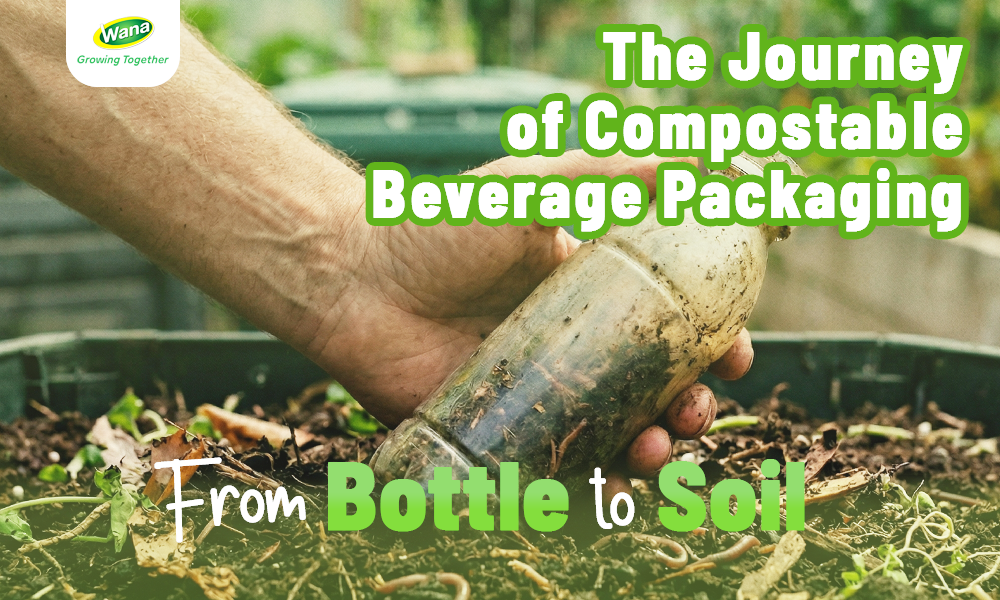
Looking ahead, the journey from bottle to soil will continue to evolve. New materials such as PHA are being developed to decompose in natural environments, even in oceans. Businesses will adopt hybrid strategies that combine compostable, recyclable, and reusable solutions. As demand increases, production will scale, costs will decrease, and sustainable packaging will become more accessible.
WANA Beverage – Sustainable Packaging Solutions
At WANA Beverage, sustainability is considered as part of long-term product and packaging development rather than simply a passing trend. As a beverage manufacturer serving international markets, WANA understands that packaging plays an important role in product protection, brand positioning, consumer expectations, and environmental responsibility.
WANA explores a range of packaging solutions, including recyclable, recycled, and other sustainable materials, depending on each product and market requirement. For beverage brands, this approach provides greater flexibility when developing products that balance sustainability goals with packaging performance, cost, shelf life, and production requirements.
Rather than applying a one-size-fits-all approach, WANA works with clients to evaluate packaging options based on their beverage formula, target market, product positioning, and sustainability objectives. From product development and packaging selection to commercial production, WANA supports beverage brands in building practical and market-ready solutions for their products.
Conclusion
In the past, packaging design focused on durability, product protection, and logistics. Today, a new question is being asked: what happens after the product is used? Compostable beverage packaging not only answers that question but also changes how we think from the very beginning.
In this model, throwing something away is no longer the end. It becomes a transition from product back to nature and from consumption back into a circular system. In the beverage industry, where every product comes with packaging, this is no longer just a trend. It is the future, gradually becoming the present.