
Choosing the right filling process is an important decision when developing a new beverage product. It affects not only production efficiency but also product quality, packaging compatibility, and shelf-life requirements. Among the commonly used methods in beverage manufacturing, hot filling and cold filling each serve different product needs.
Understanding the differences between these processes can help beverage brands make more informed decisions before moving into product development and large-scale production. Factors such as beverage formulation, acidity, sensitivity to heat, packaging materials, and intended storage conditions all influence which filling method is suitable.
In this guide, we explain how hot filling and cold filling work, compare their key characteristics, and outline what buyers should consider when selecting a suitable beverage filling process.
What Is Hot Fill in Beverage Manufacturing?
Hot filling is a beverage packaging process in which the product is heated to a specified temperature before being filled into containers. After filling, the containers are sealed while the beverage is still hot. Depending on the validated process, the product may then be held at a controlled temperature or inverted to allow the hot beverage to contact the internal surfaces of the container and closure.
The validated heat treatment and filling process help control microorganisms that could cause spoilage, supporting the required product safety and shelf stability. Hot filling is commonly used for acidic beverages, including fruit juices drinks, and certain tea-based products,…
However, not every beverage is suitable for hot filling. The formulation, pH level, heat sensitivity of ingredients, and packaging material must all be considered. Exposure to high temperatures may affect flavor, color, aroma, or heat-sensitive nutrients. Therefore, manufacturers need to establish appropriate processing conditions to balance product safety and quality.
What Is Cold Fill in Beverage Manufacturing?
Cold filling refers to filling beverages into containers at or near ambient or chilled temperatures rather than filling them while hot. Unlike hot filling, this method does not use heat during the filling stage itself. The way the beverage is preserved depends on the product formulation and the processing system used before filling.
For example, some cold-filled beverages rely on preservation methods such as preservatives, refrigeration, filtration, or other validated processing technologies, depending on the product requirements. Carbonated soft drinks are also commonly filled at low temperatures using specialized equipment designed to maintain carbonation and manage filling pressure.
One important point is that cold filling does not automatically mean aseptic filling. Conventional cold filling may take place in a non-sterile environment, whereas aseptic filling requires sterilized products and packaging to be brought together under controlled sterile conditions.
Cold filling can be suitable for beverages that are sensitive to heat or require specific processing conditions. However, product safety and shelf stability depend on the complete preservation system, not simply the temperature at which the beverage is filled.
What Is Aseptic Filling in Beverage Manufacturing?
Aseptic filling is a specialized beverage packaging process designed to prevent microbial contamination during filling. In this process, the beverage is sterilized separately, while the packaging materials and filling equipment are also sterilized. The product is then transferred into sterilized containers within a controlled sterile environment and sealed to maintain its condition.
Unlike conventional cold filling, aseptic filling requires strict control over the entire process, including product treatment, packaging sterilization, equipment hygiene, and the filling environment. This allows manufacturers to package certain beverages without exposing them to high temperatures during the filling stage.
Aseptic technology is commonly used for products such as dairy-based drinks, plant-based beverages, juices, and other products that require specific shelf-stability conditions. It can help preserve product characteristics that may be affected by prolonged heat exposure, although the final quality depends on the formulation and sterilization process.
Aseptic filling also requires specialized equipment, packaging materials, and technical controls. As a result, it may involve different production costs and investment requirements compared with conventional hot or cold filling.
Hot Fill vs Cold Fill vs Aseptic Fill: Key Differences
| Comparison factor | Hot Filling | Cold Filling | Aseptic Filling |
| Filling temperature | Elevated temperature | Lower temperature | Usually ambient or controlled temperature |
| Product treatment | Validated heat treatment before filling | Depends on the preservation system | Product sterilized separately before filling |
| Filling environment | Controlled hygienic conditions; not necessarily sterile | Depends on the filling system | Controlled sterile environment |
| Packaging requirements | Heat-resistant containers and closures | Suitable for the selected filling conditions | Packaging materials must be sterilized before filling |
| Equipment | Hot filling and compatible sealing systems | Cold filling equipment | Specialized aseptic processing and filling equipment |
| Product suitability | Commonly used for suitable acidic beverages | Depends on formulation and preservation system | Suitable for a range of beverages, including products that require sterile processing and packaging. |
| Shelf-life approach | Depends on heat treatment, closure integrity and storage | Depends on preservation method and packaging | Depends on validated sterilization and aseptic integrity |
Note: Cold filling is a broad term for filling beverages at lower temperatures. Aseptic filling is a specialized process involving sterilized products, sterilized packaging, and a controlled sterile filling environment.
Which Beverages Are Suitable for Each Filling Process?
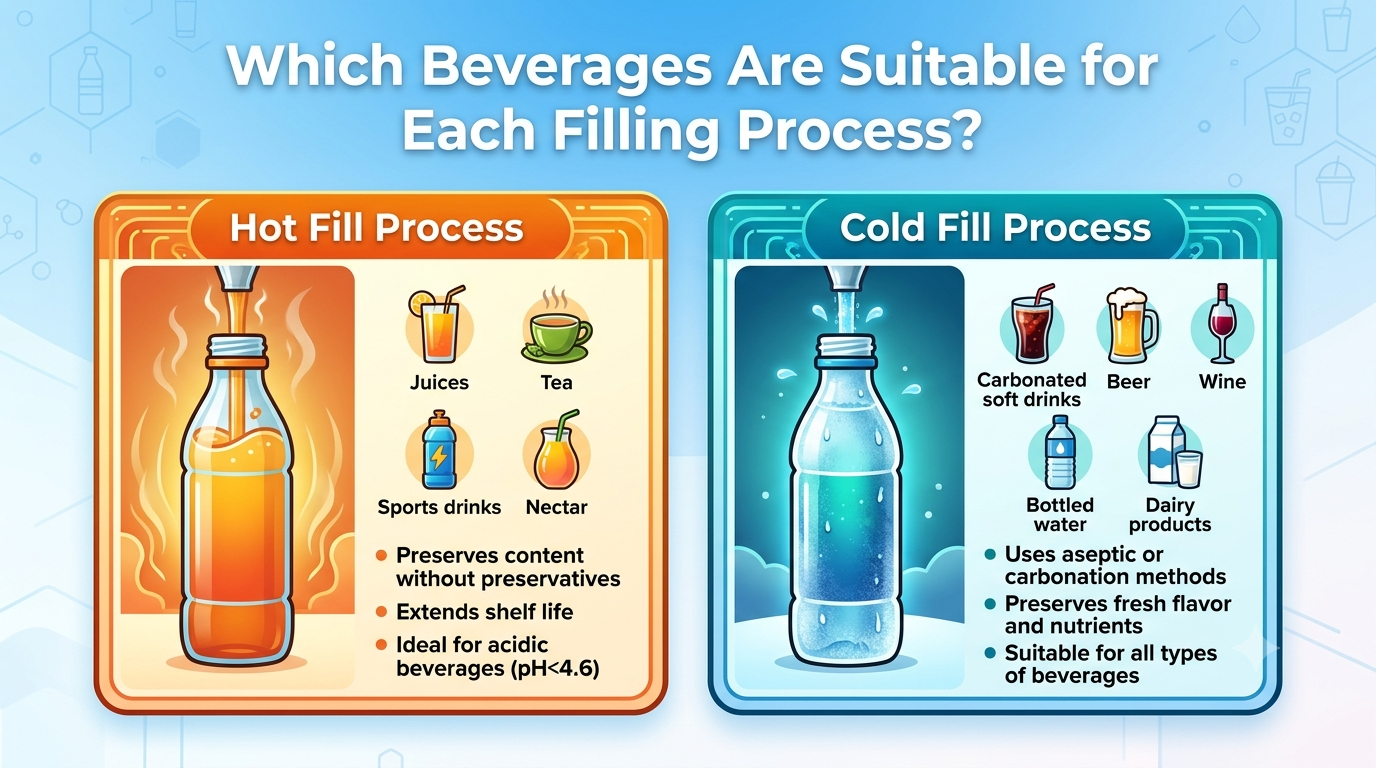
Hot filling and cold filling are used for different types of beverages, depending on their formulations, processing requirements, and packaging compatibility. Selecting the right method helps manufacturers maintain product safety while preserving the desired taste, quality, and shelf stability.
Beverages commonly suitable for hot filling
Hot filling is widely used for acidic beverages that can tolerate heat treatment. Common applications include:
- Fruit juice drinks: Such as mango, guava, pineapple, orange, and mixed fruit juice.
- Fruit-based beverages: Drinks formulated with fruit puree or juice concentrates, provided their formulations are suitable for the required heat treatment.
- Tea-based beverages: Certain ready-to-drink teas that meet the necessary acidity and processing requirements.
Because hot filling exposes beverages to elevated temperatures, it may not be ideal for products containing heat-sensitive ingredients or formulations where fresh flavor and aroma are a priority.
Beverages commonly suitable for cold filling
Cold filling is often used for beverages that require lower filling temperatures or specialized filling conditions. Examples include:
- Carbonated soft drinks: Such as sparkling fruit drinks, which are typically filled using pressure-controlled systems designed to maintain carbonation and minimize CO₂ loss.
- Energy drinks: Including carbonated and non-carbonated formulations, depending on their preservation systems and production requirements.
- Heat-sensitive beverages: Products containing ingredients that may be affected by high temperatures, provided an appropriate preservation process is in place.
The suitability of either process depends on more than the beverage category. Factors such as pH, ingredient stability, microbial requirements, packaging type, and intended storage conditions must be evaluated before selecting a filling method.
How to Choose the Right Filling Process for Your Beverage Product
Choosing between hot filling and cold filling requires more than comparing equipment or production costs. Beverage brands should consider how the filling process affects product quality, packaging, shelf stability, and the overall manufacturing plan.
Here are five key factors to evaluate:
Beverage formulation and acidity
The product’s pH, ingredients, and microbial characteristics help determine the appropriate processing method. Acidic fruit juices may be suitable for hot filling, while other formulations may require a different preservation approach.
Heat sensitivity and product quality
Consider whether the beverage can withstand heat treatment without significantly changing its flavor, color, aroma, or functional ingredients. If the formulation contains heat-sensitive components, cold filling may be worth evaluating alongside a suitable preservation system.
Packaging compatibility
Not all containers are designed for the same filling conditions. Hot filling requires packaging materials that can withstand the relevant temperatures, while cold filling may require specialized equipment for carbonated products or other specific formulations. Confirm container specifications before finalizing the process.
Shelf-life and storage requirements
Define whether the product will be distributed at ambient temperature or under refrigerated conditions. The required shelf life, distribution environment, and preservation system all influence the choice of filling technology.
Production scale and cost
Consider the available production lines, minimum order quantity (MOQ), packaging costs, and expected production volume. A process that works well for a small product trial may not be the most efficient option for large-scale commercial production.
Ultimately, the right filling method is the one that meets your product’s safety and quality requirements while supporting your packaging, budget, and target market.
What Should You Ask Your OEM Beverage Manufacturer?
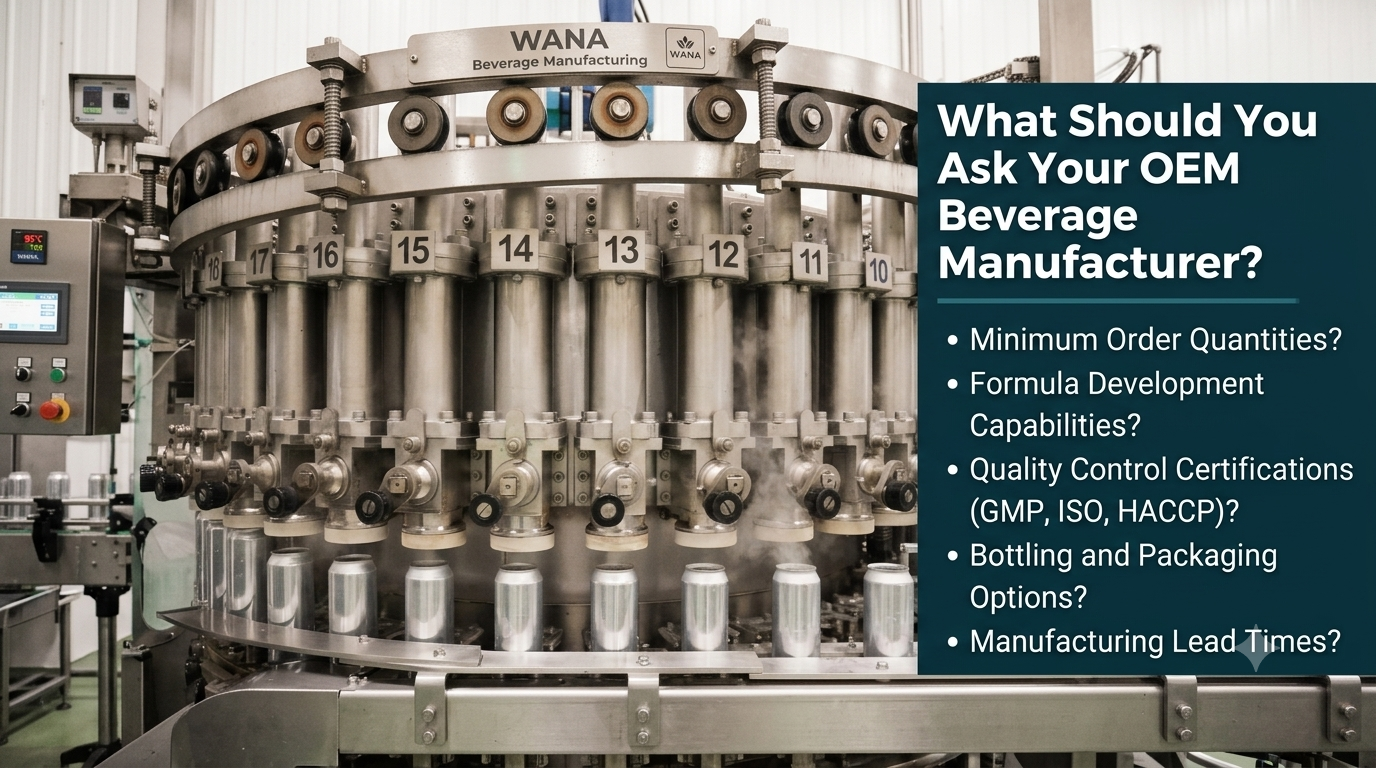
Before starting production, beverage brands should discuss the filling process with their OEM manufacturing partner. A clear technical assessment helps avoid formulation issues, packaging incompatibility, and unexpected production costs.
Here are some important questions to ask:
- Which filling process is suitable for my beverage formulation? Ask the manufacturer to assess the ingredients, pH, and processing requirements before recommending hot or cold filling.
- Can your production lines handle my product and packaging format? Confirm compatibility with the beverage type, container material, and can or bottle specifications.
- What shelf life can the finished product achieve? Request information based on the validated processing method, formulation, packaging, and intended storage conditions.
- What is the minimum order quantity (MOQ)? Understand the minimum production volume and whether it varies by beverage type, packaging, or production line.
- What are the estimated production costs and lead time? Ask for a quotation that considers ingredients, packaging, processing, and customization requirements.
- What quality control measures are applied during filling and packaging? Ask about microbial testing, filling temperature or conditions, sealing integrity, and routine quality inspections.
An experienced OEM beverage manufacturer should be able to evaluate your product requirements and explain the technical and commercial considerations behind its recommended filling process. This gives your team a clearer foundation for product development and large-scale production.
Read more: How To Choose a Carbonated Beverage Manufacturer for Your Brand?
Develop Your Beverage Product with WANA Beverage
Choosing between hot filling and cold filling is an important step in turning a beverage concept into a commercially viable product. The right process depends on your formulation, packaging specifications, quality expectations, and target market.
At WANA Beverage, we provide OEM, ODM, and private label beverage manufacturing services in Vietnam, supporting brands from product development to large-scale production. Our team works with customers to understand their beverage concepts, evaluate production requirements, and identify suitable manufacturing solutions.
Whether you are developing fruit juice through hot filling or a carbonated beverage that requires cold filling, selecting the right production process is essential to achieving consistent product quality and meeting your business goals.
Planning your next beverage project? Share your product concept, preferred packaging, and target market with WANA Beverage. Our team can help you explore suitable OEM and private label manufacturing solutions.
Frequently Asked Questions
What is the main difference between hot filling and cold filling?
The main difference is the temperature at which the beverage is filled into its container. Hot filling involves heating the beverage before filling and sealing it while hot, whereas cold filling takes place at ambient or chilled temperatures. Each method requires a suitable processing and preservation system to ensure product safety and shelf stability.
Is hot filling better than cold filling?
Neither method is universally better. Hot filling is commonly used for suitable acidic beverages, such as fruit juices, while cold filling is often preferred for carbonated drinks and certain heat-sensitive formulations. The best option depends on the beverage’s ingredients, pH, packaging compatibility, and required storage conditions.
Can fruit juice be cold-filled?
Yes, certain fruit juices can be cold-filled, provided an appropriate preservation system is used. Depending on the formulation and product requirements, this may involve preservatives, filtration, refrigeration, or other validated processing methods. The manufacturer must assess microbial safety and shelf-life requirements before selecting the process.
Does hot filling affect beverage taste and quality?
Heat treatment can influence a beverage’s flavor, aroma, color, and heat-sensitive nutrients. The extent of these changes depends on the formulation, processing temperature, and exposure time. Manufacturers must carefully control the process to achieve the required level of product safety while maintaining the desired sensory quality.