The numbers are clear: beverage companies are trying to launch products very quickly, but the way they make them is not good for this pace.
For example, the global artificial intelligence in food and beverages market is going to grow from $13.57 billion in 2025 to $19.38 billion in 2026. That is a 42.8% increase.
But what is really happening on the production floors is more important.
Here are some things to consider:
- Time to launch new products: people’s preferences are changing a lot. They want sugar-functional and personalized products. The days of one product being very popular and supporting a brand no longer exist.
A 2025 survey by TraceGains found that 83% of food and beverage brands want to invest in new product development, but only 2% have fully digitized their product development processes.
- Rising production costs: More than half of beverage brands say that production costs are rising. Labor costs. Are a big concern. At the time, 50% of them are still having trouble getting the ingredients and materials they need.
- It is hard to predict demand: the beverage market is not just getting bigger. It is also getting harder to predict. As people’s preferences change, it is getting harder to know what products will be popular and when. Some products become very popular quickly, while others sell in unexpected bursts.
- Profit margins are getting smaller: 70% of brands say that the overall state of the economy is the biggest barrier to innovation. This is up 15 points from 2024. Among brands that are reducing their innovation pipeline, 41% say it is because they are not sure about their finances, and they are under pressure to keep their prices low.
The result is that the traditional way of making products, which was based on stability, long production runs, and predictable demand. It is no longer working.
This is not a story about technology. This is a story about the beverage industry trying to survive.
Smart beverage production is becoming more popular, not because manufacturers love intelligence but because they need to solve problems that they cannot handle manually.
The beverage industry needs to find ways to make products because the old ways are not functional.
The beverage industry is facing multiple challenges. They need to find new ways to overcome them.
The beverage industry needs to change the way they make products if they want to continue in business.
What Is Smart Beverage Production? (A Practical Definition)
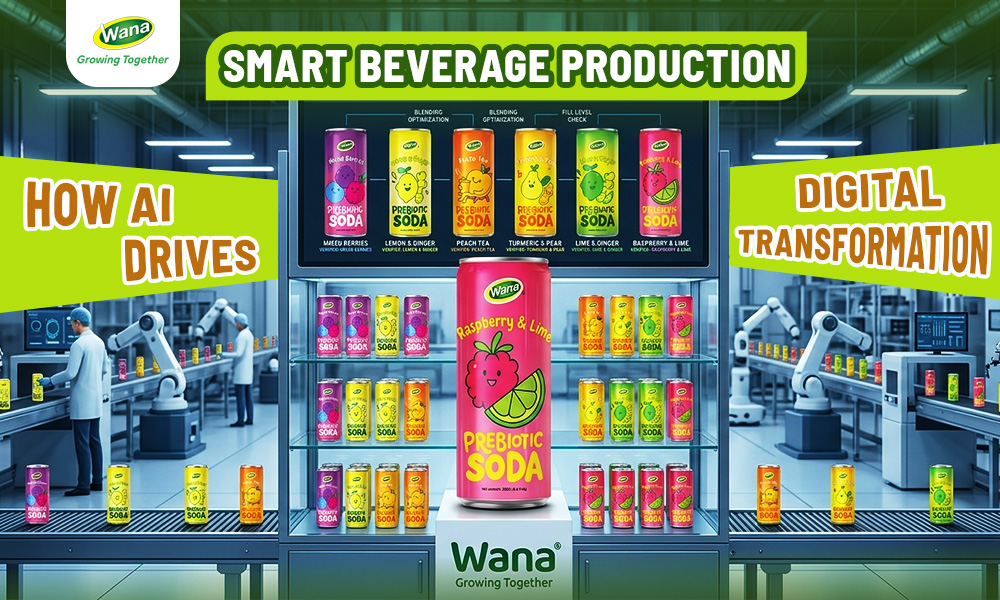
Let’s get straight to the point. Smart beverage production is about making things more efficient. It is about using real-time data to make decisions.
Here’s what it means at levels:
At the Factory Level
Smart production is about connecting machines in a factory to a single system. Now, machines from different companies don’t talk to each other. Operators can’t see how a problem with one machine affects another. Smart production gives a picture of how well machines are working, why they stop working, and where things are being wasted.
At the Supply Chain Level
Smart production is about predicting demand accurately. It is about understanding that different products sell differently. Modern systems group products by how often and how much they are sold. Then they use methods to forecast demand for each group. (Source: Shi et al., Applied Soft Computing)
At the R&D Level
Smart production is about using tools to develop new products. Most beverage brands still use methods like spreadsheets and email to manage new product development. Smart R&D uses automated workflows to speed up testing, validation and scaling up.
What It Is NOT
Smart beverage production is not a computer program. It is not about replacing operators with computers. It is not about getting rid of old existing equipment.
Why Traditional Beverage Production Is No Longer Enough
To understand why smart production is becoming irreplaceable, look at the operational problems that have become baked into traditional manufacturing:
Demand Unpredictability
Beverage manufacturing is full of surprises. Demand for beverages is not one thing; it is many things happening all at once. When we look at sales data from big beverage suppliers, we can see that demand for beverages falls into different groups. Some beverages sell a lot, and often some sell a little but regularly. Some sell in a way that is hard to predict. The old ways of guessing demand that all beverages be treated the same, which means they are often wrong for a lot of the products.
Ingredient Waste
Beverage manufacturers also have to deal with waste. When they switch from making one product to another, they have to clean the equipment. If they get the timing wrong, they can lose some of the product. Ruin the next batch. In fact, 4% of the milk used to make dairy products is wasted, which costs a lot of money. Almost €1 billion every year in the EU, plus another half billion to clean up the wastewater. (Source: Tech.eu on Collo)
Manual Quality Checks
Another problem is that a lot of the information about the products is written down on paper. This makes it hard to keep track of things, for example, how much of each ingredient is used, how full the bottles are, and whether the labels are correct or not. When there is a problem, it is hard to figure out what went wrong because the information is not in a computer where it can be easily accessed .
Slow Formulation Scaling
It also takes time to get new products from the lab to the factory. More than half of the companies that make beverages do not use a system to help them manage this process. This means that it takes more time to get new products to the market, and it can be difficult to make sure they follow all the rules.
People who make beverages are searching for ways to make their process better. They want to know how to make their manufacturing more efficient, how to reduce the cost of production, how to estimate demand accurately, or how to reduce waste when they are bottling their products.
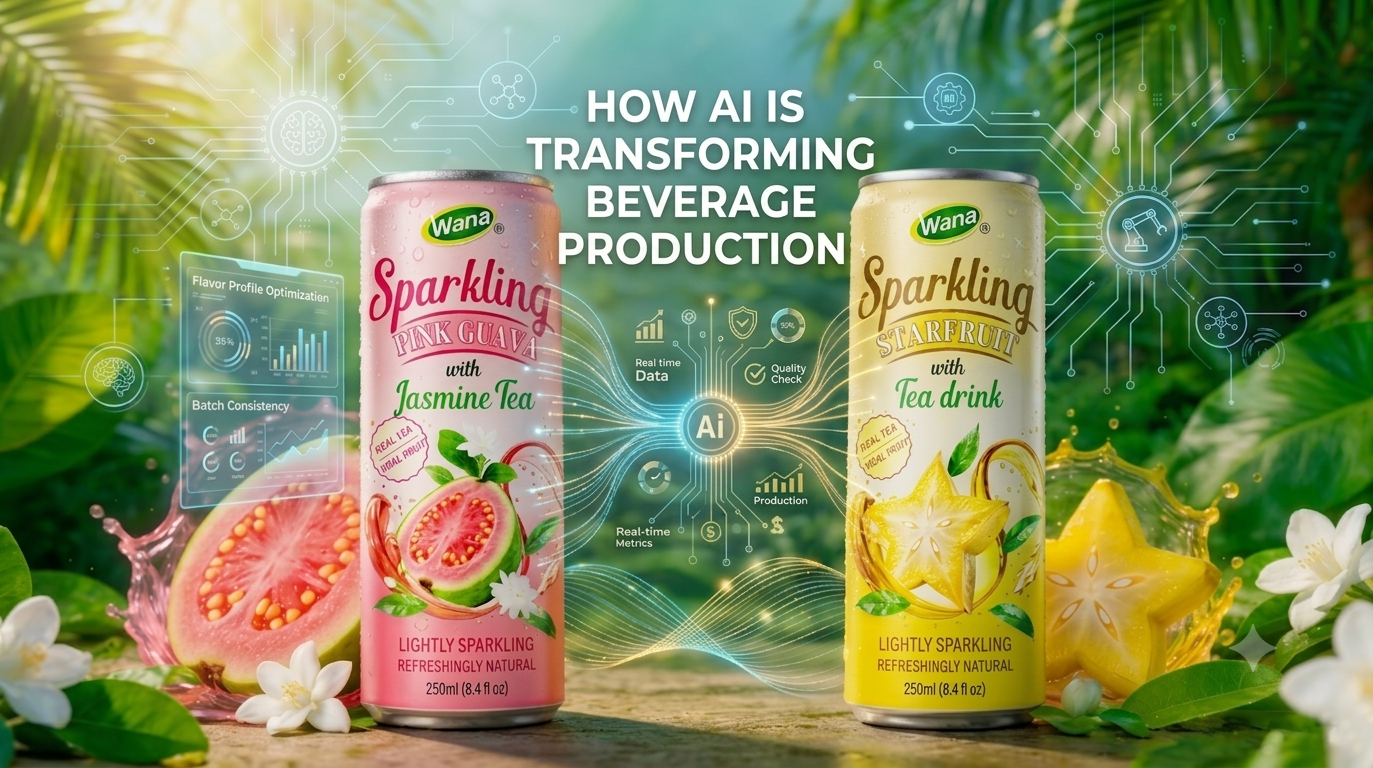
How AI Is Transforming Beverage Production
Not theoretical. Operational.
Demand Forecasting & Production Planning
The problem with forecasting is that it treats all products the same. This means it does not make predictions for products that are not always in demand or have unusual demand patterns.
The solution to this problem is to use machine learning models that are applied in stages. First, these models group similar products based on how they’re demanded. Then they apply models to each group of products.
For example, a system that was made for the beverage industry works in three stages. (Source: Shi et al., Applied Soft Computing):
- Stage 1 is about grouping products. This is done by looking at things like how a product is demanded and how much the demand changes. A Gaussian Mixture Model is used to group products into categories like products that are always in high demand, products that are not often demanded but have stable demand, products that are often demanded but have changing demand, and products that are only demanded sometimes.
- Stage 2 is about figuring out if a product will be demanded during a time.
- Stage 3 is about estimating how much of a product will be demanded.
The result of using this system is that it makes more accurate predictions than traditional methods. This was seen when the system was tested using sales data from a beverage supplier.
Smart Quality Control
The problem with quality checks is that they are not always done the same way and they take a long time. They also do not produce data that can be easily searched.
For example, automated test stations are now used to check beverage machines as they are being made.
These test stations can check 100% of the machines. Do it faster and more accurately than manual checks.
This has reduced the time it takes to test the machines and the labor needed by over 50%.
Smart Quality Control is useful for industries.
For production lines, modern systems enable:
- Check the volume of a product as it is being made
- Check the torque and seal integrity of a product as it is being made
- Check the label on a product as it is being made
- Check the ingredients of a product as it is being made
- Use statistics to control the production process and make sure it is working correctly
- Use checklists to make sure everything is done correctly and to eliminate human error
The result of using these systems is that it reduces the number of quality problems by 15-20% and makes it easier to tell when there is a problem
Formula Optimization & R&D
The problem with product development is that it is still done by hand. A lot of companies, 82%, use spreadsheets or email to manage New Product Development processes. While others have already gone to the moon.
The way to fix this is to use computers to help with New Product Development workflows. This can make testing checking if products are safe and making amounts of products much faster.
Nowadays, only a small number of companies, about 2%, have completely switched to using computers for New Product Development workflows. The companies that have done this are already seeking bigger opportunities. They can get products to market faster. Their teams can work together better. New Product Development is getting easier for those who know how to work smarter, not harder. (Source: TraceGains R&D and Product Innovation Survey 2025)
Predictive Maintenance
The problem is that we do not keep track, and we do not repeatedly report performance. This makes it hard to see how these small stops affect the amount of output we lose.
The solution is to have dashboards that show us what is happening in real time. These dashboards can automatically show us where we are losing output.
By connecting multi-OEM bottling lines to a unified digital platform, manufacturers can gain a lot of things :
- Real-time line dashboards that show the output of each line, the speed losses, and the stoppages
- Automatic maps of faults that happen with summaries every hour highlighting why the line stopped
- Early warning signals for utility equipment issues when some breakdowns occur
The real result of using Predictive Maintenance is an 8 to 10 percent improvement in how our bottling lines operate. (Source: Altizon case study, large beverage major)
Digital Transformation Beyond the Factory
The good things about transformation in the beverage industry do not stop at the factory. Digital transformation in beverages goes beyond the factory. It affects the process of making and selling beverages.
The main areas where digital transformation in beverages makes a big impact include:
Supply Chain Coordination
When we have up-to-date information about beverage production, it helps suppliers of beverages adjust to how much people are actually drinking, rather than just guessing how much they will drink. This helps cut down on the costs of storing beverages and also reduces the waste of beverages.
Inventory Management
If we can predict how many beverages people will buy, we do not need to keep much extra stock of beverages. A special forecasting model for beverages helps reduce mistakes when guessing demand for beverages for products that people do not buy regularly. The old ways of guessing demand for beverages often get it very wrong.
Distributor Forecasting
When production information for beverages is shared with distributors who order beverages, both sides can see how well beverages are selling, rather than just looking at orders for beverages that can be misleading due to promotions or extra stock behaviors for beverages.
Product Innovation Cycles
Using tools to develop new beverages speeds up the process from creating a new recipe to actually making the beverage. For the beverage industry, where most brands are spending money on innovations for beverages, but very few have digital processes for beverages, getting started with digital transformation can be a huge advantage for companies that do it first. Digital transformation, in beverages, is a steal, and it can really help companies to develop rapidly.
How Beverage Brands Can Start Transitioning
Step 1: Audit Production Data
Before implementing any technology, understand what data you currently collect and where gaps exist. Key questions:
- Which lines have real-time monitoring?
- What downtime reasons are tracked, and how?
- Are quality checks digital or paper-based?
- Can you trace a batch from raw material to finished goods?
Step 2: Start with a Pilot
The most successful implementations start with one plant, a few lines, and focused objectives. Recommended deployment roadmap: 6 weeks for a pilot (1 plant, 4 lines), 10-12 weeks to scale to the whole plant, and 20+ weeks for enterprise rollout.
Step 3: Partner with Experienced Manufacturers
Vendor-neutral platforms that can connect multi-OEM equipment are critical. Avoid proprietary systems that lock you into a single equipment manufacturer’s ecosystem.
Step 4: Scale Gradually
Standardize KPIs across plants before expanding. Establish enterprise-level visibility before adding advanced AI capabilities. Ensure operator training keeps pace with technology deployment.
Frequently Asked Questions
How Can AI Reduce Costs in Beverage Production?
AI can help reduce costs by improving production planning, minimizing material waste, identifying equipment issues early, and optimizing resource use. The actual savings depend on the production system and implementation.
Can AI Improve Beverage Product Quality?
Yes. AI-powered monitoring and data analysis can help manufacturers detect quality variations earlier, improve process consistency, and support more accurate quality control throughout production.
Can Small and Growing Beverage Brands Benefit from Smart Production?
Yes. Smart production is not limited to large manufacturers. Beverage brands can start with specific areas such as demand forecasting, quality monitoring, or digital R&D and gradually expand as their production needs grow.
How Does AI Help Beverage Manufacturers Predict Demand?
AI can analyze historical sales, product performance, seasonal patterns, and other relevant data to identify demand patterns. This can help manufacturers plan production and inventory more efficiently.
Does Smart Beverage Production Replace Human Workers?
No. Smart production is designed to support human decision-making rather than completely replace workers. AI and automation can handle repetitive monitoring and data analysis while experienced teams remain responsible for production, quality, and strategic decisions.
How Can a Beverage Brand Start Using AI?
Brands can start by identifying a specific operational challenge, reviewing available production data, and testing AI or digital solutions on a small scale. Working with an experienced beverage manufacturing partner can also make implementation easier.
Conclusion
Smart beverage production is not a future concept. It’s happening now.
The market is moving: from $13.57 billion in 2025 to $79.38 billion by 2030. (Source: Ken Research) But the driver isn’t technology enthusiasm — it’s operational necessity. Beverage companies are facing demand unpredictability, margin pressure, and supply chain instability that traditional production models can’t handle.
The brands that will win are not necessarily those with the most advanced AI. They are the ones who start with real operational problems, implement measurable solutions, and build capabilities incrementally.
Smart beverage production is no longer a future concept — it’s becoming the operational standard for competitive beverage brands. The question isn’t whether to transition. It’s whether to start now or catch up later.
Ready to bring smarter production to your beverage brand?
Whether you are developing a new product or scaling an existing line, working with an experienced manufacturing partner can simplify the transition toward more efficient, data-driven production.
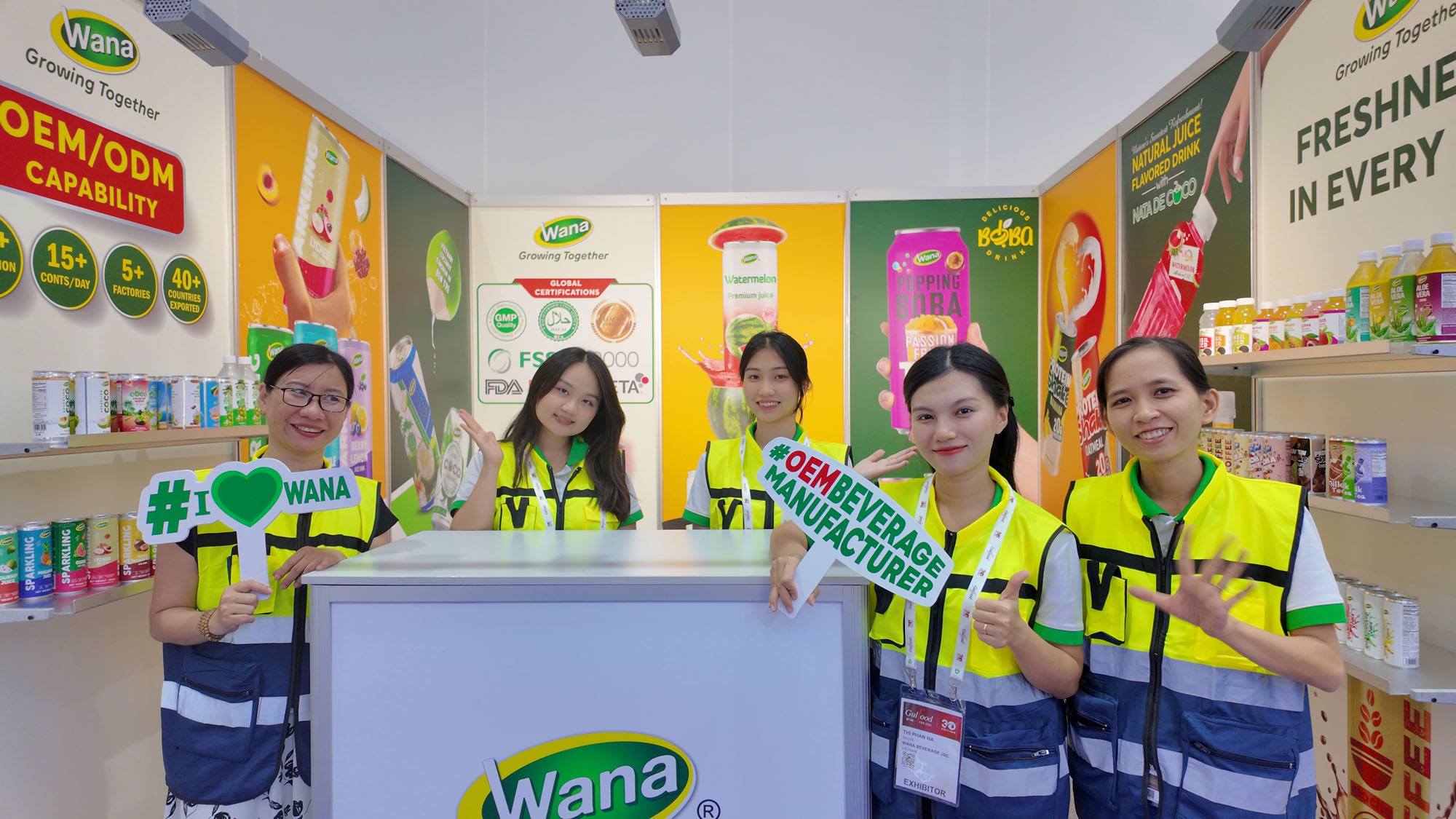
👉 Connect with our team to explore how smart beverage production can support your next stage of growth.