As Extended Producer Responsibility (EPR) requirements expand across different markets, beverage brands need to understand how packaging materials, reporting obligations, fees, and end-of-life requirements may affect their products. For companies selling beverages internationally, EPR compliance can vary significantly by market, making packaging data and regulatory planning increasingly important. It strengthens sustainability narratives and helps optimize packaging systems. As a result, brands are better positioned to meet the demands of contemporary consumers. The book provides a step-by-step guide to navigate EPR beverage packaging regulations in 2026 with realism and practicality.
For beverage companies, this shift brings both pressure and opportunity. Those who fail to adapt may face regulatory penalties, rising costs, and reputational risks. Meanwhile, those who move early have the chance to turn EPR into a strategic advantage—strengthening their sustainability positioning, optimizing packaging systems, and aligning more closely with the expectations of modern consumers.
In this guide, we’ll walk through how to navigate EPR beverage packaging regulations in 2026 in a clear, practical, and forward-looking way.
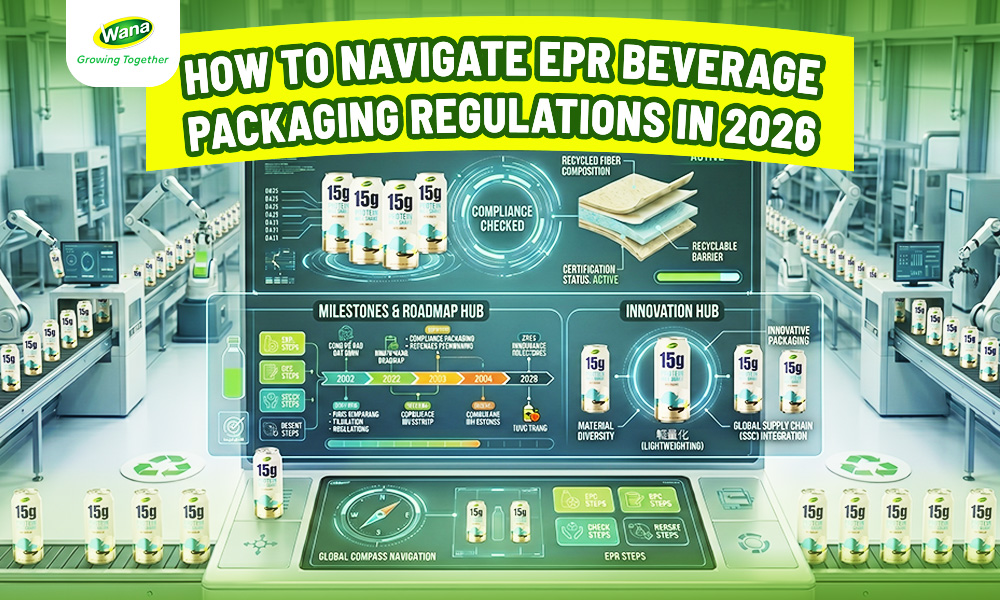
What Are EPR Beverage Packaging Regulations?
Extended Producer Responsibility (EPR) policies mandate that producers assume financial or operational accountability for the collection, recycling, and disposal of packaging materials they introduce into the market. The specific responsibilities, registration requirements, reporting rules, and fees vary by jurisdiction and packaging type. Typically, beverage packaging involves the use of PET bottles, aluminum cans, glass bottles and cartons (while also being used to make multi-layer packaging), as well as biodegradable or compostable materials. Waste management is no longer considered an external issue by EPR frameworks for companies. It is expected that they will actively participate in the end-of-life cycle of their packaging or directly manage it.
Why EPR Matters More in 2026
The enforcement of EPR has become more rigorous, broader, and intricate in 2026. This is not the first time.
Global Expansion of Regulations
EPR frameworks exist in a range of markets, but their scope, producer obligations, registration processes, reporting requirements, and fee structures vary by jurisdiction. EPR requirements are developing across major beverage markets, but the specific obligations vary by country and regulatory framework.
Eco-Modulated Fees
Eco-Modulated Fees EPR fees are not fixed. Your packaging’s sustainability is increasingly being a focal point. Some EPR systems use eco-modulated fees, where producer fees may vary according to factors such as packaging material, recyclability, or other environmental criteria defined by the relevant scheme.
Data Transparency Requirements
Brands are expected to track and report:
- Total packaging volume introduced to the market
- Material composition
- Recycling rates and recovery performance
This requires not just compliance, but system-level visibility across the supply chain.
Vietnam: EPR Requirements for Beverage Packaging
Vietnam has established an Extended Producer Responsibility (EPR) framework under the Law on Environmental Protection 2020, with detailed requirements further developed through government regulations. In 2026, Vietnam updated its EPR framework through Decree No. 110/2026/ND-CP, which took effect on May 25, 2026. The decree sets out responsibilities for the recycling of products and packaging, as well as waste collection and treatment obligations for manufacturers and importers.
For beverage businesses, EPR requirements should be assessed based on the type of packaging, the company’s role in placing products on the Vietnamese market, and the applicable obligations under current regulations. Businesses should also keep track of supporting guidance, including Circular No. 24/2026/TT-BNNMT, which provides detailed guidance on implementing Decree 110/2026/ND-CP.
This means beverage brands and importers should not treat Vietnam’s EPR requirements as identical to those in the EU, South Korea, Japan, or other markets. Each jurisdiction has its own rules covering producer responsibility, registration, reporting, recycling, waste management, and financial obligations.
What Does This Mean for Beverage Brands?
In practice, beverage brands selling into the EU may need to consider both EPR obligations and PPWR packaging requirements.
When developing a new beverage product, brands should look beyond the bottle itself and evaluate the complete packaging system, including the bottle or can, cap, label, secondary packaging, recycled content, recyclability, and packaging weight.
The key point is that EPR is mainly about producer responsibility and packaging waste management, while PPWR sets broader rules for how packaging is designed, used, labeled, and managed within the EU market.
Because requirements can change and may depend on the specific product and market, beverage brands should verify the latest rules before finalizing packaging for commercial production or export.
Read more: rPET Beverage Bottles: A Sustainable Packaging Option for Brands
Common Challenges for Beverage Businesses
Implementing EPR in practice is not simple, especially for beverage companies operating across multiple markets.
Complex material selection
Many types of packaging today are designed to optimize shelf life, protect product quality, or enhance user experience, but are not compatible with existing recycling systems. This puts businesses in a position where they must trade off between product performance and EPR compliance.
Differences across markets
Each country applies its own system of regulations, standards, and EPR fee structures, making it impossible for businesses to adopt a single packaging solution for all markets. This requires flexibility in both design and strategy, while also consuming additional resources to manage and adapt for each region.
Cost pressure
EPR can introduce additional costs related to producer fees, packaging data management, reporting, compliance, and packaging redesign, depending on the applicable market and scheme. Therefore, EPR is not only a compliance requirement, but also an operational challenge that needs to be addressed strategically.
An Effective Approach to Navigating EPR Compliance in 2026
Audit the entire packaging portfolio
To adapt to increasingly strict EPR regulations, beverage companies need a systematic and long-term approach, rather than simply reacting when regulations take effect. This process should begin with a full audit of the existing packaging portfolio. Understanding what materials are being used, in what volumes and designs, as well as their recyclability in each target market, will help identify exactly where improvements and optimizations are needed.
Design packaging for recyclability
Packaging design needs to be adjusted to support recycling from the very beginning. Changes such as shifting to mono-material instead of multi-layer structures, reducing packaging weight, or designing labels and caps for easy separation can create significant improvements in post-use processing. At the same time, limiting the use of dark colors or hard-to-sort materials also helps improve real-world recycling efficiency. These are not only technical adjustments, but also ways for businesses to directly optimize EPR costs in the long term.
Select materials suitable for each market
Material selection should be considered based on the specific context of each market, rather than following “green” trends based on intuition. A material is only truly sustainable when it fits the local recycling infrastructure, has a strong recovery rate, and delivers reasonable economic efficiency. Therefore, material decisions need to be placed within a complete ecosystem, where sustainability and practicality go hand in hand.
Build a data management system
Data plays a critical role in ensuring EPR compliance. Businesses need to build systems to accurately track packaging volumes placed on the market, classify materials according to regulatory standards, and prepare periodic reports transparently. A strong data system not only reduces legal risks, but also provides better cost control and operational optimization.
Collaborate with the right partners
Working with experienced partners in manufacturing and packaging is an important factor in helping businesses move faster and in the right direction. These partners not only provide solutions aligned with current regulations, but also help update trends, anticipate policy changes, and optimize design from the early stages. In a constantly evolving EPR landscape, the right collaboration can create a clear advantage.
EPR as an Opportunity for Innovation
Instead of viewing EPR as a cost burden or regulatory barrier, many businesses are beginning to see it as an opportunity for restructuring and improvement. Optimizing packaging not only helps reduce long-term costs, but also enables companies to build more transparent and efficient supply chains. At the same time, as consumers and partners increasingly value sustainability, proactive EPR compliance also enhances credibility and brand value.
In this context, EPR is no longer simply an obligation to fulfill, but can become a competitive advantage if businesses approach it correctly and act early.
EPR vs. PPWR: What Is the Difference?
EPR and the EU Packaging and Packaging Waste Regulation (PPWR) are closely related, but they are not the same. EPR focuses on the producer’s responsibility for managing packaging waste, while the PPWR establishes broader requirements for packaging placed on the EU market.
For beverage brands, understanding the difference is important when developing packaging for different markets.
EPR: A Producer Responsibility Framework
Extended Producer Responsibility (EPR) requires producers and other responsible businesses to take responsibility for the packaging they place on the market. Depending on the country and applicable EPR scheme, this can include registration, reporting packaging data, financing recycling or waste management, and meeting other producer obligations.
EPR requirements are not identical across countries. The specific responsibilities can depend on the type of packaging, the company’s role in the supply chain, and the regulations of the target market.
PPWR: Broader Rules for Packaging
The EU Packaging and Packaging Waste Regulation (Regulation (EU) 2025/40) covers packaging and packaging waste across their lifecycle. It applies in the EU from 12 August 2026 and introduces harmonised requirements covering areas such as packaging design, recyclability, recycled content, packaging minimisation, labeling, reuse, and extended producer responsibility.
For example, the PPWR sets requirements for the recyclability of packaging and introduces minimum recycled-content requirements for certain plastic packaging, with important requirements applying from 2030.
EPR vs. PPWR: Key Differences for Beverage Brands
| Aspect | EPR | PPWR |
|---|---|---|
| Main focus | Producer responsibility for packaging and waste management | Broader rules covering packaging and packaging waste |
| Geographic scope | Depends on the country and applicable EPR scheme | EU market |
| Packaging design | May influence packaging choices through fees and recyclability requirements | Sets broader requirements for packaging design and recyclability |
| Recycled content | Requirements vary by market and packaging type | Establishes minimum recycled-content requirements for certain plastic packaging |
| Reporting | May require packaging data and producer reporting | Includes requirements that affect packaging information and compliance |
| Waste management | Focuses on producer responsibility for recycling or waste management | Covers packaging waste prevention, recycling, reuse, and related requirements |
| For beverage brands | Understand EPR obligations in each target market | Ensure packaging meets applicable EU requirements when selling into the EU |
Note: EPR requirements vary by country and producer role. PPWR requirements also apply according to the specific packaging, product, and market conditions.
Wana Beverage Supporting Sustainable Packaging Solutions
At Wana Beverage, we understand that EPR compliance is not just about meeting regulations, but about building a packaging strategy that is aligned with the future.
We offer:
– Beverage production solutions with a wide range of packaging formats
– Consultation on material selection tailored to each market
– Design optimization to improve recyclability and cost efficiency
Our goal is to help partners not only bring products to market, but also be ready for the entire lifecycle of those products.
Frequently Asked Questions About EPR Beverage Packaging
What is EPR in beverage packaging?
Extended Producer Responsibility (EPR) is a framework that makes producers or other responsible businesses accountable for the packaging they place on a market. Depending on the country, this may include registering with an EPR system, reporting packaging data, paying applicable fees, or supporting recycling and waste management. Requirements vary by market and by the company’s role in the supply chain.
Does EPR apply to all beverage packaging?
EPR requirements can apply to different types of beverage packaging, but the exact scope depends on the regulations in each market. Bottles, cans, cartons, caps, labels, trays, and other packaging components may be subject to different requirements. Beverage brands should check the rules that apply to their specific packaging format and target market.
How does EPR affect beverage packaging costs?
EPR can add packaging-related costs through registration, reporting, recycling contributions, or other applicable fees. The amount depends on the market, packaging material, weight, and applicable EPR scheme. Some systems may also use eco-modulated fees based on packaging characteristics. Therefore, brands should evaluate EPR costs together with material, packaging, and production costs when developing a new beverage.
What packaging data do beverage brands need for EPR reporting?
The required data varies by market, but brands may need information such as packaging material, packaging weight, packaging components, recycled content, packaging format, and the quantity placed on the market. Keeping accurate data for bottles, caps, labels, secondary packaging, and other components can make reporting easier.
What is the difference between EPR and PPWR?
EPR focuses mainly on producer responsibility for packaging waste management, while the EU Packaging and Packaging Waste Regulation (PPWR) covers broader packaging requirements, including recyclability, recycled content, packaging minimisation, labeling, and reuse.
Can an OEM beverage manufacturer help with EPR preparation?
An OEM beverage manufacturer can support packaging selection, specifications, product development, and packaging data collection. However, EPR obligations depend on the target market and the responsible producer, so brands should verify specific requirements with the relevant authorities or regulatory specialists.
Conclusion
In 2026, EPR is changing how the beverage industry views packaging. From a supporting element, packaging has become an essential part of sustainable development and business operations.
Proactively adapting to EPR not only helps businesses comply with regulations, but also opens opportunities to optimize costs, improve products, and enhance brand value.
In an increasingly competitive market, timing matters. Companies that act early in designing and managing their packaging gain a clear advantage. They are the ones more likely to lead in the future.