Food safety certification has become more than a compliance requirement. For many global buyers, it is one of the first indicators of a manufacturer’s credibility and operational capability.
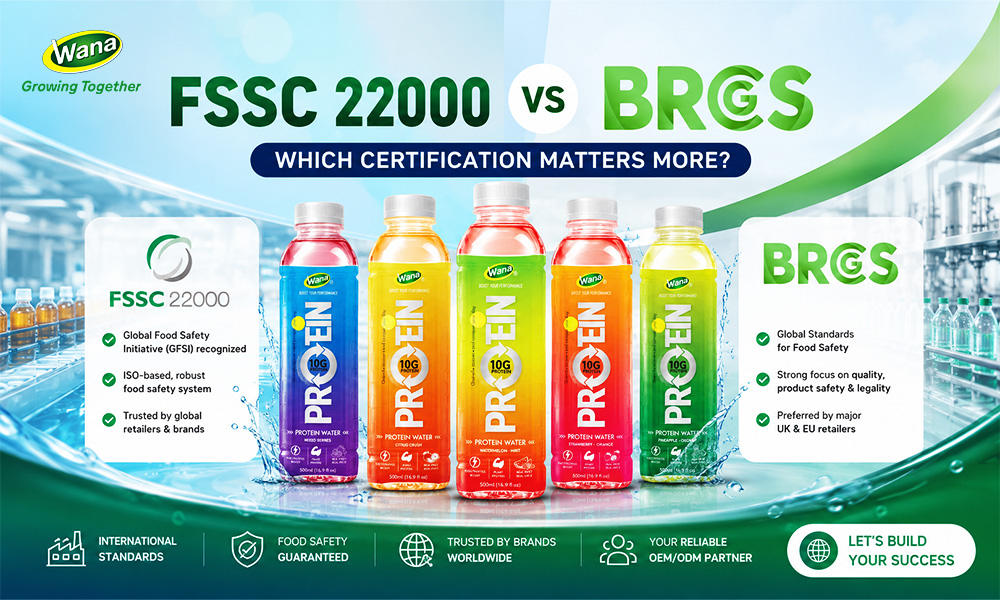
Among the most recognized standards in the beverage industry, FSSC 22000 and BRCGS are frequently mentioned. Both are benchmarked by the Global Food Safety Initiative (GFSI) and widely accepted by international buyers, yet they focus on different aspects of food safety and quality management.
Understanding these differences can help brands choose a manufacturing partner that aligns with their market requirements and long-term business strategy.
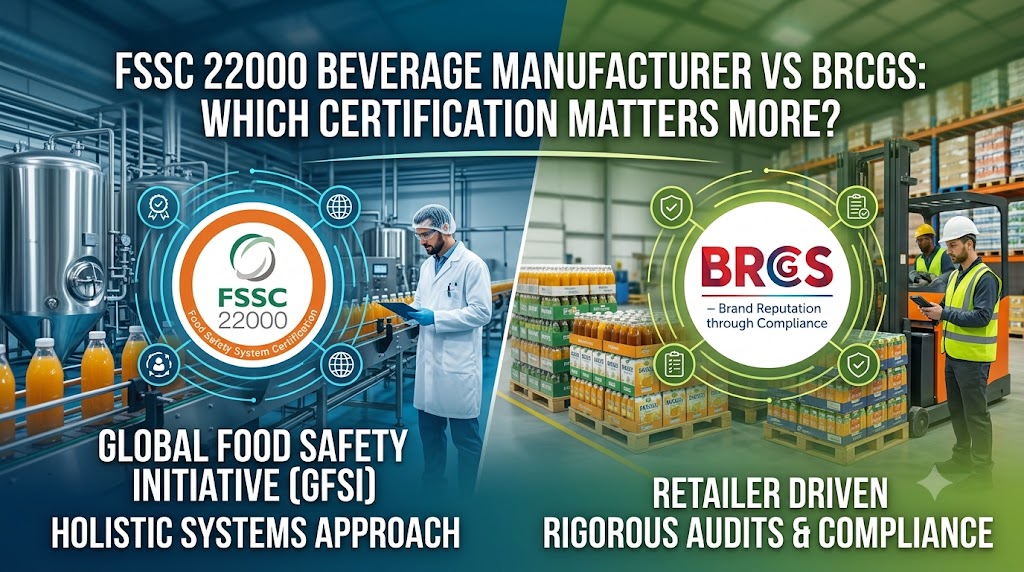
What Is FSSC 22000 Certification?
FSSC 22000 (Food Safety System Certification 22000) is one of the world’s leading food safety certification schemes for the food and beverage industry. Recognized by the Global Food Safety Initiative (GFSI), it is built on the ISO 22000 food safety management system and includes additional requirements to strengthen risk management and operational control.
For beverage manufacturers, FSSC 22000 provides a structured framework for identifying food safety risks, implementing preventive measures, and continuously improving production processes. It also demonstrates a commitment to producing safe, high-quality beverages that meet international market expectations.
Today, many OEM and private label beverage manufacturers adopt FSSC 22000 to enhance customer confidence and support global export opportunities.
What Is BRCGS Certification?
BRCGS (Brand Reputation through Compliance Global Standards) is an internationally recognized food safety certification originally developed by the British Retail Consortium (BRC) for UK retailers. Today, it is widely accepted by retailers, importers, distributors, and food service companies around the world.
Like FSSC 22000, BRCGS is also GFSI-recognized. However, it places a stronger emphasis on retailer requirements, product safety, quality management, operational controls, and factory compliance.
For beverage manufacturers, BRCGS certification demonstrates the ability to consistently produce safe, legal, and high-quality products while meeting the strict expectations of global retail markets.
Read more: BRC Certified Beverage Manufacturer: Why It Matters for Global Beverage Brands
FSSC 22000 vs BRCGS: Key Differences
Although both FSSC 22000 and BRCGS are recognized by the Global Food Safety Initiative (GFSI) and share the same goal of improving food safety, they are built on different frameworks and place emphasis on different areas.
The following comparison highlights the key differences between the two certifications.
| Criteria | FSSC 22000 | BRCGS |
| Main objective | Establish a comprehensive food safety management system | Ensure food safety, product quality, and compliance with retailer requirements |
| Based on | ISO 22000 + ISO/TS 22002-1 + FSSC additional requirements | BRCGS Global Standard for Food Safety |
| Audit approach | System-based, focusing on risk management and continuous improvement | More prescriptive, with detailed operational and compliance requirements |
| Documentation | Extensive documentation to support the food safety management system | Detailed documentation with a strong focus on operational control and compliance |
| Risk management | Strong emphasis on identifying, assessing, and controlling food safety risks | Strong emphasis on risk prevention, product integrity, and site management |
| Retail acceptance | Widely accepted by food manufacturers and international buyers | Highly recognized by retailers, supermarkets, and private label programs |
| Global recognition | GFSI-recognized and accepted worldwide | GFSI-recognized and widely accepted across global retail markets |
| Continuous improvement | A core requirement through regular management reviews and system improvement | Required through ongoing audits, corrective actions, and performance monitoring |
| Best suited for | Manufacturers seeking a robust ISO-based food safety management system | Manufacturers supplying retailers, supermarkets, and global private label brands |
While these differences may seem significant, neither certification is inherently better than the other. Instead, they address different business needs and customer expectations.
In the following sections, we’ll take a closer look at where FSSC 22000 and BRCGS overlap, and how beverage brands can determine which certification is the best fit for their manufacturing strategy.
Similarities Between FSSC 22000 and BRCGS
While FSSC 22000 and BRCGS have different structures and areas of focus, they share the same ultimate goal: helping manufacturers produce safe, high-quality food and beverages while meeting international market expectations.
Here are the key similarities between these two globally recognized certifications.
Both Are GFSI-Recognized
FSSC 22000 and BRCGS are both benchmarked by the Global Food Safety Initiative (GFSI). This recognition gives global buyers greater confidence that certified manufacturers follow internationally accepted food safety practices.
Both Require HACCP Principles
Both certification schemes are built on the principles of Hazard Analysis and Critical Control Points (HACCP). Manufacturers must identify potential food safety hazards, assess risks, and implement preventive controls throughout the production process.
Both Improve Traceability
Effective traceability is a core requirement of both standards. Manufacturers must be able to track raw materials, production batches, and finished products, allowing faster investigations and product recalls if necessary.
Both Strengthen Food Safety Culture
Neither certification focuses solely on documentation. They also emphasize employee training, management commitment, and company-wide responsibility for maintaining food safety throughout daily operations.
Both Support Continuous Improvement
FSSC 22000 and BRCGS encourage manufacturers to continuously review and improve their food safety management systems through regular audits, corrective actions, and performance evaluations.
Both Increase Buyer Confidence
For importers, distributors, retailers, and private label brands, both certifications provide assurance that a manufacturer operates under internationally recognized food safety standards. This can simplify supplier evaluations and strengthen trust during long-term business partnerships.
Which Certification Should Beverage Brands Choose?
There is no one-size-fits-all answer when choosing between FSSC 22000 and BRCGS. The right certification depends on your target market, customer requirements, and business objectives.
Rather than asking which certification is “better,” it’s more useful to consider which one best aligns with your brand’s needs.
Choose FSSC 22000 if…
FSSC 22000 may be the better choice if your business:
- Prioritizes a comprehensive food safety management system.
- Supplies products across multiple food and beverage sectors.
- Prefers an ISO-based framework with a strong focus on risk management and continuous improvement.
- Serves customers who recognize internationally accepted food safety management systems.
Its systematic approach makes it particularly suitable for manufacturers seeking long-term operational excellence and global market acceptance.
Choose BRCGS if…
BRCGS may be the better fit if your business:
- Supplies supermarkets and major retail chains.
- Works closely with private label or retailer-owned brands.
- Serves customers that specifically require BRCGS certification.
- Needs to meet detailed operational and compliance requirements commonly requested by retailers.
Because of its strong reputation in the retail sector, BRCGS is often preferred by buyers looking for suppliers that can consistently meet strict product safety and quality standards.
Choose a Manufacturer with Both if…
In many cases, the strongest choice is a manufacturer that holds both FSSC 22000 and BRCGS certifications.
Manufacturers with both certifications demonstrate a broader commitment to internationally recognized food safety and quality management systems. They are often better equipped to serve customers with different certification requirements across multiple markets and distribution channels.
For beverage brands planning to expand internationally, partnering with a manufacturer that maintains both certifications can provide greater flexibility, strengthen buyer confidence, and support long-term business growth.
Beyond Certifications: What Buyers Should Also Evaluate
Food safety certifications are an important indicator of a manufacturer’s credibility, but they shouldn’t be the only factor in your decision.
When evaluating an OEM beverage manufacturer, experienced buyers look beyond certificates to assess the manufacturer’s overall capability, consistency, and long-term reliability.
Manufacturing Consistency
A certified manufacturer should also be able to deliver the same product quality across every production batch. Consistent flavor, appearance, packaging, and shelf life are essential for protecting your brand reputation and maintaining consumer trust.
R&D Capability
Product development is more than creating a good-tasting beverage. A capable R&D team can optimize formulations, improve product stability, and adapt recipes to meet changing market trends and regulatory requirements.
OEM Experience
An experienced OEM manufacturer understands the challenges of developing products for different markets. From formulation and packaging to production planning and export documentation, practical experience helps projects move more efficiently.
Traceability
A reliable traceability system allows manufacturers to track every production batch from raw materials to finished products. This supports food safety, simplifies product recalls when necessary, and provides greater transparency for customers.
Export Capability
International markets often have different food safety regulations, labeling requirements, and documentation standards. Manufacturers with export experience are better prepared to support customers throughout the entire export process.
Communication
Clear and responsive communication is essential throughout product development and manufacturing. A reliable manufacturing partner keeps customers informed, responds quickly to technical questions, and provides timely updates during production.
Production Capacity
As your business grows, your manufacturing partner should be able to scale production while maintaining the same quality standards. Strong production capacity ensures reliable supply without compromising product consistency.
Ultimately, certifications demonstrate that a manufacturer follows internationally recognized standards, but long-term success depends on much more than compliance alone. Evaluating these additional capabilities can help brands choose a manufacturing partner that supports sustainable growth.
Read more: Consistent Quality Beverage Manufacturer: Why It Matters for Your Brand
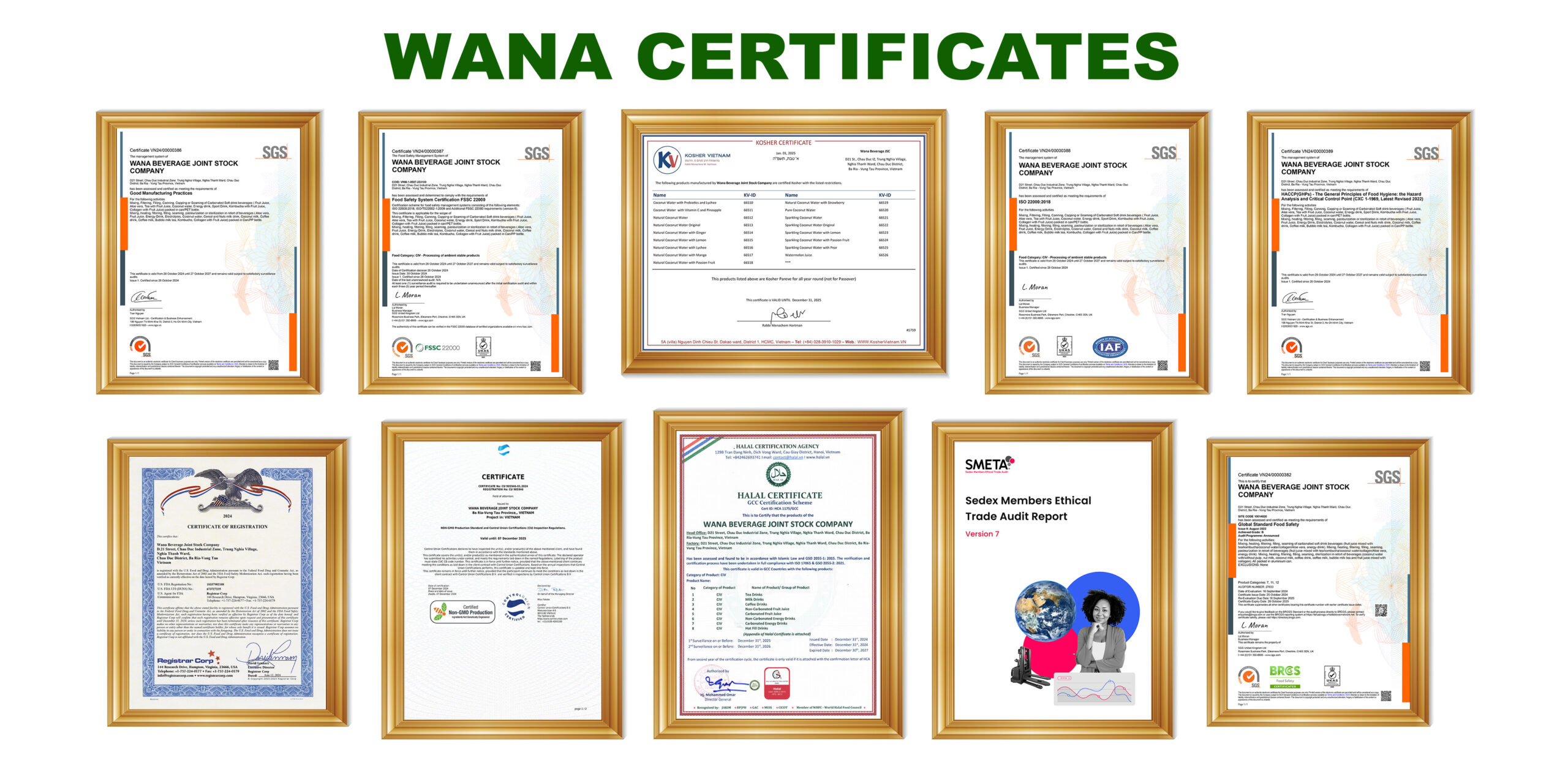
Why WANA Beverage Invests in Both FSSC 22000 and BRCGS
At WANA Beverage, we believe food safety is not defined by a single certification. Different customers have different market requirements, which is why we have invested in both FSSC 22000 and BRCGS to better support global beverage brands.
FSSC 22000 strengthens our food safety management system through a structured, risk-based approach, while BRCGS helps us meet the rigorous operational and quality expectations of international retailers and private label programs. Together, these certifications provide a solid foundation for serving customers across a wide range of export markets.
Our commitment extends beyond these two certifications. WANA Beverage also operates under internationally recognized standards, including FDA Registration, HACCP, ISO 22000, GMP, and HALAL, reinforcing our focus on food safety, product quality, and continuous improvement.
Combined with experienced R&D teams, modern manufacturing technology, and strict quality control throughout production, these systems help us deliver beverages that meet customer specifications consistently—from product development to global distribution.
For us, investing in international certifications is not simply about meeting audit requirements. It is about building a manufacturing system that gives every customer greater confidence in the quality, safety, and reliability of the products they bring to market.
Frequently Asked Questions
Is FSSC 22000 better than BRCGS?
It depends on your market and customer requirements. Both are strong food safety certifications, but BRCGS is often preferred by retailers, while FSSC 22000 is widely accepted for global food safety management.
Can a beverage manufacturer have both certifications?
Yes. Many manufacturers hold both certifications to meet different customer and market demands.
Which certification do retailers prefer?
Many retailers prefer BRCGS because it is closely aligned with retail and private label requirements.
Does FSSC 22000 help with beverage exports?
Yes. FSSC 22000 is internationally recognized and can support export credibility in many markets.
Is certification enough to choose an OEM beverage manufacturer?
No. You should also evaluate product quality, R&D capability, production consistency, export experience, and communication.
In Conclusion
There is no universal answer to whether FSSC 22000 or BRCGS is the better certification. Both are globally recognized food safety standards that help manufacturers produce safe, high-quality beverages while building trust with customers and regulatory authorities.
The right choice depends on your target market, customer requirements, and business objectives. Some buyers prioritize a robust food safety management system, while others require compliance with retailer-specific standards. Understanding these expectations is key to selecting the right manufacturing partner.
More importantly, certifications should be viewed as part of a bigger picture. When choosing an OEM beverage manufacturer, look beyond the certificate itself. Consider the manufacturer’s quality management system, production consistency, R&D capabilities, export experience, and commitment to continuous improvement.
By partnering with a manufacturer that combines internationally recognized certifications with proven manufacturing expertise, you can build a stronger, safer, and more competitive beverage brand for global markets.
Read more: 10 Questions Every Brand Should Ask Before Choosing a Discreet Beverage Manufacturer