Imagine your first beverage shipment receives excellent customer feedback.
Consumers love the taste, retailers place repeat orders, and your brand starts gaining momentum.
A few months later, the next production batch tastes slightly different. The change is subtle, but customers notice it. Retailers begin asking questions, and the trust you’ve worked hard to build starts to weaken.
This is a common challenge for growing beverage brands. Developing a great product is only the beginning—delivering the same quality in every batch is what drives long-term success.
That’s why choosing a consistent quality beverage manufacturer matters. A reliable manufacturing partner helps ensure every product meets the same standards for taste, appearance, safety, and quality, giving both consumers and retailers confidence in your brand.
In this article, we’ll explore why consistency is essential in beverage manufacturing and how the right OEM partner can help protect your brand as it grows.
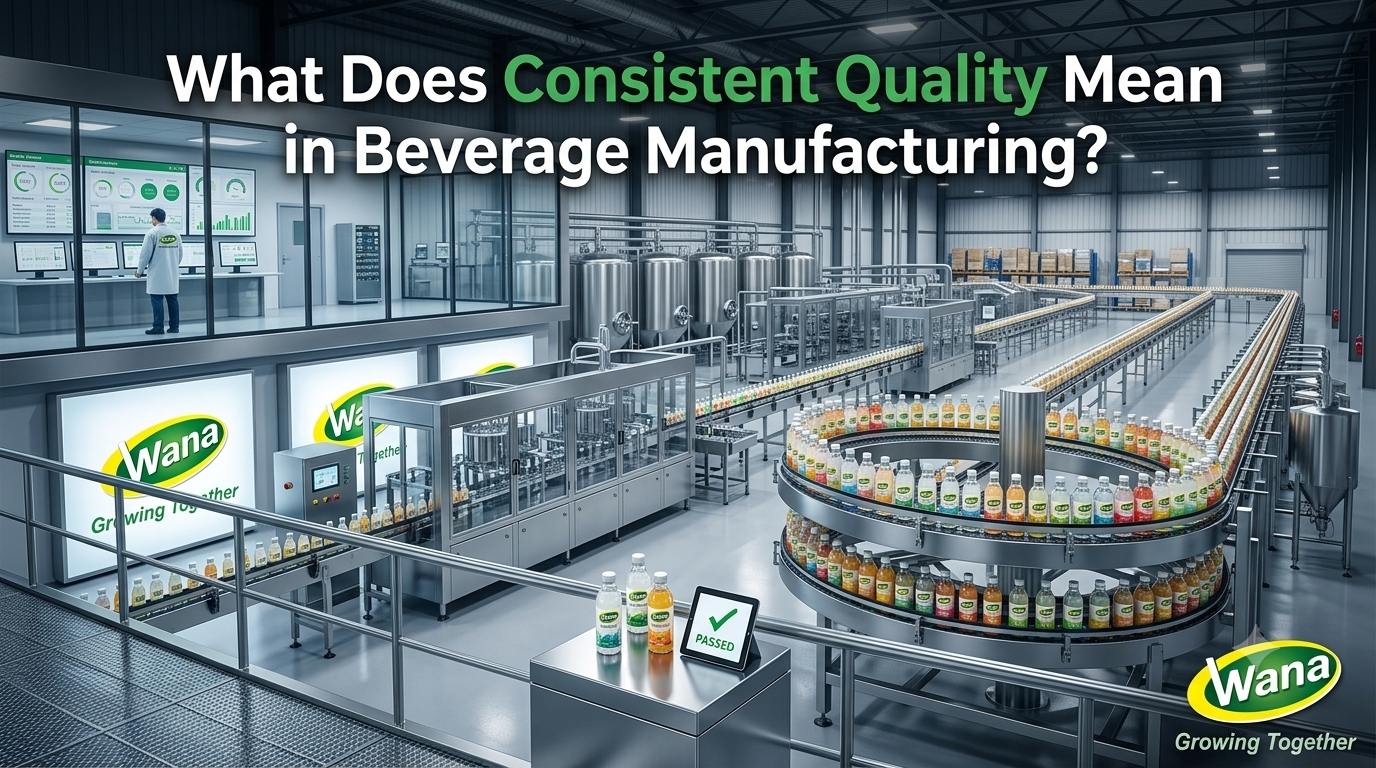
What Does Consistent Quality Mean in Beverage Manufacturing?
Consistent quality in beverage manufacturing means that every single product—whether it’s the first or the thousandth bottle in a batch—meets the exact same standards of flavor, safety, and physical properties. For a brand, this is non-negotiable; it means your customers experience the same refreshing taste and quality every time they purchase your drink.
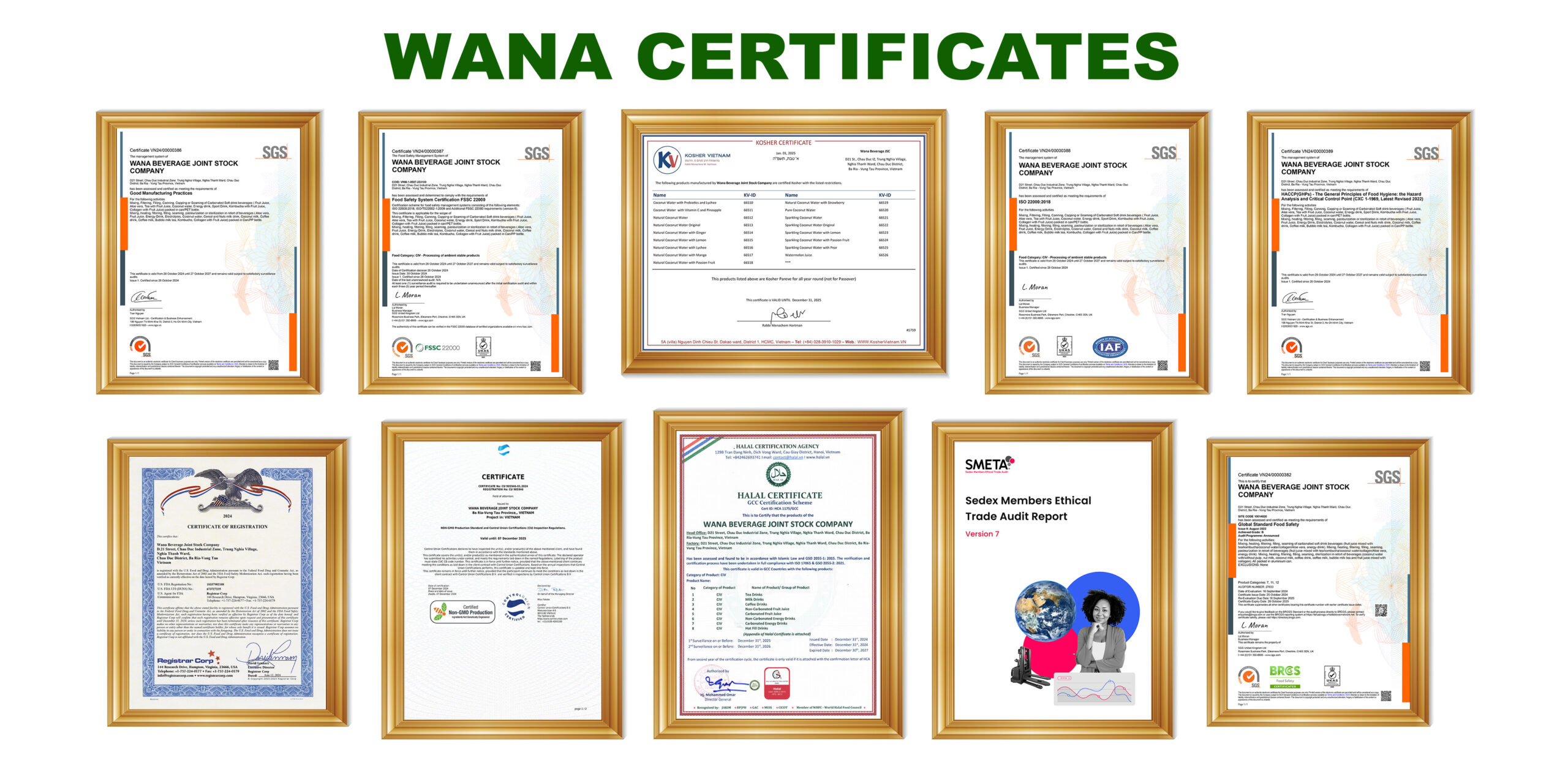
A consistent quality beverage manufacturer ensures this uniformity by strictly controlling every variable in the production process. This includes sourcing high-quality ingredients, maintaining precise formula control, calibrating equipment, and implementing rigorous in-process testing. At WANA Beverage, this commitment is backed by international certifications—including ISO 22000, FSSC 22000, and HACCP—which guarantee that our automated production lines deliver excellence in every container.
Why Consistent Quality Matters for Beverage Brands
For beverage brands, consistency is more than a production goal—it is a business advantage.
Consumers expect every bottle or can to deliver the same taste, appearance, and overall experience, regardless of where or when they purchase it. Even small differences between production batches can affect customer satisfaction, retailer confidence, and long-term brand growth.
Partnering with a consistent quality beverage manufacturer helps brands minimize these risks while building a stronger reputation in competitive markets.
Protecting Brand Reputation
A beverage brand’s reputation is built over time but can be damaged surprisingly quickly.
Imagine a customer enjoying your mango juice on their first purchase. They return a few weeks later expecting the same refreshing taste, only to find that the sweetness, color, or texture has changed. Even if the difference is slight, it can leave a lasting negative impression.
Consistent product quality helps protect the identity of your brand. When every production batch delivers the same experience, customers know exactly what to expect—and that reliability becomes part of your brand value.
For companies competing in international markets, maintaining consistency is just as important as developing innovative products.
Building Consumer Trust
Trust is one of the strongest drivers of repeat purchases.
Consumers rarely think about the manufacturing process behind their favorite beverages. What they do notice is whether the product tastes the same every time they buy it.
When brands consistently deliver the expected flavor, aroma, texture, and packaging quality, customers become more confident in their purchasing decisions. Over time, that confidence turns into loyalty.
On the other hand, inconsistent quality can create uncertainty. If customers are unsure what they’ll get with each purchase, they’re more likely to switch to another brand that offers a more reliable experience.
Reducing Customer Complaints
Even minor quality variations can lead to customer complaints.
Issues such as inconsistent flavor, uneven carbonation, color differences, packaging defects, or incorrect fill levels may seem small during production, but they can significantly impact the customer experience.
Maintaining strict quality standards throughout manufacturing helps reduce these problems before products reach the market.
Fewer complaints also mean fewer product returns, lower operational costs, and less time spent resolving quality issues. This allows brands to focus on product innovation and business growth instead of managing avoidable production challenges.
Supporting Retail Partnerships
Retailers value consistency just as much as consumers.
Supermarkets, convenience stores, distributors, and private label partners expect every shipment to meet the same quality standards. Inconsistent products can lead to customer dissatisfaction, increased returns, and disruptions throughout the supply chain.
A manufacturer that consistently delivers reliable products helps strengthen relationships with retail partners.
For growing beverage brands, this reliability can lead to repeat orders, expanded shelf space, and stronger long-term partnerships with distributors and retailers.
Ensuring Global Market Compliance
Exporting beverages requires more than meeting customer expectations. Products must also comply with food safety regulations, labeling requirements, and quality standards in different markets.
Maintaining consistent quality helps manufacturers meet these requirements more effectively by standardizing production processes, monitoring critical control points, and ensuring products remain within approved specifications.
For brands expanding internationally, working with a consistent quality beverage manufacturer reduces the risk of quality issues, supports regulatory compliance, and increases confidence among global buyers.
In today’s competitive beverage industry, consistency is no longer just a manufacturing objective—it has become a key factor in building sustainable growth across international markets.
What Causes Inconsistent Beverage Quality?
Maintaining consistent quality isn’t always easy. Beverage production involves numerous variables, and even small deviations can affect the final product.
From raw material sourcing to packaging, every stage of the manufacturing process must be carefully controlled. If one element falls outside the expected standard, it can lead to noticeable differences in flavor, appearance, texture, or shelf life.
Below are some of the most common causes of inconsistent beverage quality.
Raw Material Variations
Every beverage begins with its ingredients.
However, natural ingredients such as fruits, tea leaves, coffee beans, herbs, and botanical extracts can vary depending on harvest season, climate, growing conditions, and supplier practices.
Without strict raw material specifications and supplier qualification procedures, these natural variations can influence the taste, color, aroma, and nutritional value of the final product.
Reliable manufacturers minimize this risk by working with qualified suppliers and inspecting incoming ingredients before production begins.
Poor Formula Control
A beverage formula is designed to achieve a specific taste and product profile.
Even small changes in ingredient ratios can alter sweetness, acidity, viscosity, carbonation, or overall flavor balance.
When formulas are not standardized or accurately followed during production, product consistency becomes difficult to maintain.
Professional manufacturers use validated formulations, precise dosing systems, and documented production instructions to ensure every batch follows the same recipe.
Inconsistent Production Processes
A well-developed formula alone cannot guarantee consistent quality.
Production parameters—including mixing time, processing temperature, filling speed, sterilization conditions, and carbonation pressure—must remain consistent throughout every manufacturing run.
If these conditions vary from batch to batch, the finished beverage may also vary.
Standard operating procedures (SOPs) and automated production systems help manufacturers maintain greater control over critical processing stages.
Equipment Calibration Issues
Modern beverage manufacturing depends heavily on precision equipment.
Filling machines, mixing systems, pressure gauges, temperature sensors, and laboratory instruments all require regular calibration to maintain accuracy.
Poorly calibrated equipment can result in problems such as incorrect fill volumes, inconsistent carbonation levels, or variations in ingredient dosing.
Routine maintenance and calibration programs help manufacturers prevent these issues before they affect production.
Weak Quality Control Systems
Quality cannot be inspected only at the end of production.
Without effective monitoring throughout the manufacturing process, small problems may go unnoticed until products have already been packaged or shipped.
Strong quality control systems include raw material inspections, in-process monitoring, laboratory testing, and final product verification.
By identifying potential issues early, manufacturers can take corrective action before products reach customers.
Packaging Variations
Product consistency extends beyond what’s inside the bottle or can.
Packaging also influences how customers perceive quality.
Differences in bottle dimensions, can integrity, label placement, cap sealing, or printing quality can affect both product protection and brand image.
Consistent packaging standards help ensure every product meets customer expectations while protecting beverage quality during transportation and storage.
Human Error
Even with advanced manufacturing technology, people remain an essential part of beverage production.
Errors such as incorrect ingredient measurements, incomplete documentation, equipment setup mistakes, or deviations from standard procedures can all impact product quality.
Manufacturers reduce these risks through employee training, standardized work instructions, regular performance reviews, and continuous improvement programs.
While human error can never be eliminated entirely, a well-managed manufacturing system significantly reduces its likelihood and helps maintain consistent product quality across every production batch.
Fortunately, these challenges can be effectively managed with the right manufacturing systems, experienced teams, and standardized production processes. This is where a consistent quality beverage manufacturer makes a significant difference.
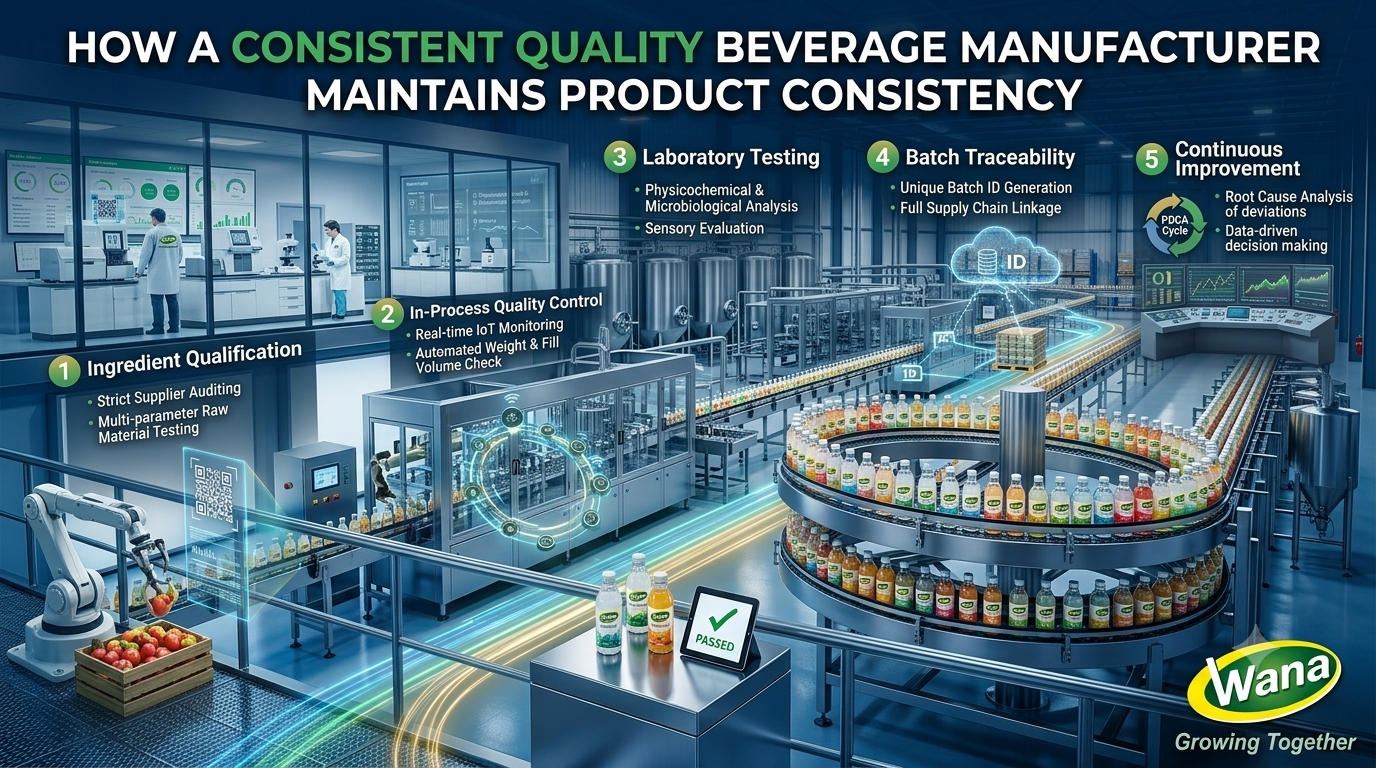
How a Consistent Quality Beverage Manufacturer Maintains Product Consistency
Consistent beverage quality doesn’t happen by chance. It is the result of well-designed systems, standardized procedures, advanced technology, and a culture of continuous improvement.
A consistent quality beverage manufacturer controls every stage of production—from ingredient sourcing to final inspection—to ensure that every batch meets the same quality standards. Here are the key practices that help maintain product consistency.
Ingredient Qualification
Quality begins long before production starts.
Selecting reliable suppliers and establishing strict ingredient specifications are essential to producing consistent beverages. Every raw material, whether it’s fruit puree, coconut water, tea extract, coffee, sweeteners, or functional ingredients, should meet predefined quality standards before entering the production line.
To maintain consistency, manufacturers typically:
- Work with qualified and trusted suppliers
- Inspect incoming raw materials
- Verify ingredient specifications
- Monitor storage conditions to preserve quality
By controlling ingredient quality from the source, manufacturers reduce variations that could affect the final product.
Standardized Formulations
A successful beverage formula should deliver the same taste and performance every time it is produced.
To achieve this, manufacturers rely on standardized formulations that specify exact ingredient ratios, processing parameters, and production instructions.
Rather than depending on manual adjustments, every batch follows validated recipes developed through research and product testing.
This standardized approach helps ensure:
- Consistent flavor profiles
- Balanced sweetness and acidity
- Stable texture
- Uniform nutritional values
For OEM and private label brands, standardized formulations also make it easier to scale production while maintaining product integrity.
Automated Production Systems
Automation plays an increasingly important role in modern beverage manufacturing.
Advanced production equipment helps minimize human error while improving process accuracy and repeatability.
Automated systems monitor and control critical production parameters such as:
- Ingredient dosing
- Mixing time
- Temperature
- Pressure
- Filling volume
- Carbonation levels
By reducing manual intervention, manufacturers can produce beverages with greater consistency across every production run.
Automation also improves production efficiency and supports large-scale manufacturing without compromising quality.
In-Process Quality Control
Quality should be monitored throughout production—not just after the beverage has been packaged.
A consistent quality beverage manufacturer performs regular inspections at key production stages to identify potential issues before they become larger problems.
Typical in-process quality checks include:
- Brix (sugar content)
- pH level
- Carbonation pressure
- Fill volume
- Temperature monitoring
- Packaging integrity
Continuous monitoring allows production teams to make immediate adjustments whenever results fall outside the established specifications.
This proactive approach reduces waste and helps ensure every batch meets customer expectations.
Laboratory Testing
Laboratory analysis provides another layer of quality assurance.
Before products are released for distribution, manufacturers conduct a series of tests to verify that beverages comply with internal quality standards and regulatory requirements.
These tests may include:
- Microbiological analysis
- Chemical testing
- Sensory evaluation
- Shelf-life studies
- Packaging performance tests
Laboratory testing helps confirm that each product is safe, stable, and consistent before reaching consumers.
For brands serving international markets, these testing procedures also support compliance with customer and export requirements.
Batch Traceability
Traceability has become an essential part of modern beverage manufacturing.
Every production batch should be fully documented, allowing manufacturers to identify the origin of raw materials, production records, quality inspection results, and packaging information.
An effective traceability system enables manufacturers to:
- Track products throughout the supply chain
- Investigate quality concerns efficiently
- Support product recalls if necessary
- Meet customer and regulatory documentation requirements
Comprehensive batch records also provide greater transparency for importers, distributors, and retail buyers.
Continuous Improvement
Maintaining consistent quality is an ongoing process.
Consumer preferences, food safety regulations, production technology, and market requirements continue to evolve. Successful manufacturers regularly review their operations to identify opportunities for improvement.
Continuous improvement may include:
- Upgrading production equipment
- Improving manufacturing procedures
- Enhancing employee training
- Optimizing quality control systems
- Introducing new testing technologies
By continuously refining their processes, manufacturers can improve operational efficiency while delivering beverages that consistently meet customer expectations.
Ultimately, consistency is not achieved through a single quality check. It is the result of disciplined systems, experienced teams, and a long-term commitment to excellence at every stage of beverage manufacturing.
Read more: Beverage OEM Supplier Confidentiality: How Manufacturers Protect Your Formula
What Global Buyers Look for in a Consistent Quality Beverage Manufacturer
Global buyers, ranging from international distributors to major retailers, prioritize specific markers of reliability and operational excellence when selecting a manufacturing partner. To ensure their brand reputation remains intact in competitive global markets, they typically look for the following:
Verified Quality Standards
Beyond promises of quality, buyers demand objective proof. Certifications such as ISO 22000, FSSC 22000, HACCP, BRCGS, GMP, FDA, and Halal serve as essential verification of a manufacturer’s commitment to safety and consistent excellence.
Scalable Operational Capacity
Consistency must be maintained regardless of volume. Buyers seek partners with high-speed, automated production lines that can handle large orders without sacrificing the precision or integrity of the final product.
End-to-End Traceability
Transparency is vital for risk management. Global buyers prioritize manufacturers that maintain comprehensive batch documentation, allowing them to track every ingredient and production step throughout the entire supply chain.
Strategic Logistics & Infrastructure
Reliability is also tied to supply chain stability. Access to major seaports, secure local ingredient sources, and proximity to key industrial zones are critical factors that help manufacturers minimize lead times and ensure timely delivery.
Formulation & Production Flexibility
Buyers need partners that can execute proprietary recipes and adapt to market trends. Whether through OEM/ODM or private-label services, the ability to translate complex formulas into repeatable production results is a key differentiator.
Proactive Quality Culture
Consistency is the result of a culture, not just a one-time check. Buyers favor manufacturers that invest in R&D, continuous employee training, and automated quality control systems that detect and prevent defects in real-time.
Why WANA Beverage Prioritizes Consistent Quality
At WANA Beverage, we believe consistency is what turns a great beverage into a trusted brand.
Every production batch should deliver the same taste, appearance, and quality that customers expect. To achieve this, we focus on controlling every stage of the manufacturing process—from ingredient sourcing to final inspection.
Carefully Selected Ingredients
Consistent products begin with consistent ingredients.
We work with qualified suppliers and carefully inspect incoming raw materials to help ensure every production batch starts with the same quality foundation.
Advanced Manufacturing & Quality Control
Our modern production lines combine automated manufacturing with strict quality control procedures.
Throughout production, our team monitors critical parameters such as Brix, pH, carbonation, fill volume, and packaging integrity to ensure every product meets customer specifications before it leaves the factory.
Built on International Standards
WANA Beverage operates under internationally recognized food safety and quality management systems, including BRCGS, FDA Registration, HACCP, ISO 22000, GMP, and HALAL.
These certifications reflect our commitment to producing beverages that meet international manufacturing and export standards.
Supporting Global Beverage Brands
Whether working with startups, private label brands, or established beverage companies, our goal remains the same: to manufacture products with reliable quality that customers can trust.
By combining experienced R&D, modern production technology, and disciplined quality management, WANA Beverage helps brands deliver a consistent drinking experience—batch after batch.
Frequently Asked Questions
Why is beverage consistency important?
Consistency is essential because it shapes how consumers perceive your brand. Customers expect the same taste, color, aroma, texture, and overall drinking experience every time they purchase a beverage. Even small variations between production batches can reduce customer satisfaction and weaken brand loyalty.
For beverage brands, consistent quality also helps minimize customer complaints, strengthen retailer relationships, and support long-term business growth.
How do manufacturers ensure consistent quality?
A consistent quality beverage manufacturer combines standardized operating procedures, qualified ingredients, advanced production technology, and strict quality control throughout the manufacturing process.
Key practices include:
- Working with qualified raw material suppliers
- Using standardized beverage formulations
- Operating automated production systems
- Monitoring production through in-process quality control
- Conducting laboratory testing
- Maintaining complete batch traceability
- Continuously improving production processes
Together, these systems help ensure every production batch meets the same quality standards.
Does certification guarantee consistency?
Certifications such as BRCGS, HACCP, ISO 22000, GMP, and FDA Registration demonstrate that a manufacturer follows internationally recognized food safety and quality management standards.
However, certification alone does not guarantee consistent product quality.
True consistency comes from how well those standards are implemented every day. Manufacturers must combine certified management systems with experienced teams, disciplined production processes, regular equipment maintenance, and ongoing quality monitoring to consistently deliver products that meet customer expectations.
Can OEM manufacturers produce identical batches?
Yes—provided they have the right systems in place.
Professional OEM beverage manufacturers use validated formulations, precise ingredient control, automated production equipment, and comprehensive quality assurance programs to minimize batch-to-batch variation.
Although natural ingredients may vary slightly due to seasonal conditions, experienced manufacturers adjust production parameters to maintain the same flavor profile, appearance, and product performance across every production run.
How can brands evaluate manufacturing consistency?
Before choosing an OEM partner, brands should look beyond production capacity and pricing.
Some important questions to ask include:
- Does the manufacturer follow internationally recognized quality standards?
- What quality control procedures are in place during production?
- How are raw materials qualified and inspected?
- Can the manufacturer provide batch traceability?
- What certifications does the factory hold?
- Does the company have experience serving international markets?
- Can they consistently reproduce products across multiple production runs?
Visiting the factory, reviewing quality documentation, and conducting a factory audit can also provide valuable insights into a manufacturer’s ability to maintain consistent product quality.
Read more: 10 Questions Every Brand Should Ask Before Choosing a Discreet Beverage Manufacturer
In Conclusion
Building a successful beverage brand takes more than developing a great recipe. It requires delivering the same high-quality product every time customers open a bottle or can.
From ingredient sourcing and formulation to production, quality control, and packaging, every stage of the manufacturing process influences the final product. Even small inconsistencies can affect consumer confidence, retailer relationships, and your brand’s reputation.
Choosing a consistent quality beverage manufacturer means partnering with a team that values precision, follows standardized processes, invests in modern manufacturing technology, and continuously improves its operations. These practices help brands reduce production risks, maintain customer satisfaction, and grow confidently in competitive global markets.
At WANA Beverage, we believe consistency is the foundation of every successful partnership. By combining experienced R&D, advanced production systems, internationally recognized certifications, and strict quality management, we help brands bring reliable, market-ready beverages to consumers around the world.
Looking for a consistent quality beverage manufacturer?
Discover how WANA Beverage supports global brands with reliable manufacturing, international quality standards, and flexible OEM, ODM, and private label solutions. Contact WANA Beverage today to discuss your project, request samples, and explore customized manufacturing solutions for your target market.