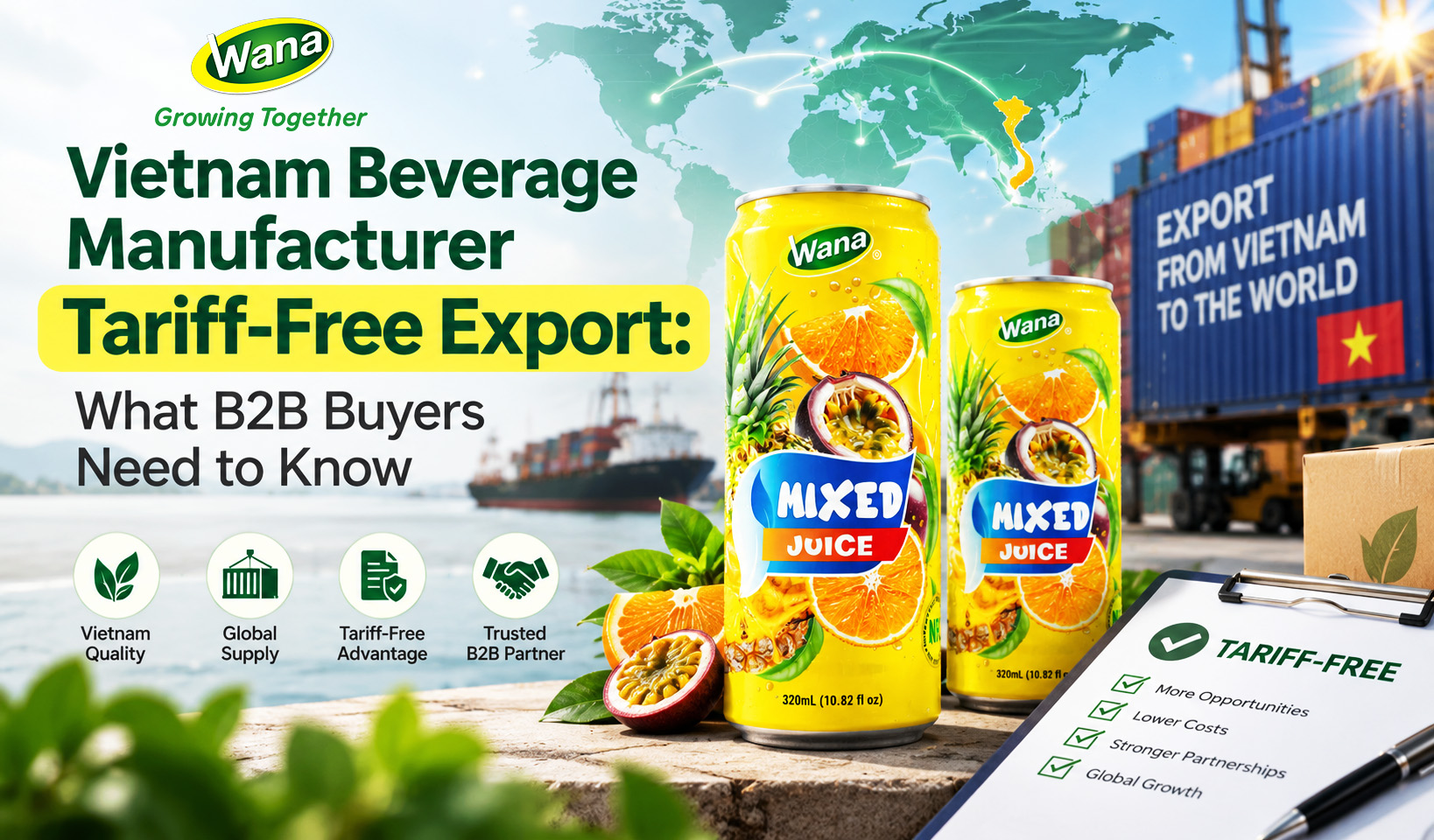
Choosing a Vietnam beverage manufacturer tariff free export strategy can help global beverage brands manage import costs and improve their competitiveness in international markets. However, “tariff-free” does not simply mean that a beverage is manufactured in Vietnam and automatically enters another country with zero import duty. The actual tariff treatment depends on several factors, including the destination market, product classification, applicable trade agreements, and rules of origin.
For B2B buyers, understanding these requirements is just as important as finding a manufacturer with competitive production costs. A beverage may be eligible for preferential or zero tariffs only when it meets the specific conditions of an applicable Free Trade Agreement (FTA) and the required origin criteria.
In practice, four elements should be considered together: FTA eligibility, HS code classification, rules of origin, and export documentation. Understanding how these factors work can help buyers evaluate the real cost advantage of sourcing beverages from Vietnam and avoid unexpected import duties during international shipments.
This guide explains what B2B buyers should know when sourcing beverages from Vietnam, how tariff benefits may apply, and what to check before choosing a Vietnam beverage manufacturer for export.
What Does “Tariff-Free” Mean for Beverage Imports?
When sourcing beverages internationally, the term “tariff-free” can be misleading if taken to mean that every product manufactured in Vietnam automatically enters a foreign market with zero import duty. In reality, the tariff applied to a beverage depends on the destination country, product classification, applicable trade agreement, and whether the product meets the required rules of origin.
For B2B buyers, it is useful to understand the difference between the following tariff treatments:
Standard Tariff
A standard tariff is the normal import duty applied when no preferential trade agreement or special tariff treatment is available. The rate can vary depending on the destination market and the beverage’s HS code.
Preferential Tariff
A preferential tariff is a lower import duty available under a Free Trade Agreement (FTA) when the product meets the agreement’s requirements. Beverages manufactured in Vietnam may benefit from preferential rates when exported to markets covered by relevant trade agreements.
Reduced Tariff
A reduced tariff means the applicable import duty is lower than the standard rate but may not necessarily reach zero. The reduction depends on the specific agreement, product category, and tariff schedule.
Zero Tariff
A zero tariff means no import duty is charged on an eligible product under the applicable tariff schedule. However, zero-tariff treatment is generally conditional and may require the product to satisfy specific rules of origin and documentation requirements.
Does a Vietnam-Made Beverage Automatically Qualify for Tariff-Free Import?
Not necessarily. A beverage manufactured in Vietnam may qualify for preferential or zero tariffs depending on the destination market, HS code, applicable trade agreement, and rules of origin.
This is why B2B buyers should not evaluate a Vietnam beverage manufacturer based on factory pricing alone. Before placing an order, buyers should confirm whether the specific beverage qualifies for tariff benefits in their target market and what documentation is required to claim those benefits.
In other words, “Made in Vietnam” can create tariff advantages, but eligibility must be verified for each product and destination market. Understanding these requirements early can help buyers calculate landed costs more accurately and avoid unexpected import duties.
Why Manufacturing Country Matters for Beverage Tariffs
The country where a beverage is manufactured can directly affect how the product is treated when it enters an international market. For B2B buyers, this makes the country of origin an important part of the sourcing decision—not just the factory location.
When a beverage is manufactured in Vietnam, it may be eligible for preferential tariff treatment under trade agreements between Vietnam and the destination country. However, eligibility is not based on the manufacturing location alone. The product must generally satisfy the applicable rules of origin and documentation requirements.
This is particularly relevant for beverages because their formulas can include ingredients sourced from multiple countries. For example, a Vietnamese manufacturer may use locally sourced coconut water or tropical fruit while also importing certain ingredients, additives, or functional components. Depending on the applicable trade agreement, the origin of these materials and the manufacturing process may affect whether the finished beverage qualifies for preferential treatment.
For this reason, B2B buyers should consider more than simply asking, “Is this beverage made in Vietnam?” A better question is:
“Does this specific beverage meet the origin requirements for preferential tariff treatment in my target market?”
A reliable Vietnam beverage manufacturer should be able to provide information about the product’s ingredients, manufacturing process, HS classification, and relevant export documentation. This information allows buyers, customs brokers, and importers to determine whether the product can benefit from an applicable trade agreement.
Ultimately, manufacturing in Vietnam can provide access to tariff advantages, but the benefit depends on the specific product, destination market, and applicable trade rules.
How to Determine If Your Beverage Qualifies for Tariff Benefits
Before assuming that a beverage qualifies for preferential or zero tariffs, B2B buyers should evaluate several factors. A practical approach is to work through the following steps.
Identify the Destination Market
Start by determining where the beverage will be imported. Different countries have different tariff schedules and trade agreements with Vietnam.
For example, Vietnam has trade agreements covering markets in Europe, Asia-Pacific, and other regions. The applicable agreement—and therefore the potential tariff benefit—depends on the destination country.
Confirm the HS Code
The HS code (Harmonized System code) is used by customs authorities to classify imported products. The applicable tariff rate is generally linked to this classification.
Beverages that appear similar from a consumer perspective may fall under different classifications depending on their ingredients, composition, and product characteristics. Therefore, buyers should confirm the appropriate HS code before calculating potential tariff savings.
Check the Applicable Trade Agreement
Once the destination market and HS code are identified, check whether an FTA or other preferential trade arrangement applies to the product.
The relevant tariff schedule can show whether the product receives:
- Standard tariff treatment
- A reduced preferential tariff
- A phased tariff reduction
- Zero import duty
The exact treatment should be verified for the specific product and import destination rather than assumed based on the fact that it is manufactured in Vietnam.
Verify the Rules of Origin
This is one of the most important steps.
Trade agreements generally include rules of origin that determine whether a product can be considered originating from Vietnam. These rules may consider factors such as where ingredients are sourced, how materials are processed, and whether sufficient manufacturing or transformation takes place in Vietnam.
For beverages using ingredients from different countries, reviewing the formula and production process early can help determine whether the finished product meets the applicable requirements.
Prepare the Required Origin Documentation
If the product qualifies for preferential treatment, the importer may need appropriate documentation to claim the benefit.
Depending on the applicable agreement and destination market, this can include a Certificate of Origin (C/O) or other accepted proof of origin.
An experienced beverage manufacturer can help provide the production, ingredient, and origin information needed to support the export documentation process.
Calculate the Potential Landed-Cost Advantage
Finally, buyers should compare the standard tariff with the applicable preferential rate and consider the impact on total landed cost.
The calculation should include more than the factory price. Buyers should consider:
Product cost + shipping + import duty + customs-related costs + other applicable charges = landed cost
A preferential or zero tariff can potentially reduce the import-duty component, but the actual savings depend on the product and destination market.
For this reason, checking tariff eligibility before finalizing the product formula, packaging, and commercial terms can help B2B buyers make more accurate sourcing decisions and avoid unexpected costs after production.
Trade Agreements B2B Beverage Buyers Should Know
Vietnam’s network of Free Trade Agreements (FTAs) can provide opportunities for beverage brands sourcing from the country. Depending on the destination market and product eligibility, agreements such as EVFTA, CPTPP, RCEP, and UKVFTA may offer reduced or zero import tariffs.
However, tariff benefits vary by product, HS code, and rules of origin. B2B buyers should verify the applicable agreement and requirements for their specific beverage before shipment.
Read more: EVFTA Beverage Vietnam EU Export: Lower Tariffs and New Market Opportunities
What Documents Should Buyers Request from a Vietnam Beverage Manufacturer?
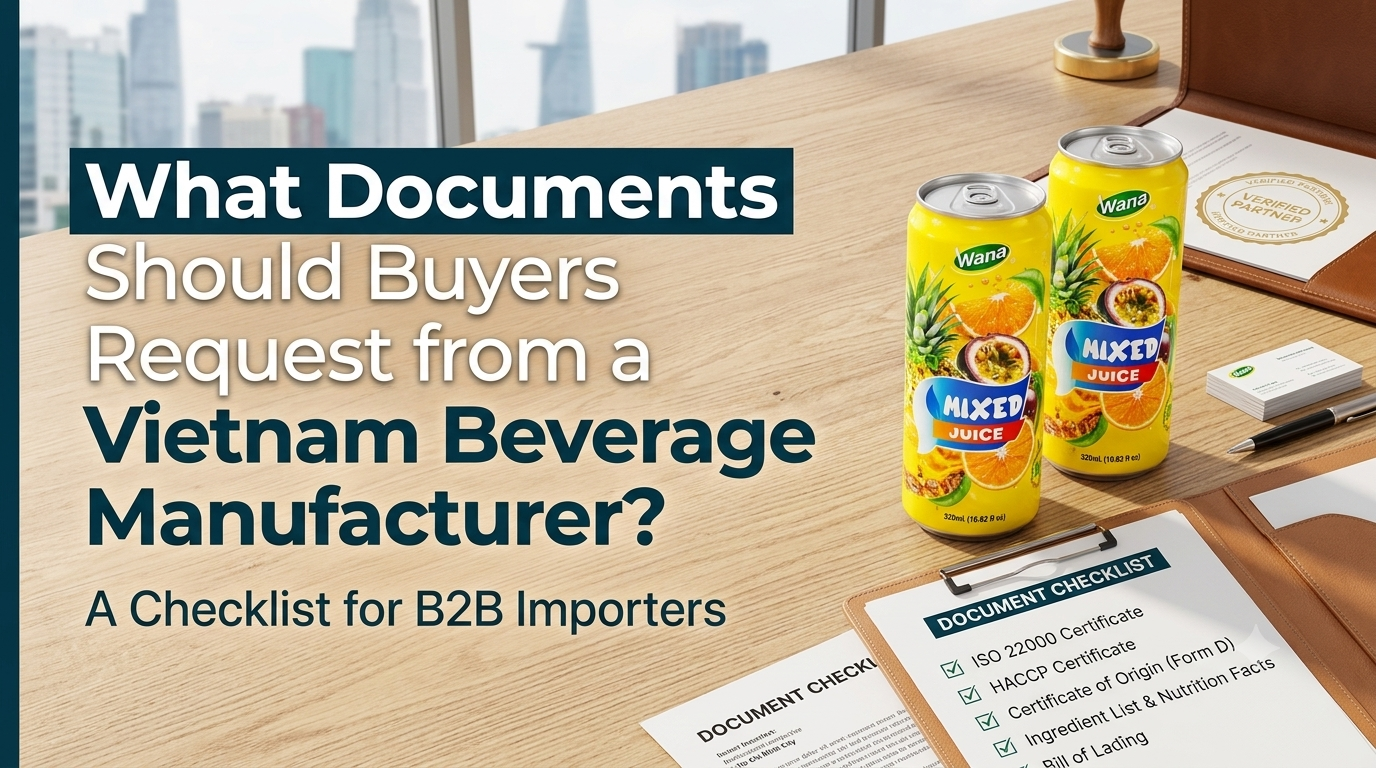
Before placing an export order, B2B buyers should confirm that the Vietnam beverage manufacturer can provide the documentation needed for customs clearance, product verification, and potential tariff benefits. The exact requirements vary by destination market and product category, but several documents are commonly important.
Certificate of Origin (C/O) is one of the key documents when buyers want to claim preferential tariff treatment under an applicable trade agreement. It helps demonstrate the product’s country of origin and should match the relevant origin requirements.
Buyers should also request the Commercial Invoice and Packing List to verify shipment details, quantities, product descriptions, and commercial values. These documents are commonly used during customs procedures.
For product verification, buyers may need Product Specifications, Ingredient Lists, and product-related technical documents. These help importers and customs authorities understand the beverage’s composition and classification.
Depending on the destination market, buyers may also require Food Safety and Compliance Documents, such as HACCP, BRCGS, FSSC 22000, ISO 22000, GMP, or other relevant certifications.
Finally, buyers should confirm the HS Code and export documentation requirements before shipment. Working with an experienced manufacturer can make this process more straightforward and help reduce documentation issues during customs clearance.
Why HS Code and Product Formula Matter
The HS code and product formula are two important factors when determining the tariff treatment of an imported beverage. Different beverage categories may fall under different HS classifications, which can affect the applicable import duty.
For example, fruit juice, coconut water, sparkling beverages, functional drinks, and energy drinks may have different classifications depending on their composition and product characteristics.
The formula also matters because the origin of ingredients can affect whether a beverage meets the rules of origin under a specific trade agreement. A product manufactured in Vietnam does not necessarily qualify for preferential tariffs if it does not meet the required origin criteria.
For B2B buyers, confirming the HS code and reviewing the formula early can help avoid unexpected tariff costs and documentation issues. An experienced Vietnam beverage manufacturer should be able to provide accurate information about the product’s ingredients, composition, manufacturing process, and relevant HS classification for further verification.
Common Mistakes B2B Buyers Make When Looking for Tariff-Free Beverage Sourcing
When sourcing beverages from Vietnam, buyers can make several mistakes that may affect their expected tariff benefits.
Assuming Vietnam-made means zero tariff
Manufacturing in Vietnam does not automatically guarantee tariff-free treatment. Eligibility depends on the destination market, HS code, FTA, and rules of origin.
Ignoring the HS code
Buyers may estimate import duties without confirming the correct product classification, leading to inaccurate cost calculations.
Overlooking rules of origin
Imported ingredients may affect whether the finished beverage qualifies for preferential treatment.
Choosing a manufacturer without export experience
A manufacturer unfamiliar with international documentation may create delays or compliance issues.
Focusing only on factory price
A lower production cost does not always mean a lower landed cost. Buyers should consider tariffs, shipping, customs, and other import-related expenses when evaluating the overall sourcing cost.
How to Choose a Vietnam Beverage Manufacturer for Tariff-Advantaged Export
Choosing the right Vietnam beverage manufacturer is about more than production cost. B2B buyers should evaluate whether the manufacturer can support both product quality and international export requirements.
Key factors to consider include:
- International food safety certifications such as BRCGS, FSSC 22000, HACCP, or ISO 22000
- Export experience in your target markets
- Product traceability and reliable batch control
- Consistent production quality across different batches
- R&D and formulation capabilities for customized beverages
- Flexible packaging options for different market requirements
- Export documentation support, including origin-related documents
- Knowledge of destination-market regulations
- OEM, ODM, and private label capabilities for customized production
A manufacturer that combines these capabilities can help buyers reduce potential compliance and documentation issues while building a more reliable long-term supply chain.
Read more: Understanding Vietnam OEM Beverage US Tariff Advantage: A Comprehensive Guide
Why WANA Beverage Is an Export-Ready Vietnam Beverage Manufacturer
WANA Beverage supports global brands from beverage development to commercial production and international export. Its capabilities include OEM, ODM, and private label manufacturing, supported by an in-house R&D team and modern production facilities.
The company maintains international food safety and quality certifications, including FSSC 22000, BRCGS, HACCP, ISO 22000, GMP, HALAL, and FDA Registration. WANA also offers multiple beverage categories and packaging formats to meet different market requirements.
With experience serving international customers, WANA focuses on consistent quality, production traceability, and export-ready documentation. This allows brands to work with one manufacturing partner throughout product development, production, quality control, and export preparation.
For brands exploring Vietnam as a beverage sourcing destination, tariff considerations are only one part of the decision. Quality, compliance, documentation, and export experience are equally important when building a reliable international supply chain.
FAQ
Is Vietnam tariff-free for beverage exports?
Not always. Tariffs depend on the destination market, product type, HS code, and applicable trade agreement.
Does manufacturing a beverage in Vietnam automatically qualify it for zero tariffs?
No. The product must meet the relevant rules of origin and documentation requirements.
How can I check the tariff for my beverage product?
Check the product’s HS code and consult the destination country’s tariff schedule or a customs expert.
What is a Certificate of Origin?
It is an official document proving where a product was manufactured or produced.
Do all Vietnamese beverages qualify for FTA benefits?
No. Eligibility depends on the product’s origin, HS code, and compliance with the specific FTA.
Can a Vietnam beverage manufacturer help with export documentation?
Yes. Many manufacturers can support documents such as Certificates of Origin, invoices, packing lists, and shipping paperwork.
Conclusion
Tariff advantage is not simply choosing Vietnam.
It is about having the right market + right HS code + right origin + right documentation + right manufacturing partner.
For B2B beverage buyers, understanding these factors before production and shipment can help identify potential tariff benefits, calculate landed costs more accurately, and build a more reliable international supply chain.