Before adding a manufacturer in Vietnam to your China Plus One beverage strategy, you need answers to three practical questions: Can the new site keep your product consistent? Can it source the packaging you need? Can it supply your target market at a workable cost?
This guide explains how to assess a second production source, from formula and packaging checks to trial batches, landed cost and export requirements.
Key Takeaways
- China+1 does not mean leaving China. Brands can retain production in China while qualifying Vietnam for selected products or backup supply.
- Transfer complexity depends on the formula, processing method and packaging, not just the beverage category. Validate each SKU with samples and a trial batch.
- Compare against your current baseline. Judge a Vietnam supplier on written quotations, trial results and confirmed schedules, not on price alone.
- Duty savings are not automatic. U.S. duties depend on your product’s HTSUS classification and country of origin, so verify both before building a cost case.
- Run a controlled transfer. Brief, reference sample, lab sample, packaging check, trial batch, then scale. Keep your current production running in parallel.
What Is China Plus One in Beverage Manufacturing?
China Plus One in beverage manufacturing is a sourcing model where a brand adds manufacturing capacity in another country, such as Vietnam, to supplement its existing China production. The aim is to reduce dependence on a single country, create backup capacity, and give the buyer more options when tariffs, logistics, lead times or market access change.
This differs from a full relocation. In a full relocation, the brand moves the production covered by the project out of China, rather than maintaining a second source alongside it. In a China+1 model, China may remain the main site for certain SKUs, packaging formats, ingredients or order volumes, while Vietnam becomes a second manufacturing country for selected products.
For beverage companies, that distinction matters. Formulas, taste profiles, ingredient availability, filling lines, labeling rules and shelf-life requirements vary by product. A phased approach lets a buyer test whether a Vietnam partner can match the required quality before moving large commercial volume.
When Should Beverage Brands Add a Second Manufacturing Country?
Beverage brands should consider a second manufacturing country when too much supply depends on one factory, one port, one regulatory environment or one cost structure. A China+1 plan is most useful when it protects continuity without forcing a rushed move that could disrupt flavor, packaging quality or launch timing.
Common triggers include:
- Supply concentration risk: If a single supplier in China makes most of your beverages, a factory delay, policy change, material shortage or capacity issue can affect your entire sales plan.
- Delivery disruption: Port congestion, shipping delays, container shortages or route changes can make it harder to meet retailer and distributor timelines.
- Capacity backup needs: A second production site can support seasonal demand, promotional runs or emergency replenishment when the primary factory is full.
- Serving new markets: Vietnam may help when serving buyers in the EU, UK, ASEAN or CPTPP markets, provided origin rules, documentation and landed cost support the business case.
- Tariff and compliance review: U.S. importers may consider a second production country when reviewing duty exposure, as long as the impact is confirmed for each product’s classification.
The right time to explore Vietnam is before a crisis. Brands get better results when they qualify suppliers, compare samples and validate documentation while the existing supply chain is still working.
Is Vietnam a Suitable Alternative for Your Beverage Products?
A Vietnamese factory can be a viable alternative to a China-based beverage manufacturer for some products, but suitability depends on the formula, ingredients, packaging, technology and target volume. The real question is not whether Vietnam can make beverages. It is whether a specific factory can reproduce your product safely, consistently and commercially at the scale you need.
Formula and process. Transfer complexity depends on the formula, processing method and packaging, not just the beverage category. A coconut water, RTD coffee, carbonated drink or dairy-based beverage can each have specific processing and stability requirements. Ask the factory what equipment and controls your product needs, such as mixing, filtration, pasteurization, hot-fill, aseptic, carbonation, retort or cold-chain capability.
Raw materials. Confirm whether key ingredients are available locally, must be imported or need approved substitutes. A formula may be harder to duplicate if it relies on an extract, sweetener, stabilizer or flavor supplied only by your current source, unless the Vietnamese manufacturer can source the same input or qualify an equivalent.
A second factory may still depend on the same ingredient or packaging suppliers as your current site. Ask where critical inputs come from and whether alternative sources have been approved.
Packaging. Check bottle, can, carton, pouch, cap, label, shrink sleeve, tray and case availability. If your product uses a custom mold, special can size, high-barrier packaging or unusual decoration, assess the packaging supply chain before the factory quote is meaningful.
Volume. Confirm minimum order quantities, batch sizes, line capacity and lead times so your pilot can become commercial production.
What to Compare Between Your Current and Proposed Manufacturer
Use the same criteria for both suppliers. Ask the proposed manufacturer to provide written answers and supporting records.
| Factor | Current manufacturer | Proposed Vietnam manufacturer |
|---|---|---|
| Product and process fit | Current approved specification | Capability and trial results |
| MOQ per SKU | Current order terms | Written quotation |
| Packaging supply | Supplier and lead time | Availability and tooling needs |
| Ingredient dependence | Current sources | Shared sources or alternatives |
| Production lead time | Actual recent performance | Confirmed production schedule |
| Landed cost | Existing cost baseline | Quote, freight and verified duties |
How to Evaluate a China Plus One Beverage Manufacturer
Check the manufacturer’s capabilities against your product requirements, using samples, audit records and production evidence. Agree on acceptance criteria before development begins so both teams know how samples and trial batches will be assessed.
- Formula replication ability: Share a controlled brief and reference sample. Ask how the factory will match taste, color, aroma, mouthfeel, sweetness, acidity, carbonation and shelf life.
- Testing procedures: Confirm testing for microbiology, stability, nutrition, °Brix, pH, heavy metals, preservatives, allergens and other parameters relevant to the product.
- Factory audits: Review food safety systems, production flow, sanitation, pest control, staff hygiene, water treatment, storage and batch release. Arrange a third-party audit if needed.
- Traceability: The manufacturer should trace raw materials, packaging lots, production dates, batch codes, retained samples and finished goods.
- Confidentiality safeguards: Use NDAs, controlled formula disclosure, limited supplier access and clear ownership terms for formulas, artwork and packaging designs.
- Export capability: Confirm experience with export documents, certificates, labeling files, palletization, container loading and freight forwarders.
If your buyer requires energy, packaging or emissions data, ask the manufacturer early what records it can provide.
Food Safety Certifications and Market Requirements
Ask which items below apply to your product and destination market, and request evidence for each.
| Requirement type | What to ask for |
|---|---|
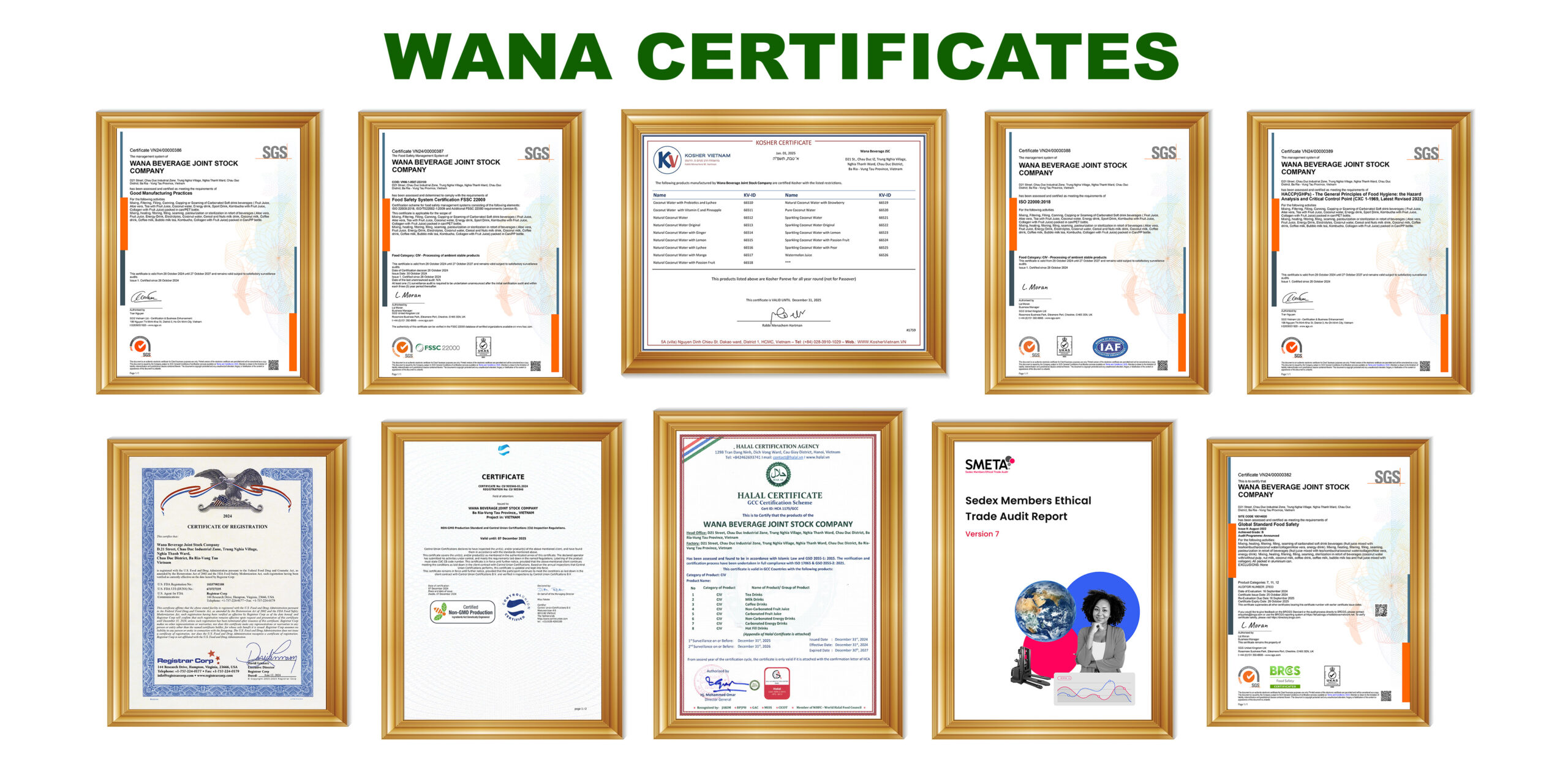
| Food safety systems and certification | The certifications required by your buyer and destination market (for example HACCP, ISO 22000, FSSC 22000, BRCGS or IFS). Verify that the scope covers the relevant facility and products, and check certificate validity and the latest audit date |
| Facility registration (U.S.) | FDA food facility registration for the manufacturing site |
| Product-specific process filings | Where your product falls within FDA’s acidified food or low-acid canned food rules. Do not assume this from the filling technology (hot-fill, retort or aseptic) alone; confirm with a regulatory specialist |
| Import-side obligations (U.S.) | Confirm applicable Prior Notice requirements, identify the responsible FSVP importer, and check whether an exemption or modified requirements apply |
| Religious or market certification | Halal certification from a body accepted in the destination country, if required |
| Supporting records | Recent third-party audit report, testing reports and traceability records |
Trade Agreements to Check for Your Destination Market
Preferential import duty depends on the destination, product classification and the agreement’s origin rules. Use the following agreements as starting points for a market-specific review.
| Agreement | Relevant markets | What to verify |
|---|---|---|
| EVFTA | EU | Product tariff schedule, origin rules and accepted proof of origin |
| UKVFTA | UK | Product tariff schedule, origin rules and accepted proof of origin |
| CPTPP | Participating markets such as Japan, Canada, Australia and Mexico | Product-specific origin rules, ingredient treatment and origin documentation |
| RCEP | Participating Asia-Pacific markets, including China, Japan, South Korea, Australia and New Zealand | Applicable tariff commitments, origin rules and whether cumulation is relevant to your inputs |
Ask your importer or customs broker which agreement, if any, offers suitable treatment for the product. An agreement covering the destination does not by itself establish eligibility. For example, Canada’s CPTPP guidance on claiming preferential treatment explains the origin certification needed for a claim.
How to Transfer or Duplicate Beverage Production
Transferring production works best as a controlled duplication project, not a simple purchase order. The objective is a second source that can produce a commercially acceptable product while preserving brand standards.
- Prepare the brief: Include formula details where appropriate, target market, product format, packaging, certifications, shelf-life expectations, testing needs and estimated volumes.
- Send a reference sample: Provide current production samples, packaging samples, artwork, specifications and benchmark sensory notes.
- Run development testing: Let the manufacturer create lab or pilot samples, then compare flavor, color, texture, carbonation, sweetness, acidity and stability.
- Confirm packaging: Validate bottle, can, carton, closure, label, coding, case pack, pallet pattern and export carton strength before trial production.
- Produce a trial batch: Test line performance, filling accuracy, packaging quality, batch records and finished-product testing.
- Scale up production: Move from pilot to commercial volume only after approvals, documentation, costing and logistics are stable.
Qualifying a second manufacturer does not reserve production capacity. Agree on material availability, minimum order quantities and scheduling before relying on the site for urgent replenishment.
Keep your current production active during the transfer if possible. That allows side-by-side comparison and avoids forcing the Vietnam supplier to solve every issue under deadline pressure. Learn more about our OEM beverage manufacturing services when assessing whether WANA fits your project.
Compare Total Landed Cost Before Moving Production
Compare quotations using the same product specification, order quantity, currency, delivery point and Incoterm. A lower factory price may be offset by packaging procurement, freight, duties or additional inventory.
Separate recurring supply costs from the one-time cost of qualifying the second site:
- Recurring costs: beverage and packaging, transport, applicable duties, inspection, storage and inventory financing.
- Transition costs: sample development, laboratory testing, packaging tooling, audits, trial production and any obsolete materials.
Ask the manufacturer to identify what the quotation includes and excludes. Then compare the proposed supply plan with your current cost baseline. For more detail on the factors to compare, see our Vietnam vs China beverage manufacturing cost guide.
U.S. Duties and Country of Origin: What to Verify
Moving production to Vietnam does not automatically reduce U.S. import duties. Compare the treatment of the specific product under each origin, including its HTSUS classification, additional duties and any applicable exclusions.
The USTR Section 301 announcement published in July 2026 illustrates why buyers should check the scope of each measure instead of assuming that Section 301 only concerns China. Use the rules in force at the time of import, rather than a historical headline rate, when calculating landed cost.
The country of shipment does not establish the product’s origin. If Chinese concentrates, ingredients or semi-finished inputs are used, have a customs broker or trade counsel assess the actual processing in Vietnam. Keep records of inputs and production steps for each SKU. Preferential origin under a trade agreement and origin for U.S. trade remedies should be reviewed under their respective rules.
Before committing to a supply plan:
- Confirm the product’s classification using the USITC Harmonized Tariff Schedule and qualified classification advice.
- Check current duties, the scope of relevant measures and product exclusions.
- Review comparable decisions in CBP’s CROSS rulings database. Similar rulings can inform the review, but may not determine the outcome for a different formula or process.
- Have the importer confirm the origin evidence and documents needed for entry.
For other destinations, check the relevant tariff schedule and origin requirements. Our guide to import duties and rules of origin for beverages from Vietnam outlines the questions to discuss with suppliers and import partners.
Practical Buyer Checklist
Before placing a trial order, agree on the following points in writing:
- The product specification and reference sample to use when assessing the trial.
- Any permitted ingredient substitutions and who must approve them.
- Packaging specifications, artwork, coding and case configuration.
- The testing plan, acceptance criteria and shelf-life validation requirements.
- The documents needed for the destination market and who will provide them.
- Trial quantity, costs, material availability and production schedule.
- Formula ownership, confidentiality and the process for approving changes.
Review the trial results against these requirements before authorizing commercial production.
Frequently Asked Questions
Can we keep our China factory while adding Vietnam?
Yes. That is how China Plus One works. Brands can keep China for existing SKUs, complex packaging or high-volume items, and qualify Vietnam for backup capacity, regional supply or selected products. Running both during the transfer lets you compare batches side by side.
Will a Vietnam factory match our current flavor?
Possibly, but it must be proven through sampling. Flavor depends on ingredients, water, processing and packaging interaction. Share a reference sample and a sensory brief, then compare lab samples and a trial batch against current production before approving volume.
How much does it cost to add a Vietnam manufacturer?
Compare total landed cost, not unit price: development samples, MOQ, packaging, freight, duties, testing, safety stock and transition inventory. Vietnam can be cheaper for some products and markets, but not automatically. Request a written quote and compare it with your current baseline.
What determines the MOQ and lead time?
MOQ depends on the beverage formula, packaging format and production setup. Ask for the minimum quantity per SKU and clarify whether different SKUs can be combined in one shipment.
The schedule should distinguish sample development, packaging procurement, trial production and the first commercial order. Confirm these stages in writing, including which approvals are needed before production can begin.
What certifications should a Vietnam beverage manufacturer have?
Ask for the food safety certifications required by your buyer and destination market, and verify that their scope covers the relevant facility and products. For U.S. sales, also ask for FDA food facility registration. Halal applies where the market requires it.
Does moving production to Vietnam reduce U.S. duties?
Not automatically. Compare the duties and exclusions that apply to your product under each origin, using its HTSUS classification and the rules in force at the time of import.
How do we protect our formula?
Use an NDA, disclose only what each stage needs, define formula and artwork ownership in the contract, and limit supplier access to specifications. Ask the factory how it controls batch records, retained samples and staff access before sharing the full formula.
Discuss Your China Plus One Project with WANA
WANA Beverage is a Vietnam-based OEM, ODM and private label beverage manufacturer. Our product range includes coconut water, fruit juice drinks, aloe vera drinks, energy drinks, RTD tea and coffee.
If you are considering a second production source, share your product specifications, reference samples and packaging requirements with our team. We can review the project and discuss the requirements for sampling, production and quotation.
Please include your target market, estimated order quantity per SKU, annual demand and preferred launch date. Let us know which product characteristics must remain unchanged and whether you are open to alternative ingredients or packaging.