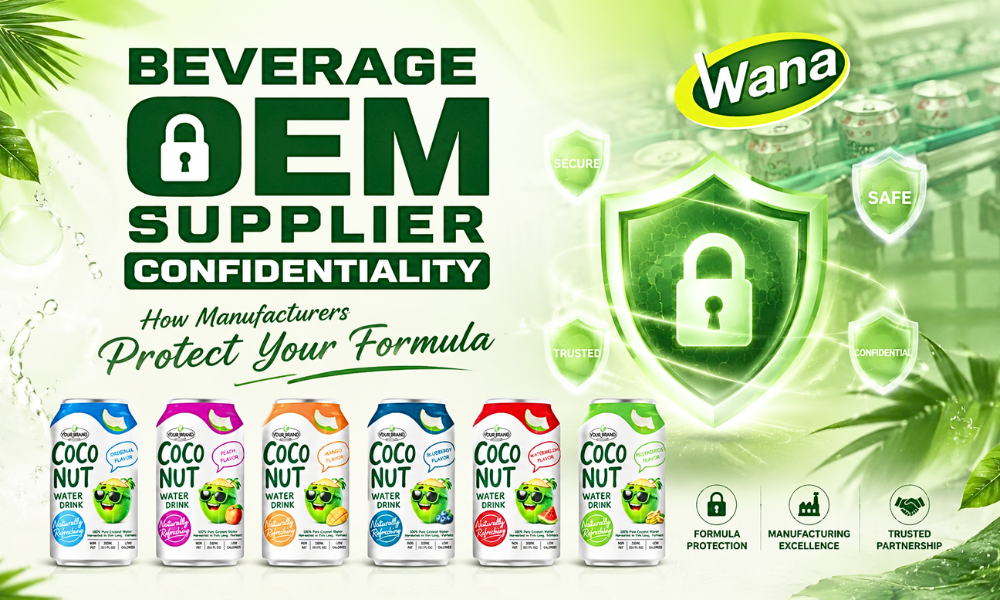
Beverage OEM supplier confidentiality matters when brands share formulas, ideas, packaging plans, or sales data with a maker. If you want to learn how to protect your beverage formula, start with clear rules for who can see the data and how it is used.
A beverage formula can require months of R&D, testing, and investment. That is why beverage formula confidentiality should be addressed before production begins.
For startups, established brands, importers, distributors, and private label teams, oem supplier confidentiality is not just about keeping a recipe secret. It also covers ingredient specs, concept notes, packaging, prices, market plans, and launch dates.
A reliable OEM beverage manufacturer should protect this data with clear agreements, limited access, secure files, and formula ownership rules. These steps help brands build and make products without putting IP at risk.
In this guide, we explain how beverage OEM supplier confidentiality works, what data should stay private, how makers protect customer formulas, and what to check before you choose a partner.
Read more “Unlocking the Secrets: How to Build Your Own Beverage Brand OEM from Scratch“
What Is Beverage OEM Supplier Confidentiality?
At its core, beverage OEM supplier confidentiality is the set of agreements, policies, and operational procedures used to protect a customer’s confidential information throughout the manufacturing relationship.
This protection goes far beyond the beverage formula. During product development, brands often share product ideas, ingredient specs, package designs, price plans, launch timelines, and target markets. Together, these items shape a brand’s market position and deserve the same care as the finished product.
A reliable OEM manufacturer treats this information as confidential from the first talk. Instead of relying on trust alone, good beverage manufacturer set clear rules for how data is received, stored, viewed, and used during research, development, production, and after the project ends.
Why Beverage OEM Supplier Confidentiality Matters
Unlike many products, beverage brands often compete through new ideas.
A unique flavor mix, a functional ingredient blend, a reduced-sugar formula, or a new package concept can become the key feature that sets one brand apart from another. In many cases, years of study and market research are packed into one formula.
If unauthorized parties access that information, competitors may develop similar products. That can weaken the brand’s originality and value.
This is especially true in today’s beverage market, where trends move fast. Categories such as functional drinks, sparkling drinks, ready-to-drink coffee, botanical drinks, and tropical fruit juices keep drawing new entrants. As competition grows, IP protection becomes a basic part of a strong beverage business.
For manufacturers, keeping things private is not only a work duty. It also shows long-term care for customer ties. Brands are more likely to stay with partners they trust to guard their ideas and business goals.
Who Needs Beverage OEM Supplier Confidentiality?
Confidentiality matters for businesses of every size, not just global beverage companies.
Startup beverage brands often spend a lot of time and money on their first product. Since their edge often depends on one new idea, protecting that idea from day one is key.
Established beverage companies often launch new product lines to enter new markets or respond to changing consumer trends. Before these products are public, every detail, from the formula to the marketing plan, must stay private.
Importers and distributors working with OEM manufacturer also need strong confidentiality rules, especially when they create exclusive beverage products for regional markets. These products are often made for a specific customer base and should not be copied for rivals.
Likewise, private label retailers rely on confidentiality to keep their products exclusive under their own brands. From custom formulas to unique package designs, protecting private info helps preserve brand distinction in very competitive retail spaces.
No matter the company size, every business wants a partner who respects IP, protects confidential information, and builds trust through good business habits.
In the end, beverage OEM supplier confidentiality is about more than keeping a formula secret. It reflects a maker’s ability to protect new ideas, respect customer ownership, and build the trust needed for long-term work.
What Confidential Information Should OEM Beverage Suppliers Protect?
When people think about confidentiality in beverage making, they often picture only the formula. In real life, the formula is just one piece of a larger puzzle.
From the first talk with an OEM maker to commercial production, brands share a lot of sensitive data. Each detail adds to the product’s uniqueness and, if shared, could weaken a company’s edge.
Knowing what to protect is the first step to picking a trustable partner.
Private Beverage Formulas
The beverage formula is often the most valuable IP a brand owns.
Whether it is a tropical juice blend, an energy drink, a sparkling drink, or a functional mix, every recipe reflects months of research, testing, and fine-tuning. Even small changes in ingredient ratios can change taste, shelf life, nutrition, and cost.
For this reason, private formulas should always stay confidential during development and manufacturing.
Confidential info may include:
- Ingredient ratios and percentages
- Functional ingredient mixes
- Flavor systems
- Sweetener choices
- Processing settings
- Shelf-life tuning methods
Protecting these details helps keep the product exclusive to the brand that paid to create it.
Product Concepts and Innovation
Long before production starts, many beverage brands share ideas that have not yet reached the market.
These concepts may include:
- A new beverage category
- A new flavor mix
- A functional position plan
- Consumer study findings
- Product launch plans
For startups, the idea itself can be just as valuable as the final formula.
Imagine spending six months creating a drink for athletes or a new blend of coconut water and plant extracts. If that concept becomes public before launch, rivals may release a similar product first.
Confidentiality helps protect not only what the beverage contains, but also the idea behind it.
Packaging and Branding Information
Packaging plays a big role in how people notice and remember a beverage.
During development, manufacturer often get access to:
- Label art
- Package specs
- Bottle or can choice
- Brand rules
- Marketing messages
- Product position
These materials show more than visual style. They show how the brand plans to compete.
For private label retailers and premium beverage brands, protecting package ideas is just as important as protecting the beverage itself.
Commercial and Business Information
Some of the most sensitive data shared with an OEM maker is not technical at all.
Brands often talk about:
- Target export markets
- Sales plans
- Price structures
- Distribution channels
- Production forecasts
- Product launch schedules
Taken together, this data gives a clear view of a company’s business plan.
A professional maker knows that commercial data deserves the same care as technical docs. Strong confidentiality practices should cover every stage of the relationship, not just product development.
How Beverage OEM Suppliers Protect Your Formula
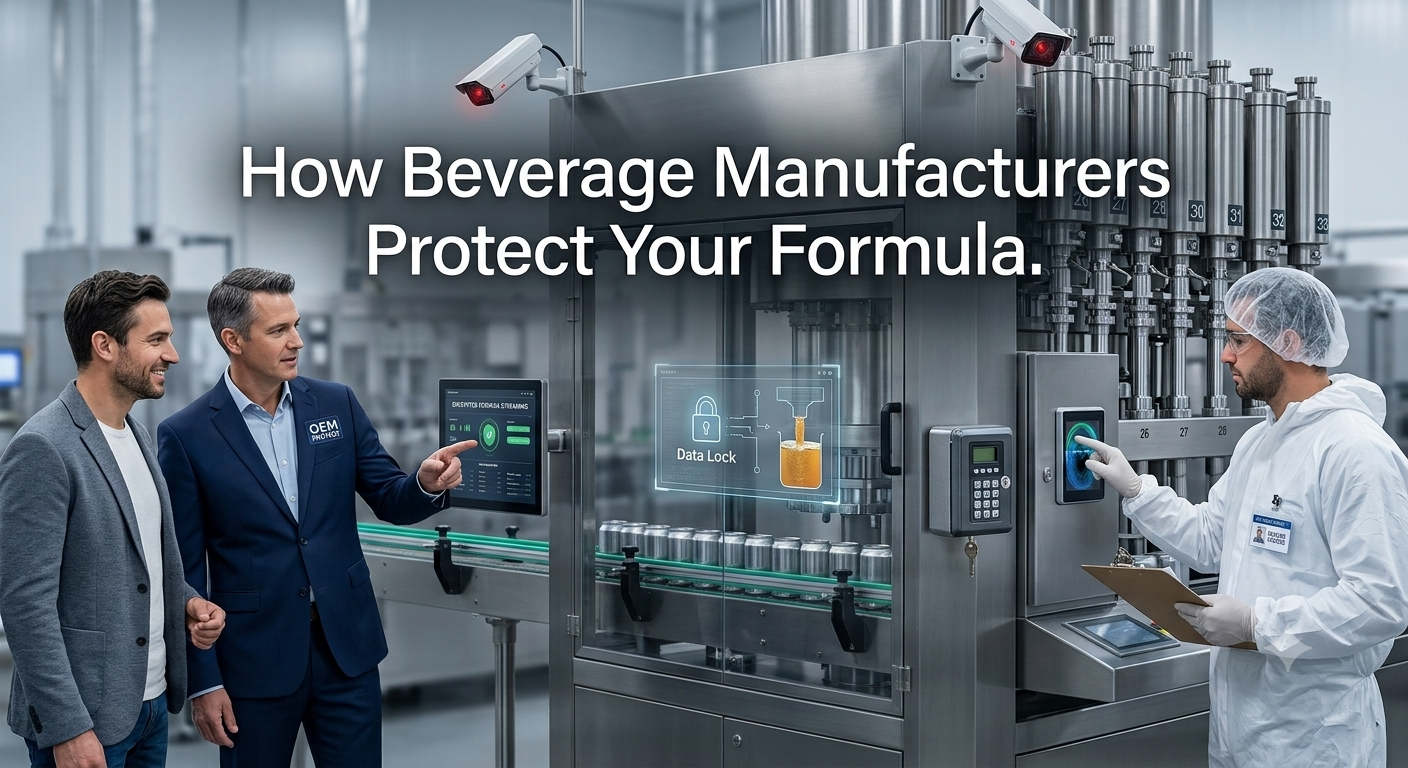
Protecting a customer’s beverage formula takes more than keeping files in a secure folder. It takes legal deals, internal steps, limited access, and a company culture based on professionalism and trust.
Experienced makers know that every customer brings valuable IP into the process. Their job is to keep it safe from the first talk to commercial production.
Here are some common ways trusted beverage makers protect customer formulas.
Non-Disclosure Agreements (NDAs)
One of the first steps many manufacturer take is signing a Non-Disclosure Agreement, or NDA.
An NDA sets the legal rules for what is private, who can see it, and how that data may be used during the partnership.
Not every project needs an NDA right away, but many beverage brands, especially startups and companies with new products, want one before they share formula details or business plans.
A clear NDA creates trust from the start and gives both sides confidence to move ahead with product development.
Restricted Access to Sensitive Information
Protecting confidential information also means limiting who can see it.
In professional plants, beverage formulas are not shared across the whole company. Access is usually limited to the staff directly involved in the project, such as R&D specialists, quality managers, or selected production staff.
This controlled access cuts needless exposure and lowers the risk of confidential information being seen or shared without approval.
The fewer people who handle sensitive data, the stronger the protection.
Secure Data Management
Today’s beverage development process depends a lot on digital docs.
Product formulas, lab results, ingredient specs, technical drawings, and customer messages are often stored digitally. Without good control, these files can be lost or seen by the wrong person.
Reliable OEM manufacturer use structured file systems to sort and protect customer data through every stage of product development.
Good data practices usually include:
- Safe storage of formula files
- Version control for product changes
- Controlled access rights
- Regular backups
- Organized technical docs
These steps help keep both privacy and tracking as projects move along.
Confidential Production Procedures
Formula protection does not stop once production starts.
During manufacturing, confidential information still appears in batch sheets, process notes, and quality docs. Manufacturers therefore need clear work steps to keep sensitive data safe on the factory floor.
Professional production management may include:
- Controlled production docs
- Safe handling of customer specs
- Internal privacy rules
- Staff training on data safety
- Limited sharing of technical docs
These steps help prevent private product info from being needlessly copied, shared, or disclosed during daily work.
Building a Culture of Trust
In the end, confidentiality is not only about contracts or tech. It is about people.
The most trusted beverage manufacturer build a company culture where protecting customer data is part of the job. Staff know that every formula, every product idea, and every business talk belongs to the customer.
When confidentiality becomes part of a company’s culture instead of just a written policy, brands gain something even more valuable than legal protection: confidence.
For many businesses, that confidence becomes the base of a long-term manufacturing partnership built on trust, respect, and shared success.
Formula Ownership: Who Owns the Beverage Formula?
One of the most common questions beverage brands ask before working with an OEM maker is simple:
If we develop a product together, who owns the formula?
The answer depends on how the formula is made and what both sides agree to before the project begins.
Knowing formula ownership early can prevent mix-ups and help build a clear, long-term partnership.
Customer-Owned Formulas
In many cases, customers already have a finished beverage formula before they contact a manufacturer.
The maker’s role is to check the formula, run pilot production if needed, and scale it for commercial use.
Since the customer created the formula alone, ownership usually stays with the customer. The maker simply produces the drink to the agreed specs while keeping all technical data private.
OEM-Developed Formulas
Some brands come to an OEM maker with only an idea.
They may know the kind of beverage they want to launch but rely on the maker’s R&D team to create the full formula.
In these cases, ownership should be clear before development starts.
Depending on the deal, the finished formula may be:
- Owned only by the customer
- Shared by both sides
- Kept by the maker as part of its formula library
There is no single right answer. What matters most is that both sides talk openly before development begins.
Custom Formulation Agreements
For brands investing in a unique beverage idea, a custom formula agreement gives extra clarity.
These agreements usually define:
- Formula ownership
- Sole rights
- IP rights
- Future production rights
- Terms for changes
Clear docs protect both the customer and the maker while lowering the risk of disputes as the business grows.
Questions Every Brand Should Ask
Before sharing product data with any OEM partner, ask these questions:
- Who owns the beverage formula after development?
- Will the formula stay exclusive to our brand?
- Can the maker produce a similar product for another customer?
- Is an NDA ready before product talks begin?
- How is private data handled inside the company?
These talks may seem simple, but they often shape the strength of the partnership in the long run.
Red Flags When Choosing an OEM Beverage Manufacturer
Finding a maker is fairly easy. Finding one that respects confidentiality and values long-term partnerships takes more care.
While every maker has different skills, there are several warning signs that brands should watch before moving forward.
No Clear Confidentiality Policy
Professional makers know that protecting customer data is part of doing business.
If confidentiality steps are vague or not talked about at all, it may mean data management is not a priority.
A reliable partner should be able to explain how customer data is handled through product development and production.
Reluctance to Sign an NDA
Not every project needs a Non-Disclosure Agreement, but a trusted maker should have no problem discussing one when confidential information is involved.
If a supplier refuses to sign an NDA without a good reason, brands should think carefully about whether their sensitive product data is safe.
Unclear Formula Ownership
Ownership should never be based on guesses.
If the maker cannot clearly explain who owns a custom formula, mix-ups may happen later, especially if the product becomes a success.
A transparent maker will talk about ownership, sole rights, and IP before development begins.
Weak Internal Information Control
Confidentiality depends not only on contracts but also on internal steps.
Questions worth asking include:
- Who can access customer formulas?
- How are technical docs stored?
- Are formula files protected?
- Is access limited to approved staff?
Manufacturer with structured data systems are usually better at protecting customer assets.
Limited Product Development Documentation
A professional OEM partner records every stage of product development, from formula work and sensory testing to pilot production and final approval.
Well-organized docs improve tracking, support quality control, and show that confidential information is handled step by step rather than in an informal way.
In the end, choosing the right maker is about more than production skill. It is about choosing a partner whose business habits build confidence from the very first talk.
How WANA Beverage Protects Client Formulas and Product Ideas
At WANA Beverage, every good product starts with trust. Explore our beverage products and OEM solutions.
Whether you are building a new beverage idea or growing an existing product line, we treat confidentiality as a core part of the process, not just a paper step.
Our approach combines clear talk, secure data handling, strict privacy rules, and internationally recognized manufacturing standards. This helps importers, distributors, and beverage brands move from idea and formula to commercial production with confidence.
Supporting Confidential Product Development
Every beverage project starts with the customer’s vision.
During the early stage, customers often share product ideas, formula choices, target markets, package ideas, and launch goals. WANA Beverage handles this data with care through the full development path.
When needed, confidentiality deals can be discussed before technical data is shared, giving both sides a clear frame for work.
Dedicated R&D with Controlled Information Access
Our R&D team works with customers to create custom beverage formulas across many product groups, including fruit juice, sparkling drinks, coconut water, energy drinks, functional drinks, coffee, tea, and aloe vera drinks.
To help protect customer projects, technical data is handled through structured internal steps, with access limited to the staff directly involved in product development and manufacturing.
This lets our team focus on new ideas while keeping a strong standard for data care.
Manufacturing Built on International Standards
Protecting a customer’s product goes beyond the formula.
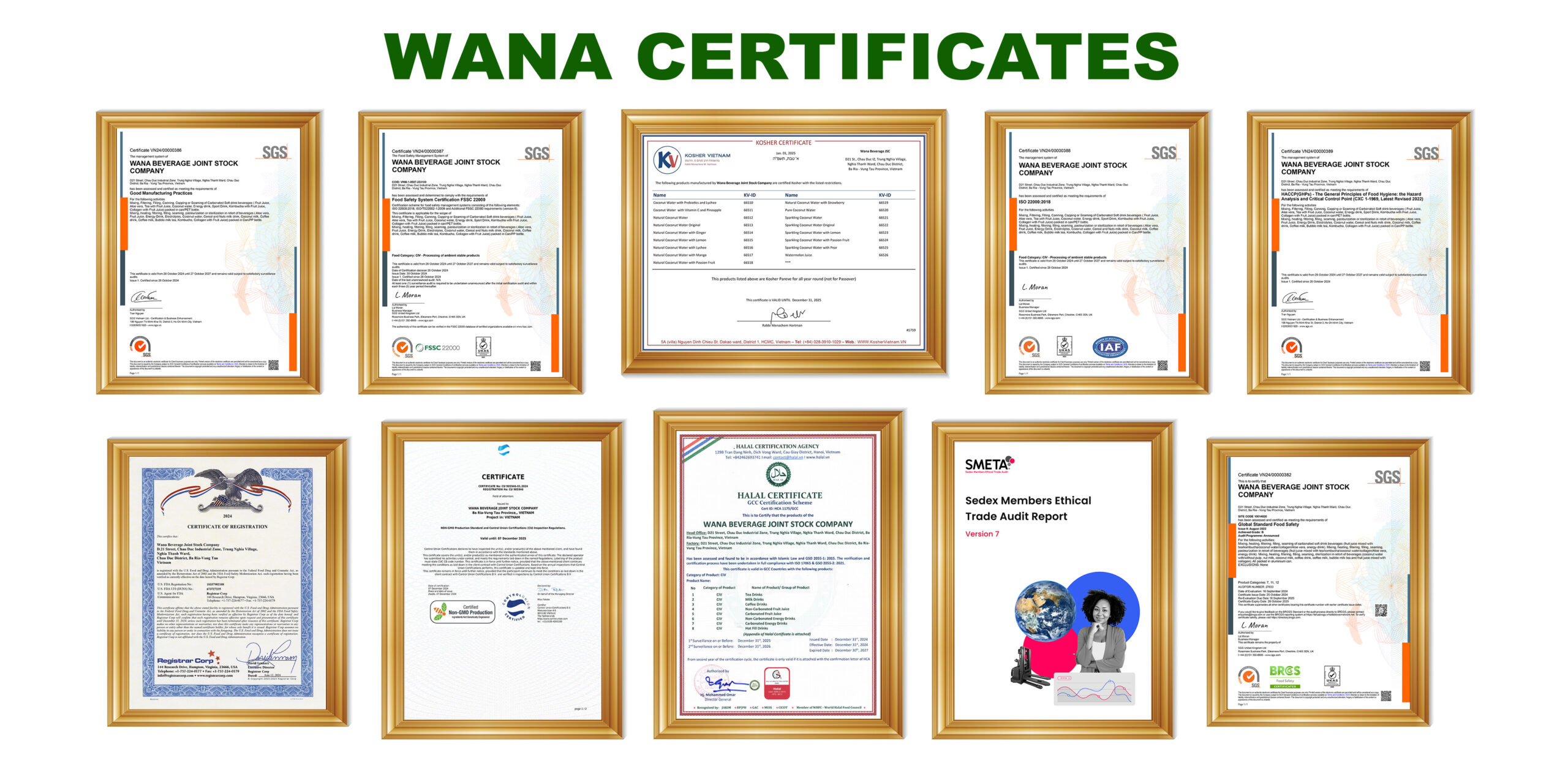
WANA Beverage works under internationally recognized quality and food safety systems, including:
- ISO 22000
- HACCP
- FDA Registration
- GMP
- HALAL
- FSSC 22000
- SEDEX SMETA
These standards support steady manufacturing, product tracking, and disciplined work steps throughout production.
Building Long-Term Partnerships
Many of WANA Beverage’s customers keep working with us long after the first product launch.
We believe strong OEM partnerships are built on more than production skill. They are built on trust, reliability, clear talk, and respect for each customer’s IP.
Whether we are helping startups enter the beverage market or helping established international brands grow their lines, our goal stays the same: create a place where new ideas can move forward with confidence.
In Conclusion
Developing a successful beverage takes creativity, technical skill, and a major investment of time and money. Protecting that investment should matter just as much as making the product itself.
As beverage innovation grows faster, beverage OEM supplier confidentiality has become a key issue for brands of every size. From private formulas and product ideas to business plans and package designs, confidential information deserves careful protection through every stage of development and manufacturing.
Working with an experienced OEM manufacturer means more than getting access to production lines. It means working with a team that understands the value of IP, talks clearly, and uses structured steps to safeguard customer data.
Before choosing a manufacturing partner, brands should take time to talk about confidentiality rules, clear up formula ownership, and learn how sensitive data will be handled. These early talks often set the base for stronger teamwork and long-term success.
In the end, trust cannot be written into a formula. But it is one of the most valuable ingredients in any successful manufacturing partnership.
Looking for a trusted OEM beverage manufacturer that values confidentiality and new ideas?
Contact WANA Beverage today to discuss your beverage project with confidence.
FAQs About Beverage OEM Supplier Confidentiality
Question: What is beverage OEM supplier confidentiality, and how is it different from formula confidentiality?
Short answer: Beverage OEM supplier confidentiality is the set of systems, deals, and internal steps a maker uses to protect all of a client’s private data, from the first talk through production. Formula confidentiality focuses on the recipe only, such as ingredients, ratios, and process settings. In practice, protection also covers product ideas, ingredient specs, package and brand assets, price plans, launch plans, target markets, and distribution plans.
Question: When should I ask for an NDA, and what should it cover?
Short answer: Ask for an NDA before you share formula details or private business plans, especially for new products, startups, or private label projects. A good NDA defines what is private, who can see it, allowed use, and sharing limits. Many brands prefer a maker-specific NDA to set clear limits for suppliers and agree on the rules early.
Question: How do trusted makers protect my formula and data day to day?
Short answer: They use legal, work, and culture-based safeguards, including:
- Limited access to sensitive files and batch details, only for R&D, QA, or selected production staff
- Secure data management, with controlled rights, version control, backups, and organized technical docs
- Confidential production steps, with controlled docs, safe handling of specs, staff training, and limited sharing
- A trust culture where protecting client IP is part of the job
WANA Beverage also works under internationally recognized standards, such as FDA Registration, HACCP, ISO 22000, GMP, HALAL, FSSC 22000, and SEDEX SMETA, which support tracking and disciplined work.
Question: Who owns the formula if we develop it with an OEM or ODM, and how do we avoid mix-ups?
Short answer: Ownership depends on who created the formula and on the deal in place:
- Customer-owned formulas: If you bring a finished recipe, you keep ownership and the maker produces to spec under confidentiality.
- OEM-made formulas: If the maker creates the recipe, ownership and sole rights must be set up front, whether the formula is customer-owned, shared, or kept by the maker.
- Custom formula agreements: Clearly write down ownership, sole rights, IP rights, future production rights, and change terms before development begins.
Question: What warning signs suggest a maker may not protect my IP?
Short answer: Be careful if you see:
- No clear confidentiality policy or no real talk about data handling
- Refusal to sign or fairly discuss an NDA
- Unclear or evasive answers about formula ownership and sole rights
- Weak internal controls, such as unclear access rights or poorly protected formula files
- Limited or messy product development docs, which hurt tracking and process control