Launching a beverage brand involves more than creating a good product. Startups also need to manage formulation, ingredients, packaging, production, quality control, minimum order quantities (MOQ), and lead times. For new beverage brands, handling all of these processes in-house can require significant investment, equipment, and technical expertise. This is where FMCG beverage contract manufacturing can offer a more practical approach.
By working with an experienced FMCG beverage contract manufacturer, startups can access existing production capabilities and beverage expertise without building their own manufacturing operation from the ground up. This can simplify product development, reduce operational complexity, and help brands move from product concept to commercial production more efficiently.
In this guide, we’ll explore how FMCG beverage contract manufacturing can support startups, what to look for when choosing a manufacturing partner, and the key questions to ask before starting a project.
What Is FMCG Beverage Contract Manufacturing?
FMCG beverage contract manufacturing is a business arrangement where a beverage manufacturer produces drinks on behalf of a brand based on agreed product specifications, packaging requirements, quality standards, and production volumes.
Depending on the manufacturer, the service may cover different stages of the process, including product formulation, ingredient sourcing, sample development, packaging selection, production, quality testing, filling, labeling, and final packaging.
The scope of support varies between manufacturers, so brands should clarify the services included, MOQ, lead time, quality requirements, and customization options before starting a project.
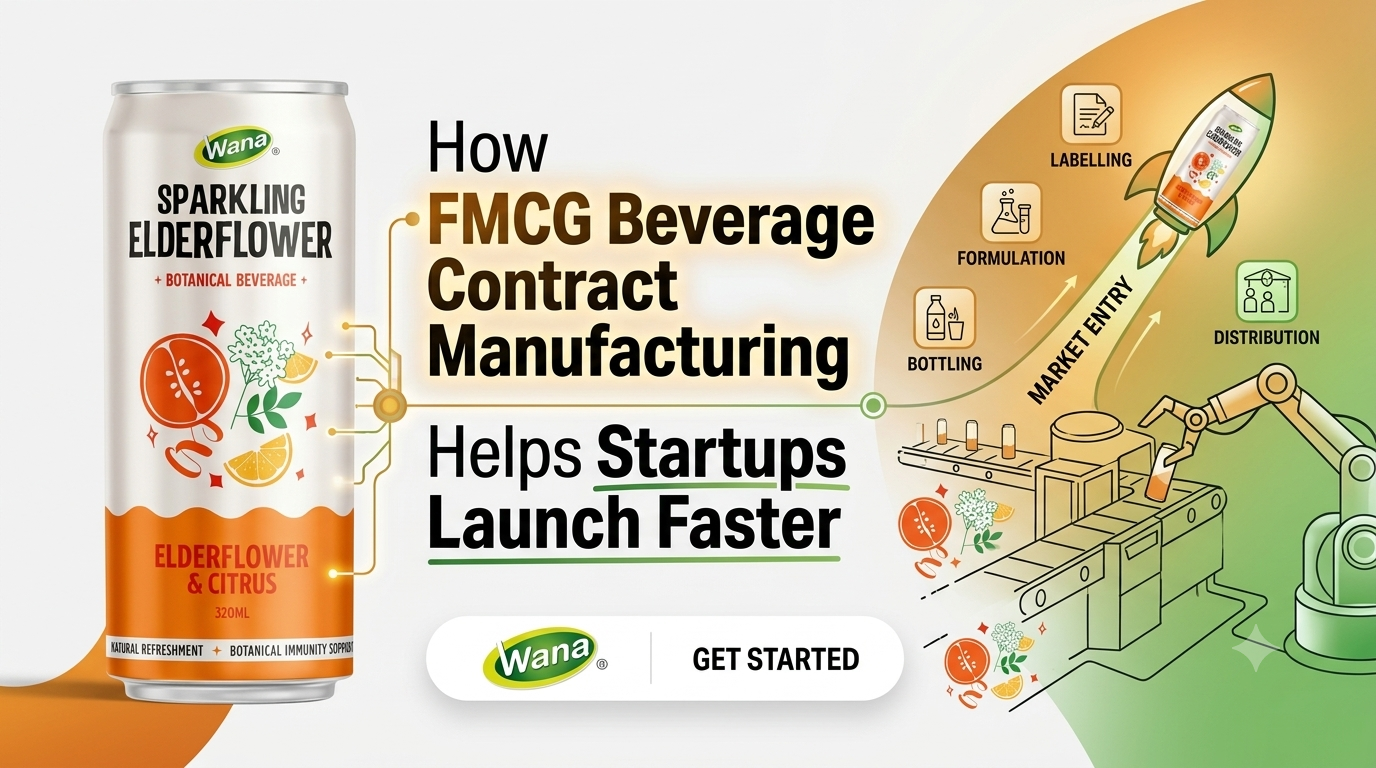
How FMCG Beverage Contract Manufacturing Helps Startups Launch Faster
For a startup, launching a beverage involves many steps, from developing the formula and selecting packaging to setting up production and meeting quality requirements. Working with an FMCG beverage contract manufacturer can simplify these processes by giving brands access to existing production capabilities and technical expertise.
Faster Product Development
An experienced contract manufacturer can support several stages of beverage development, including formulation, ingredient sourcing, sample development, testing, and production preparation. Instead of building an R&D and manufacturing system from scratch, startups can work with an established team and existing facilities. This can help reduce development complexity and move an approved product toward commercial production more efficiently.
Lower Upfront Investment
Building an in-house beverage production operation requires significant investment in facilities, filling lines, packaging equipment, laboratory systems, and production staff. Contract manufacturing allows startups to use an existing manufacturing infrastructure instead of making these investments from the beginning.
This can make it easier for new brands to allocate more resources to product development, branding, marketing, and market testing.
Access to Beverage Production Expertise
Beverage manufacturing involves technical decisions that can affect product quality, stability, shelf life, and production efficiency. A qualified manufacturer can provide expertise in areas such as formulation, filling technology, pasteurization, carbonation, packaging, and quality control.
For startups without an in-house technical team, this experience can help them make more informed production decisions and avoid unnecessary trial and error.
More Flexible Product and Packaging Options
Contract manufacturers may offer different beverage categories and packaging formats, allowing startups to develop products based on their target market and brand positioning. Depending on the manufacturer’s capabilities, this may include fruit juice, coconut water, sparkling beverages, functional drinks, protein beverages, and other customized concepts.
Packaging options may also include cans, PET bottles, glass bottles, or other formats. Having access to these existing capabilities can make it easier to test different product concepts without developing a complete production system independently.
Easier Scaling
A startup’s production needs can change as the brand grows. Working with a contract manufacturer can provide a pathway from initial product development to larger-scale commercial production without requiring the brand to build its own factory.
Before choosing a manufacturing partner, however, startups should check production capacity, MOQ, lead times, quality systems, and scalability to make sure the manufacturer can support future growth as well as the initial launch.
Read more: Consistent Quality Beverage Manufacturer: Why It Matters for Your Brand
What to Look for in an FMCG Beverage Contract Manufacturer
Choosing a contract manufacturer is an important decision for a startup because the right partner can affect product quality, launch timelines, production costs, and the ability to scale. Before starting a project, brand owners should look beyond the product price and evaluate the manufacturer’s capabilities across several areas.
Product Development Capability
Check whether the manufacturer can support your product development needs, from formulation and sample development to product customization. This is particularly important for startups that do not have an in-house beverage R&D team.
Production Capacity
Consider whether the manufacturer has enough production capacity to handle your initial order and support larger volumes as your brand grows. A supplier that can scale with your business can help avoid the need to change manufacturing partners later.
MOQ & Production Flexibility
Minimum order quantity (MOQ) can have a significant impact on a startup’s initial investment and inventory. Look for a manufacturer whose MOQ and production flexibility match your expected demand and launch strategy.
Quality Control & Certifications
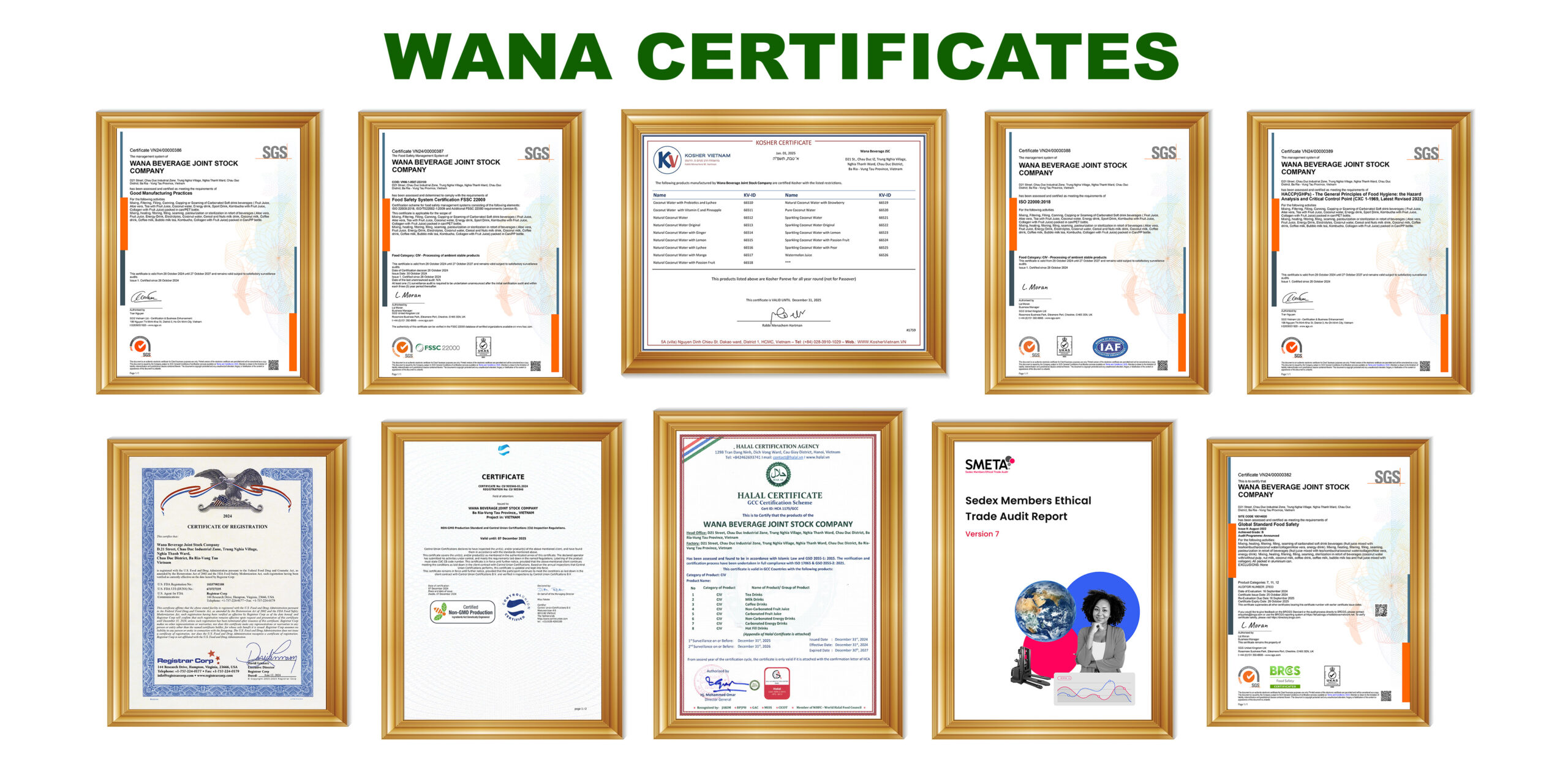
Review the manufacturer’s quality control systems and certifications based on your target market and product requirements. Depending on the market, relevant certifications or compliance requirements may include HACCP, GMP, BRC, HALAL, or FDA-related requirements.
Packaging Options
Packaging affects both product presentation and production costs. Check whether the manufacturer can provide suitable options such as cans, PET bottles, glass bottles, cartons, or other formats required for your product.
Lead Time
Do not look only at production time. Ask about the overall timeline from approved formulation and samples to production, packaging, and finished goods. Understanding the full lead time can help you plan your launch and inventory more accurately.
Export Experience
If you plan to sell internationally, check whether the manufacturer has experience exporting to your target markets. Familiarity with export documentation, product requirements, packaging specifications, and market-specific compliance can make the process more straightforward.
From Product Idea to Market Launch
One of the main advantages of working with an FMCG beverage contract manufacturer is having access to multiple production services within one workflow. Instead of coordinating with separate suppliers for formulation, production, packaging, and quality control, startups can work with a manufacturing partner that supports several stages of the project.
A typical beverage development process may include:
Product Concept → Formulation & Sample Development → Packaging Selection → Testing & Approval → Commercial Production → Quality Control → Packaging & Shipment
The exact process can vary depending on the product and manufacturer. However, having these stages connected can reduce coordination between different suppliers and make it easier for startups to track the project from product concept to finished goods.
For a new beverage brand, this can also simplify communication and help the team focus on other parts of the launch, such as branding, marketing, distribution, and sales.
How Much Does FMCG Beverage Contract Manufacturing Cost?
There is no fixed cost for FMCG beverage contract manufacturing because each project can have different product, packaging, and production requirements. The final cost is usually influenced by several factors, including ingredients, formulation complexity, packaging materials, MOQ, production volume, product type, customization, testing, certifications, and shipping.
Example: Illustrative Cost Structure for a 330ml Fruit Juice
Scenario: A startup wants to launch a 330ml fruit juice in a standard can with a first order of 10,000 units.
The following example shows how the total project cost could be distributed across different cost categories. These percentages are illustrative only and do not represent fixed industry rates or a specific manufacturer quotation.
| Cost Category | Illustrative Share |
|---|---|
| Ingredients & raw materials | 30% |
| Packaging | 30% |
| Manufacturing & processing | 20% |
| Testing & quality control | 5% |
| Product development & customization | 5% |
| Logistics & other costs | 10% |
| Total | 100% |
The actual cost structure can vary significantly depending on the beverage formula, packaging format, MOQ, production volume, customization requirements, testing, and destination market.
For startups, looking at the total project cost is often more useful than focusing only on the unit price. A lower unit cost may require a higher MOQ, while customized formulas or packaging can increase development and production costs.
When requesting a quotation, brands should provide key details such as the product type, packaging format, target quantity, customization requirements, and destination market. This gives the manufacturer enough information to prepare a more relevant estimate.
Read more: How to Choose a Beverage Manufacturer in Vietnam: B2B Buyer Checklist
Questions to Ask an FMCG Beverage Contract Manufacturer
Before choosing a manufacturing partner, startups should ask clear questions about production, product development, quality, and scalability. This can help them understand whether a manufacturer is suitable for both the initial launch and future growth.
Here are some practical questions to ask:
What is your MOQ?
Understanding the minimum order quantity helps you estimate the initial investment and plan inventory based on expected demand.
What is the typical lead time?
Ask about the full timeline from sample approval to finished products, rather than looking only at production time.
Can you develop custom formulations?
If you have a specific product concept, check whether the manufacturer has an R&D team that can support formulation and product development.
Can I request samples before placing an order?
Sampling allows you to evaluate the taste, appearance, packaging, and other product specifications before moving to commercial production.
What beverage categories do you manufacture?
Make sure the manufacturer’s experience matches your product category, whether it is fruit juice, coconut water, sparkling beverages, functional drinks, or another concept.
What packaging formats do you offer?
Ask about available packaging options and whether they can support your preferred bottle, can, or other format.
What quality certifications do you have?
Check which certifications and quality systems are in place and whether they meet the requirements of your target market.
Can you support export requirements?
Understand how raw materials, production processes, finished products, and product consistency are monitored.
Can you scale production as my brand grows?
A manufacturing partner should have sufficient capacity and flexibility to support larger production volumes as demand increases.
Looking for an FMCG Beverage Contract Manufacturer?
If you are developing a beverage brand and need support with product development, formulation, packaging, and commercial production, working with an experienced contract manufacturer can help simplify the process.
WANA Beverage provides OEM, ODM, and private label beverage manufacturing services for brands looking to develop and scale their products.